


This article may contain affiliate links. If you purchase through these links, we may earn a small commission at no extra cost to you.
If you’ve flipped over a bag of dog food and stared at the “Guaranteed Analysis” panel, you’ve probably wondered whether the crude protein number is actually good enough. Here’s the short answer: according to AAFCO (the Association of American Feed Control Officials), adult dog food must contain a minimum of 18% crude protein on a dry matter basis, while food for puppies, pregnant dogs, and nursing dogs must contain at least 22.5%.
Those are minimums, not necessarily ideal targets — and the percentage printed on the bag isn’t always directly comparable between products. Below, we’ll break down what these numbers mean, how to read a label correctly, and what actually changes across life stages.
AAFCO Minimum Crude Protein Requirements
AAFCO sets the nutrient standards that most commercial dog foods in the U.S. are formulated to meet. For crude protein, there are two main categories:
| Life Stage Category | Minimum Crude Protein (Dry Matter Basis) |
|---|---|
| Adult Maintenance | 18.0% |
| Growth & Reproduction (puppies, pregnant/nursing dogs) | 22.5% |
These figures come directly from AAFCO’s published nutrient profiles. They’re floor values — the lowest amount a food can contain and still be labeled “complete and balanced” for that life stage. A food can exceed these numbers and still be appropriate; it can’t fall below them and still meet the standard.
What “Crude Protein” Actually Means
“Crude protein” sounds like a quality label, but it’s really describing a lab test method. The value on a food’s packaging comes from measuring the nitrogen content and applying a standard conversion factor to estimate protein percentage.
That means crude protein tells you how much protein is present, not how digestible it is or how complete its amino acid profile is. A food with a high crude protein number built mostly from low-quality protein sources isn’t automatically better than a food with a slightly lower number from highly digestible animal-based ingredients. Crude protein is a useful starting point, not the full picture.
For a full breakdown of how crude protein is measured and what the Kjeldahl nitrogen test actually involves, see our complete guide: what is crude protein in dog food.
How to Read the Label Correctly (As-Fed vs. Dry Matter)
Here’s where a lot of confusion comes from. The percentage on a dog food label is listed on an “as fed” basis — meaning it reflects the food exactly as it sits in the bag or can, moisture included.
The problem is that wet food and dry food have very different moisture levels. Canned food might be 78% water, while dry kibble is often only 10% water. That means a wet food showing “9% protein” and a dry food showing “22% protein” could actually contain a similar amount of protein once the water is removed from the comparison. The two numbers aren’t directly comparable without adjusting for moisture first.
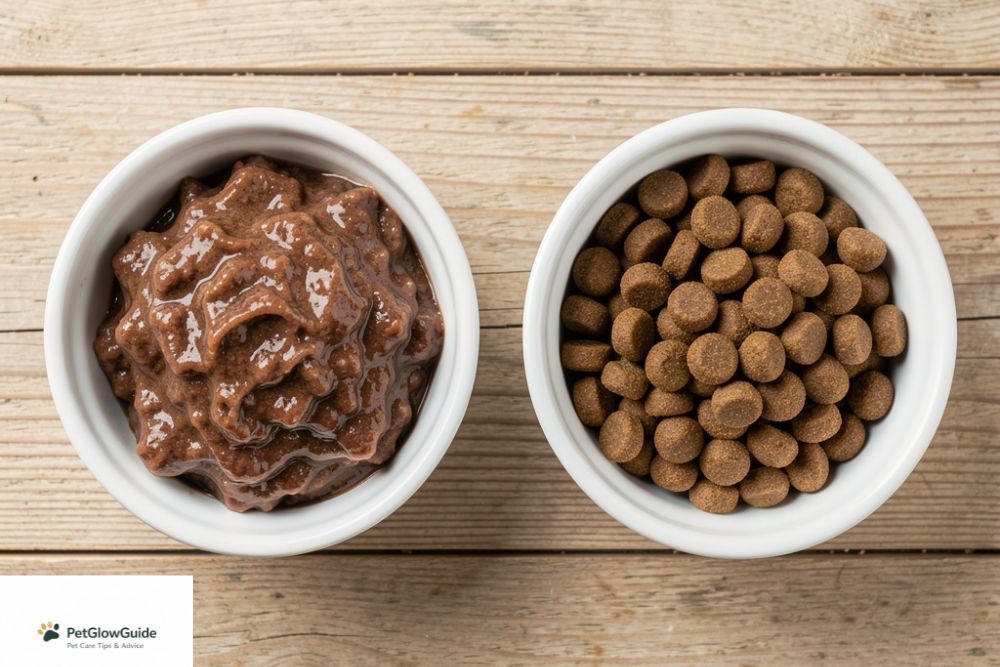
Wet food contains significantly more moisture than dry kibble, which drastically changes how protein percentages are calculated.
Simple Formula to Calculate Dry Matter Protein
To compare foods fairly, convert the label’s crude protein percentage to a dry matter basis using this formula:
Dry Matter Protein % = Crude Protein % ÷ (100 − Moisture %) × 100
Example: A canned food lists 9% crude protein and 78% moisture.
- 100 − 78 = 22 (this is the dry matter percentage of the food)
- 9 ÷ 22 × 100 = 40.9% protein on a dry matter basis
That 9% wet-food number actually works out to more protein, on a dry matter basis, than most dry kibble. This is why checking the moisture percentage on the label — usually listed right next to crude protein in the Guaranteed Analysis — matters just as much as the protein number itself.
If your dog has itchy or yeast-prone skin, a vet may suggest a diet trial with a single protein instead of simply changing the protein percentage. You can compare some options in our list of the best dry dog food for yeast infections.
If you’re measuring your dog’s food at home to double-check portions or run this kind of calculation, a simple digital kitchen scale with gram precision makes it easier. Look for one with a tare function, so you can zero out the weight of the bowl before adding food. A basic 1g-precision kitchen scale with a tare function is inexpensive and works well for this.
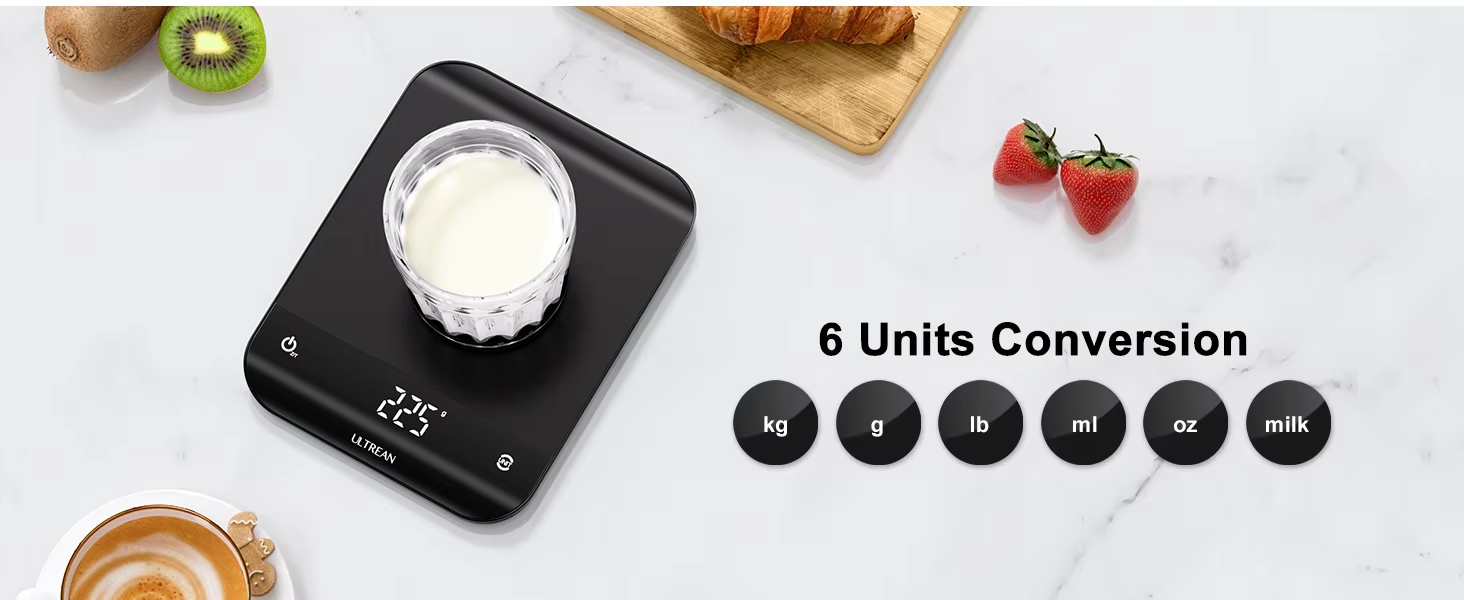
Check out this precise digital kitchen scale on AliExpress
Protein Requirements by Life Stage
AAFCO’s two categories cover the regulatory minimums, but here’s how they play out across a dog’s life.
Puppies and Growing Dogs
Puppies are actively building muscle, organs, and tissue, which is why their minimum protein requirement — 22.5% dry matter — is notably higher than the adult minimum. Food labeled for “growth” or “all life stages” is formulated to meet this higher bar.
Adult Maintenance Dogs
Once a dog reaches adulthood and is no longer growing, 18% dry matter protein is the regulatory floor for a complete and balanced diet. Many adult foods on the market contain protein levels above this minimum, which is generally fine for healthy dogs, though AAFCO doesn’t publish a single “ideal” number above the minimum.
Senior Dogs
There’s a common belief that older dogs need less protein to protect their kidneys. According to Tufts University’s Cummings School of Veterinary Medicine, this isn’t accurate for healthy senior dogs. Geriatric dogs often have protein requirements similar to or higher than younger adults, and restricting protein in a healthy senior dog can contribute to muscle loss rather than prevent health problems. AAFCO doesn’t publish a separate, lower protein minimum for seniors — the Adult Maintenance category still applies unless a dog has a diagnosed medical condition.
Pregnant and Nursing Dogs
Pregnant and lactating dogs fall under the same Growth & Reproduction category as puppies, with a 22.5% dry matter minimum. Supporting a litter, both during pregnancy and while nursing, requires more protein than standard adult maintenance.
AAFCO Minimum vs. NRC Recommended Allowance
AAFCO’s numbers represent the minimum needed to avoid nutritional deficiency. The National Research Council (NRC), a separate body that publishes research-based nutrient recommendations, sets a somewhat different benchmark called the “recommended allowance,” expressed in grams of protein per 1,000 kcal of metabolizable energy rather than as a straight percentage.
Based on NRC data, the recommended allowance for adult dogs is roughly 25 g of protein per 1,000 kcal, compared to AAFCO’s adult minimum of about 22.5 g per 1,000 kcal (the metabolizable-energy equivalent of the 18% dry matter figure). For puppies, the NRC figure is around 56.3 g per 1,000 kcal.
In practice: AAFCO tells you the lowest acceptable amount, while NRC data reflects a research-based target that sits a bit above that floor. Most commercial dog foods, especially those labeled for active or working dogs, already exceed both benchmarks.
Does High Protein Dog Food Harm the Kidneys? (Myth vs. Fact)
This is one of the most common concerns about dog food protein, so it deserves a direct answer.
| Myth | Fact |
|---|---|
| High protein diets damage a healthy dog’s kidneys | According to Tufts Cummings School of Veterinary Medicine, there is no evidence that high protein intake causes kidney damage in dogs with normal kidney function. This belief traces back to a study conducted in rats, not dogs, and hasn’t been supported by later research in dogs. |
| All senior dogs should eat low-protein food | Protein restriction isn’t a general senior-dog recommendation. It’s mainly relevant for dogs with diagnosed kidney disease, and even then, restriction is typically reserved for more advanced stages rather than applied automatically. |
| Reducing protein “gives the kidneys a rest” | In a dog without diagnosed kidney disease, restricting protein can lead to muscle loss without any corresponding health benefit. |

When Protein Should Be Limited (Vet Guidance Needed)
There are situations where a lower-protein diet is appropriate, but they’re specific rather than general. Based on Tufts veterinary guidance, protein restriction is mainly relevant for dogs with diagnosed chronic kidney disease (CKD), and even then, changes to protein levels are typically introduced in later disease stages rather than as an early precaution.
If your dog has been diagnosed with kidney disease, liver disease, or another condition where protein intake might need adjusting, that’s a decision to make with your veterinarian rather than by picking a food based on a percentage alone. Prescription renal diets are formulated with specific protein and phosphorus targets that go beyond what a standard label comparison can tell you.
How Much Protein Is Actually Ideal? (Beyond the Minimum)
There’s no single AAFCO-published “ideal” percentage above the minimum, but a few practical factors can help you think through what makes sense for your dog:
- Activity level: Working dogs, highly active dogs, and those in intense training generally use more protein for muscle repair and recovery than a sedentary house pet.
- Life stage: Puppies and reproducing dogs need to meet the higher 22.5% minimum; healthy adults and seniors typically do fine at or somewhat above the 18% minimum.
- Protein source quality: A food with animal-based ingredients (chicken, beef, fish, eggs) near the top of the ingredient list generally reflects more digestible protein than one relying heavily on plant-based protein fillers, even if the crude protein percentage looks similar.
- Individual health status: Dogs with diagnosed medical conditions should follow a veterinarian’s specific guidance rather than a general percentage range.
If you’re comparing multiple foods side by side, converting each to a dry matter basis is the most reliable way to see which one actually offers more protein, rather than relying on the as-fed number alone.
Frequently Asked Questions
Is 30% protein too much for a dog?
Not inherently. Many performance and working-dog formulas contain 28–32% crude protein and are considered appropriate for active, healthy dogs. Whether it’s “too much” for a specific dog depends more on that dog’s activity level, life stage, and any diagnosed health conditions than on the number itself.
What’s the difference between crude protein and digestible protein?
Crude protein is a lab measurement of total nitrogen-based protein content. Digestible protein refers to how much of that protein a dog’s body can actually break down and use. Two foods can show the same crude protein percentage while differing in digestibility, depending on ingredient quality and processing.
Do “all life stages” foods have enough protein for puppies?
To be labeled “complete and balanced for all life stages,” a food must meet the higher Growth & Reproduction minimum of 22.5% dry matter, since that standard covers the most nutritionally demanding stage. This means an all-life-stages food should meet a puppy’s minimum protein needs.
Sources referenced in this article: AAFCO (Association of American Feed Control Officials) official nutrient profile guidance; National Research Council (NRC) recommended allowance data; Tufts University Cummings School of Veterinary Medicine guidance on protein and kidney health.
This article is intended for general informational purposes and isn’t a substitute for individualized veterinary advice, especially for dogs with diagnosed health conditions.
Share :

numan anwar
Pet care enthusiast sharing practical, well-researched guides to help dog and cat owners make confident everyday decisions.
Leave a comment