

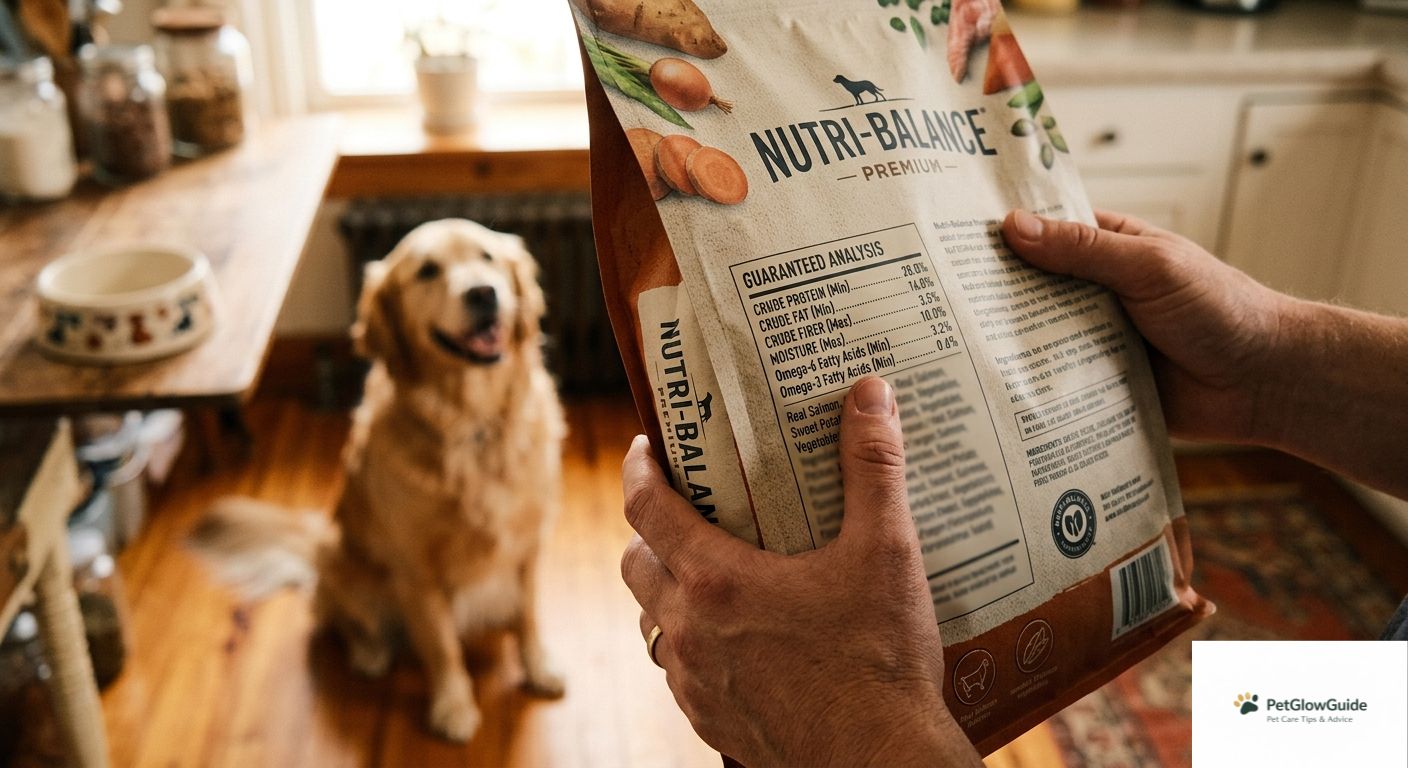
When you flip over a bag of dog food, your eyes likely land on the Guaranteed Analysis box first. Right at the top, you’ll see “Crude Protein” followed by a percentage.
To many pet owners, the word “crude” sounds unrefined, low-quality, or perhaps even “raw.” However, in pet nutrition, “crude” doesn’t describe the quality of the meat—it describes the chemical method used to measure it.
What Exactly is Crude Protein?
In the simplest terms, crude protein is an estimate of a food’s total protein content based on a laboratory analysis of nitrogen content.
On a dog food label, this percentage represents the minimum amount of protein the manufacturer guarantees is in the bag. It is a measure of quantity, not necessarily quality. Because dogs require specific essential amino acids to thrive, the total protein percentage only tells half the story. For dogs with sensitive or yeast-prone skin, the protein source can matter just as much, and our guide to dry dog foods for yeast-prone dogs shows what to check on the label.
The Science of Nitrogen: Why Is It Called “Crude”?
Laboratory tests do not “count” individual protein molecules. Instead, they measure the total amount of nitrogen present in the food.
Most proteins contain approximately 16% nitrogen. Because of this, scientists use a standard calculation known as the Kjeldahl Method. The formula looks like this:
Crude Protein = % Nitrogen × 6.25
(The factor of 6.25 is used because 100 ÷ 16 = 6.25.)
Because this method measures total nitrogen, it includes nitrogen from muscle meat, but it can also pick up nitrogen from non-protein nitrogen (NPN) or less digestible parts like hair, feathers, and connective tissue. This is why the measurement is “crude”—it is a broad estimation rather than a surgical look at the actual bioavailability of protein.
Quantity vs. Quality: The Digestibility Factor
A high crude protein percentage doesn’t automatically make a food more nutritious. What matters most for your dog is how easily that protein can be absorbed—a concept known as protein digestibility.
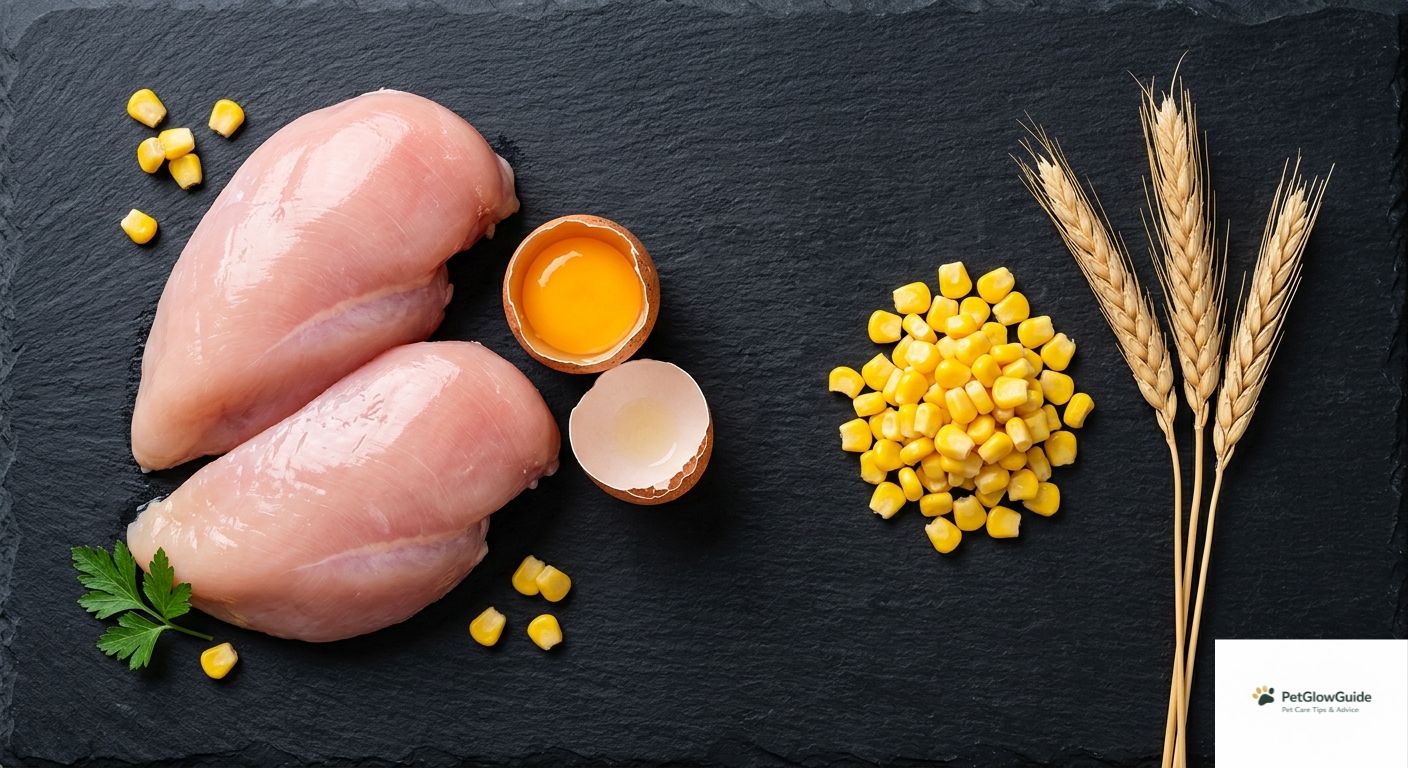
Not all proteins are equal: Comparing the biological value of animal vs. plant sources.
This is often measured by Biological Value (BV), which tracks how well a protein source provides the essential amino acids for dogs in the right proportions.
- Whole Eggs (BV 100): The “gold standard” for protein quality.
- Muscle Meats (BV 75–80): Highly digestible and rich in amino acids.
- Plant Proteins (BV 50–65): Sources like corn gluten, wheat or soy provide nitrogen, but depending on the source they can be lower in some essential amino acids, such as lysine or methionine.
If a food has 30% crude protein but low digestibility, your dog might simply pass that protein as waste rather than using it to build muscle or repair tissue.
AAFCO Standards: How Much Does Your Dog Need?
AAFCO (the Association of American Feed Control Officials) sets minimum crude protein standards for complete and balanced dog food — 18% for adult maintenance and 22.5% for puppies and reproduction, on a dry matter basis. For a full breakdown of protein needs by life stage (including seniors and pregnant/nursing dogs), see our guide on how much crude protein your dog actually needs.
The “Dry Matter” Trick: Comparing Wet vs. Dry Food
A common mistake is comparing the protein on a bag of kibble (e.g., 26%) directly to a can of wet food (e.g., 10%). Because wet food is mostly water, you must remove the moisture to get a fair comparison. This is called calculating dog food protein on a dry matter basis.
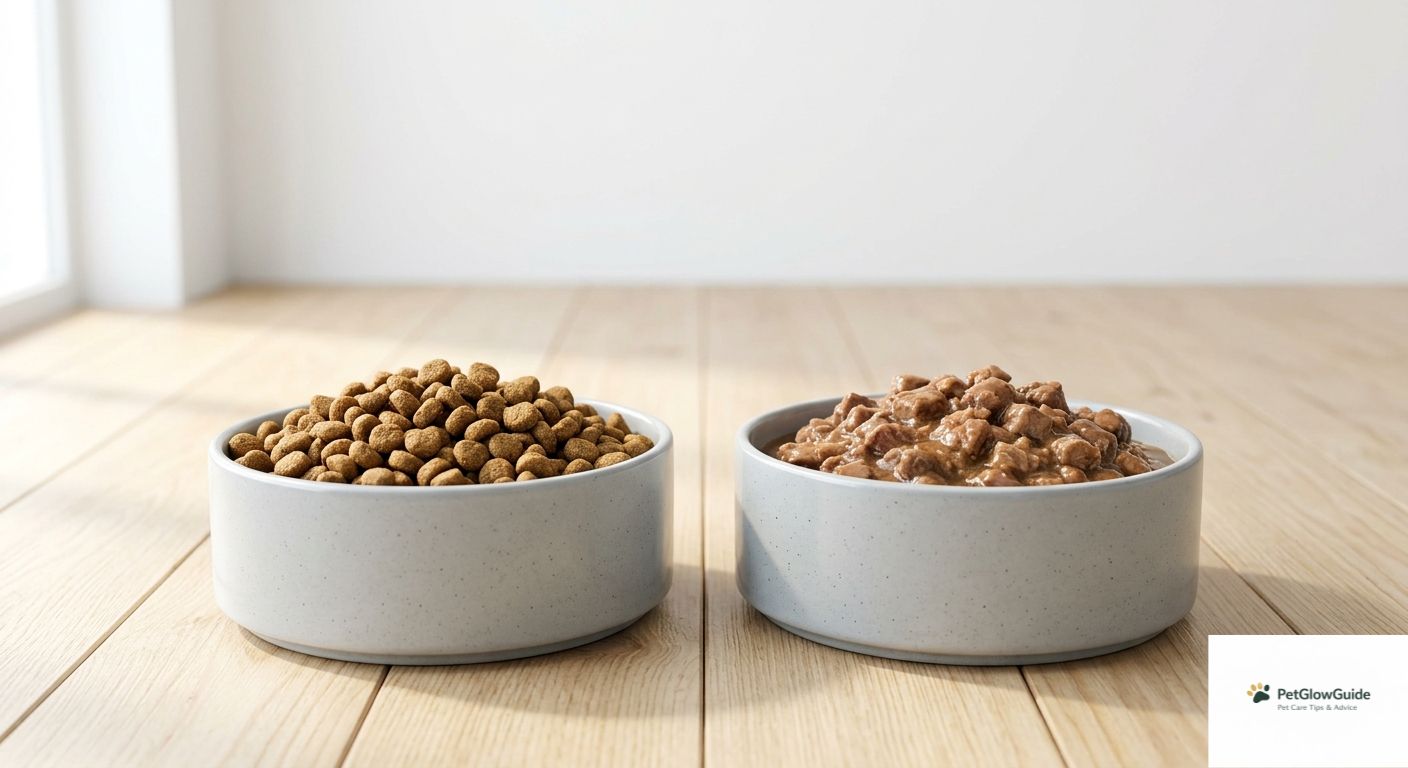
Why you can’t compare wet and dry food protein directly without the Dry Matter Basis formula.
The Formula:
For the exact formula and a worked example, see our full guide:: how much crude protein should be in dog food
Can Dogs Have Too Much Protein?
For a healthy dog, high protein is generally safe; excess is simply excreted through urine. However, it’s important to clear up two common myths:
- Kidney Health: Modern veterinary science shows that high protein does not cause kidney disease in healthy dogs. However, if a dog already has chronic kidney disease, a lower-protein diet may be recommended to reduce the workload on the organs.
- Hyperactivity: There is no conclusive evidence that high protein causes behavioral issues or hyperactivity.
Note: Always consult your veterinarian before making significant changes to the diet of a dog with pre-existing medical conditions.
Conclusion: Look Beyond the Percentage
Crude protein is a helpful baseline, but it isn’t the final word on nutrition. When shopping:
- Check the AAFCO Statement: Ensure it matches your dog’s life stage.
- Identify Named Meats: Look for specific animal proteins (like “deboned chicken”) in the first three ingredients.
- Calculate the DMB: Use the dry matter formula to compare wet and dry foods accurately.
Understanding that “crude” is just a measurement of nitrogen allows you to look past the marketing and focus on the actual quality of your dog’s diet.
Frequently Asked Questions
What Does Crude Protein Mean?
Crude protein is a lab measurement of the total nitrogen content in dog
food, multiplied by a standard factor (6.25) to estimate protein
percentage. It’s called “crude” because it measures total nitrogen
broadly, not the actual quality or digestibility of that protein.
Is Crude Protein Bad for Dogs?
Not inherently. Crude protein is simply a measurement standard, not an
indicator of poor quality. For healthy dogs, higher crude protein is
generally safe, since any excess is typically excreted through urine.
Dogs with pre-existing kidney conditions may need a lower-protein diet —
always check with your veterinarian first.
Is Crude Protein Good for Dogs?
Protein itself is essential for dogs, and crude protein gives a useful
baseline number for comparing foods. However, a high crude protein
percentage alone doesn’t guarantee quality — digestibility and named
meat sources in the ingredient list matter just as much as the percentage
on the label.
What Is Considered a Good Crude Protein Percentage?
AAFCO sets minimum crude protein requirements of 18% for adult
maintenance and 22.5% for puppies and reproduction, on a dry matter basis.
Many premium foods offer 25-30% to support active dogs. For a full
breakdown of how much protein your dog actually needs by life stage,
see our guide on how much crude protein should be in dog food.
Share :

numan anwar
Pet care enthusiast sharing practical, well-researched guides to help dog and cat owners make confident everyday decisions.
Leave a comment