


Itchy skin, bald patches, scabs, and strange bumps are worrying to see on your dog, and they are hard to tell apart. Many different conditions cause similar signs, from allergies and fleas to infections, mites, and hormone problems. Only a vet can say which one your dog has, but knowing the main categories helps you notice changes early and decide how quickly to act.
This guide explains the most common dog skin diseases, what they tend to look like, which ones can spread to people, and when a skin problem needs a vet visit or emergency care. It is one part of our wider guide to common dog diseases.
This article is general information, not a diagnosis or treatment plan. If your dog’s skin problem is getting worse or not going away, see your veterinarian.
Common Dog Skin Diseases at a Glance
| Condition | Main driver | Common clues | Worth knowing |
|---|---|---|---|
| Allergic skin disease | Environmental allergens, food, or flea bites | Itching of paws, face, ears, belly; repeat ear or skin infections | Often needs long-term management |
| Bacterial skin infection (pyoderma) | Bacteria, usually secondary to another problem | Bald patches, welts, scabbing | Vet looks for the underlying cause |
| Hot spots | Scratching or licking, often driven by fleas or allergies | Sudden, moist, irritated patch | A type of surface skin infection |
| Yeast (Malassezia) infection | Overgrowth of yeast normally living on skin | Itching that keeps returning | Often linked to allergies |
| Ringworm | Fungus | Bald, scaly patches with broken hairs | Can spread to people |
| Sarcoptic mange | Mites | Intense itching, often ears, elbows, belly | Highly contagious; can affect people |
| Demodectic mange | Overgrowth of Demodex mites | Patchy hair loss, red scaly skin | Not considered contagious |
| Hormone-related skin changes | Hypothyroidism, Cushing disease | Hair loss, dry or thickened skin | Skin can be the first sign |
| Skin lumps and tumors | Many causes | New lump, hairless patch, sore that won’t heal | Only a vet can identify them |
Why Dogs Develop Skin Problems
Most skin problems come from a handful of causes: allergies, parasites, infections, hormone or organ disease, immune system problems, and tumors.
These causes often overlap. A dog with allergies scratches, the damaged skin lets bacteria or yeast take hold, and the infection makes the itch worse. The Merck Veterinary Manual describes bacterial skin infections (pyoderma) as usually secondary to problems such as allergies or parasites, which is why vets look for an underlying cause instead of treating only the infection.
This is also why guessing at home can backfire. Two dogs with the same red, itchy patch may need very different treatment.
Common Skin Diseases in Dogs
Allergic Skin Disease
Allergies are a well-known cause of itchy skin. Dogs can react to things in the environment (like pollen or dust mites), to certain foods, or to flea bites.
The Merck Veterinary Manual’s guide to dog allergies notes that atopic dermatitis, the environmental type, usually starts between about six months and three years of age. It causes itching of the paws, face, ears, and belly. Diagnosis usually relies on your dog’s history, the pattern of signs, and ruling out other causes, not on an allergy test alone. Food allergy is checked with a vet-supervised diet trial.
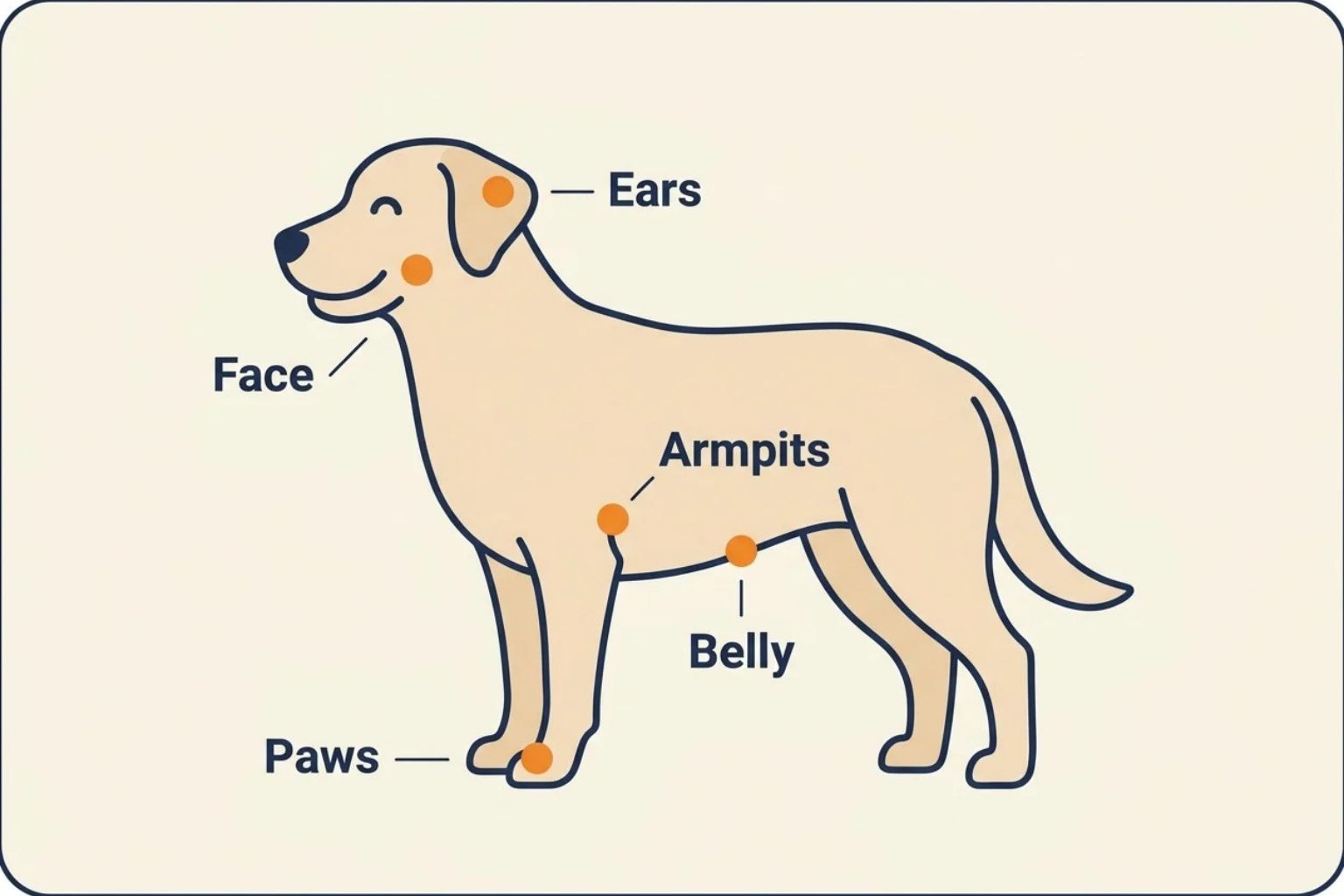
Allergic skin disease often affects these areas.
Flea allergy is a separate problem. In dogs it causes moderate to severe itching, typically around the lower back, the base of the tail, and the back of the thighs.
Bacterial Skin Infections and Hot Spots
Bacterial infections of the skin are called pyoderma. Signs can include bald patches, welts, and scabbing, and the itch may be mild or strong. Warm, moist areas such as skin folds, armpits, and paws are more prone to trouble.
Hot spots are sudden, moist, irritated patches. Vets classify them as a form of surface pyoderma, a bacterial infection of the skin’s surface. They often follow scratching or licking, for example from fleas or allergies.
If your vet prescribes medication, finish the full course even if the skin looks better early.
Yeast Infections
Yeast (Malassezia) lives on healthy dog skin. Trouble starts when it overgrows, often because of an underlying problem such as an allergy. Yeast infections tend to be itchy and to keep coming back. Vets usually check for them by looking at a skin sample under a microscope (cytology).
If your vet suspects a food sensitivity is contributing to your dog’s skin problems, our guide to the best dry dog food for yeast infections explains what to look for on the label.
Ringworm
Ringworm is a fungal infection, not a worm. As the Merck Veterinary Manual’s ringworm overview explains, it often appears as bald, scaly patches with broken hairs, commonly on the face, ear tips, tail, or feet. A fungal culture is the most accurate test.
Ringworm spreads through contact with infected animals or contaminated items such as bedding and grooming tools. In healthy adult dogs it may sometimes clear up without treatment, but treatment speeds recovery and reduces spread. It can also infect people, so it is worth taking seriously.
Mange
Mange is caused by mites, and there are two main types.
Sarcoptic mange (scabies) causes intense itching and is highly contagious. The Merck Veterinary Manual’s mange overview says it can also affect people. Signs may appear anywhere from about ten days to eight weeks after exposure, often on the ears, elbows, and belly. Other pets in contact with an affected dog generally need treatment too.
Demodectic mange is different. Demodex mites live on most dogs’ skin in small numbers, and problems develop only when they multiply too much. It is not considered contagious. The localized form usually appears in young dogs as a few small red, scaly, bald patches with little itching, and most cases clear on their own. Generalized demodicosis is more serious and can take months to treat. When it first appears in an adult dog, it is often linked to an underlying illness, so a full vet check is important.
Other mites, including ear mites, “walking dandruff” mites, and chiggers, can also irritate a dog’s skin.
Hormone-Related Skin Changes
Sometimes the skin is where an internal problem first shows up. According to the Merck Veterinary Manual on whole-body disorders that affect the skin, hypothyroidism can cause hair loss and dry, scaly, thickened skin, while Cushing disease can cause darkened skin, hair loss, oily dandruff, and secondary infections. The skin signs may appear before the internal disease is obvious.
Hormone-related hair loss often affects both sides of the body and may not itch much. With Cushing disease, other signs can include increased thirst and urination.
Autoimmune Skin Disease
Autoimmune skin diseases are uncommon. In pemphigus foliaceus, the immune system attacks the connections between skin cells, causing pimple-like spots and crusted areas, often on the face, ears, and paw pads. Vets confirm it with tests such as a skin biopsy, and treatment often involves long-term medication that calms the immune system.
Skin Lumps and Tumors
Skin tumors can look like small lumps, hairless or discolored patches, rashes, or sores that don’t heal. You can’t tell a harmless lump from a dangerous one by looking. The Merck Veterinary Manual’s page on skin tumors in dogs explains that vets identify them with tests such as a needle sample or biopsy, and that some serious tumors can resemble harmless fatty lumps. Have any new or changing lump examined.

Regular skin checks help you notice changes early.
What Your Dog’s Skin Problem Might Be Telling You
This table shows possibilities, not diagnoses. Use it to describe what you see to your vet.
| What you notice | What it may point to | Next step |
|---|---|---|
| Round or patchy bald areas with scaly skin | Ringworm, demodex, or infection | Vet visit; wash hands after handling |
| Sudden, intense itching with crusts on ears, elbows, or belly | Sarcoptic mange or allergy | Vet visit soon; mention other pets and people at home |
| Itchy paws, face, or ears that keep coming back | Allergy, possibly with infection | Vet visit for diagnosis |
| Hair loss on both sides of the body, dry skin, little itching | Possible hormone problem | Vet exam and possibly lab tests |
| Moist, red patch that appears quickly | Hot spot or skin infection | Vet visit |
| Raised welts or a swollen face | Allergic reaction | See “When to Worry” below |
| New, growing, or non-healing lump | Many possibilities, including tumors | Vet exam |
When to Worry: Emergency vs. Vet Visit Soon
Get Emergency Help
Call an emergency vet right away if your dog has:
- Swelling of the face, muzzle, or throat along with trouble breathing
- Collapse or extreme weakness
- Hives after a vaccine or a new medication
The Merck Veterinary Manual says that most hives in dogs fade within a few hours, but a dog that develops hives after a vaccination or medication should be checked by a vet immediately.
Book a Vet Visit Soon
Make an appointment if you see:
- A skin problem that lasts, spreads, or keeps coming back
- Bald patches or hair loss without a clear reason
- Open sores, pus, a bad smell, or signs of pain
- Constant scratching, licking, or chewing
- A new lump or a lump that changes
Also watch for skin changes that come with low energy, a poor appetite, or other whole-body symptoms. Treat those as signs of illness in dogs and call your vet promptly.
What to Expect at the Vet
Your vet will ask about your dog’s history and check the skin and the rest of the body. Depending on the signs, they may run tests such as:
- Skin scrapings to look for mites
- Cytology to check for bacteria or yeast
- Fungal culture to confirm ringworm
- A diet trial to test for food allergy
- A needle sample or biopsy for lumps or unusual lesions
Before the visit, jot down:
- When the problem started and where it began
- How itchy your dog seems
- Whether flea prevention is up to date
- Any recent changes to food, treats, shampoo, or medications
- Whether other pets or people at home have skin changes
- Photos of how the skin looks over a few days
Can Skin Diseases Spread to People or Other Pets?
Some can, some can’t.
- Ringworm can spread from dogs to people.
- Sarcoptic mange is highly contagious between dogs and can affect people.
- Demodectic mange is not considered contagious.
- Allergies and hormone-related problems don’t spread. Infections that follow them are a separate question for your vet.
The CDC’s ringworm prevention guidance advises pet owners to take an affected pet to the vet, wash their hands after contact, vacuum areas the pet uses, and disinfect surfaces and bedding. If you or a family member develops an itchy or ring-shaped rash, talk to your own doctor.
What You Can Do at Home (and What to Avoid)
- Do take photos and notes so you can describe changes accurately.
- Do follow your vet’s treatment plan and finish the full course of any prescribed medicine.
- Do ask your vet about flea and parasite prevention that suits your dog.
- Do wash your hands after touching an affected area if ringworm or mange is possible.
- Don’t guess at treatments. The right one depends on the cause, and delays can let a problem get worse.
- Don’t squeeze lumps or cysts. Have them checked first.
Frequently Asked Questions
What are the main causes of skin problems in dogs?
Allergies, parasites such as fleas and mites, and infections from bacteria, yeast, or fungi are among the main causes. Hormone problems, immune disease, and tumors are less common but important.
Why is my dog itching and losing hair?
Many things can do this, including allergies, mites, ringworm, infection, and hormone disease. The pattern (where it starts, how itchy it is, and whether other pets are affected) helps your vet narrow it down.
Are dog skin diseases contagious?
Some are. Ringworm and sarcoptic mange can spread to other animals and people. Demodectic mange, allergies, and hormone-related skin problems are not considered contagious.
Can dog skin problems go away on their own?
A few can. Mild hives often fade within hours to a couple of days, and localized demodex in young dogs usually clears up. Ringworm may resolve in healthy adults, but treatment helps recovery and limits spread. Anything that lasts, spreads, or returns should be checked by a vet.
When should I take my dog to the vet for a skin problem?
See a vet if a problem persists, spreads, or comes with pain, sores, or signs of illness. Go to an emergency vet for facial or throat swelling with breathing trouble, collapse, or a reaction after a vaccine or medication.
The Bottom Line
Dog skin problems have many causes, and looks alone are unreliable. Note where the problem is, how itchy it is, and whether it’s changing, and take your dog to a vet when it lasts, spreads, or comes with other signs of illness. Getting the cause right is what makes treatment work.
Share :

numan anwar
Pet care enthusiast sharing practical, well-researched guides to help dog and cat owners make confident everyday decisions.
Leave a comment