


Last updated: October 3, 2026
If your dog smells like a bag of corn chips, spends hours licking their paws, or suffers from chronically “gunky” ears, you aren’t just dealing with a hygiene issue. You are likely dealing with Malassezia dermatitis — a yeast overgrowth that thrives on the skin.
While topical treatments may be used to manage yeast overgrowth, long-term control also depends on finding and managing the underlying cause. Nutrition can support overall skin health and may be especially important when a food allergy is suspected. This guide explains how nutrition may support dogs with yeast-prone skin and reviews dry dog foods that may be worth considering when choosing a diet for your dog.
The Science: How Diet Impacts Yeast Overgrowth
To fix the problem, we first have to debunk a common myth: dietary yeast is not the same as skin yeast. The yeast that affects dogs, Malassezia pachydermatis, is a normal resident of the skin. It can overgrow when something changes, such as allergies or a weakened skin barrier. It is not caused by yeast in your dog’s food.
So, why does food matter?
Food can still matter when a dog has yeast-prone skin, especially if an underlying food allergy or ingredient sensitivity is suspected. A suitable diet may help support overall skin health, but changing carbohydrates does not directly starve or cure Malassezia yeast. Dogs with repeated yeast problems may need veterinary evaluation to find and manage the underlying cause.
Key Takeaway: There is no single “anti-yeast” dog food that directly cures Malassezia. The right food should provide complete nutrition and may be especially helpful when a dog has a known food allergy or ingredient sensitivity.
What to Look for in Dog Food for Yeast-Prone Dogs
When choosing a dry dog food for a dog with yeast-prone skin, consider the dog’s nutritional needs, known food sensitivities, and overall health. If a food allergy is suspected, a veterinarian may recommend a properly managed diet trial.
For a broader look at what goes into a complete diet, see our guide to what dog food actually contains.
1. Novel or Single Protein Sources If a food allergy is suspected, a novel protein may be useful as part of a properly managed diet trial. However, not every dog with a yeast problem needs a novel-protein diet.
2. Complete and Balanced Nutrition Choose a food that provides complete and balanced nutrition for your dog’s life stage. Grain-free or low-carbohydrate does not automatically mean that a food is better for a dog with yeast-prone skin.
Comparing protein levels? Here’s how to read crude protein on the label
3. Skin-Supportive Nutrients
- Probiotics for Dog Skin Health: Some dog foods contain probiotics or other ingredients intended to support digestive health. These may be useful as part of overall nutrition, but they should not be considered a direct treatment for a yeast infection.
- Omega-3 Fatty Acids: Ingredients that provide omega-3 fatty acids, such as fish oil, may support healthy skin and coat. However, omega-3s are not a standalone treatment for an active yeast infection.
What Foods Fight Yeast in Dogs?
No food directly kills yeast on a dog’s skin. Foods and nutrients such as fish-based omega-3s, named animal proteins and probiotics may support overall skin and digestive health, but they are not a treatment for an active infection.
While no single food cures a yeast infection, certain nutrients can support your dog’s skin health and may help as part of a broader management plan:
- Omega-3 fatty acids (fish oil, salmon, whitefish) — may help support healthy skin and reduce inflammation
- Low-glycemic carbohydrates (pumpkin, lentils, chickpeas): provide steady energy
- Probiotics — support overall digestive and immune health, which can play a role in skin condition
- Named animal proteins (salmon, venison, lamb) — easier to identify and often better tolerated than vague “meat” or “animal” sources
These nutrients support overall skin health — they aren’t a direct treatment for an active yeast infection, which should be diagnosed and managed with a veterinarian.
Can Diet Prevent Yeast Infections in Dogs?
Diet alone is unlikely to prevent yeast infections. According to the American Kennel Club, the most common cause of yeast dermatitis in dogs is allergies, including food sensitivities. If an underlying food sensitivity is the trigger, a vet-guided diet trial may help reduce repeat flare-ups. Other factors matter too: overweight dogs, dogs with long floppy ears and dogs with lots of skin folds are more prone to yeast problems.
Best Dry Dog Foods for Yeast Infections (2026 Reviews)
1. Fish-Based Option: Spot & Tango UnKibble Cod + Salmon This “fresh dry” recipe is grain-free and poultry-free, with cod and salmon as the main animal proteins and a short ingredient list. It may suit owners who want to try a fish-based food. It uses sweet potato and tapioca as starch sources, so it is not a low-starch food, and it is not a treatment for yeast infections.
- Pros: Named fish proteins; grain-free and poultry-free; short ingredient list.
- Cons: Subscription-based; premium pricing; contains tapioca and sweet potato.
2. Best Limited-Ingredient Option: Zignature Limited Ingredient Venison Venison is the single animal protein, and the manufacturer states the formula is free of chicken, corn, wheat, soy and potatoes. Limited-ingredient diets are often used in vet-supervised diet trials for dogs with suspected ingredient sensitivities.
- Pros: Single animal protein; no chicken, corn, wheat or soy.
- Cons: Relies on peas and chickpeas; grain-free formula (ask your vet).
3. Grain-Inclusive Option: Farmina N&D Ancestral Grain Lamb & Blueberry Lamb and herring are the main animal proteins, paired with spelt and oats. The listing states about 90% of the protein comes from animal sources, and the formula uses chelated minerals.
- Pros: Animal-protein-focused; includes whole grains.
- Cons: Contains grains, so not for grain-free needs. It lists brewer’s dried yeast and yeast extract; dietary yeast is not the same as skin yeast, but ask your vet if you are unsure.
4. Best Low-Fat Option: Annamaet Grain Free Lean Annamaet describes this as a reduced-fat formula (guaranteed 7–9% fat) made with added L-carnitine. It may suit dogs whose vet recommends a leaner diet. There is no evidence that a low-fat food reduces yeast on the skin.
- Pros: Reduced fat; formulated to meet AAFCO adult maintenance levels.
- Cons: Grain-free formula; not specifically designed for yeast-prone skin.
5. Best Fish-Based Kibble: Wellness CORE Ocean This chicken-free dry formula uses whitefish, herring meal and salmon meal, with a fish and flax omega blend and added probiotics. Guaranteed omega-3 amounts differ between bag sizes and retailer listings, so check the label on the bag you buy.
- Pros: Fish-based protein; omega fatty acids and probiotics included.
- Cons: Strong fish smell; grain-free formula; rich, so transition slowly.
Note: Several foods above are grain-free. The FDA has investigated a possible link between some grain-free diets and heart disease (DCM) in dogs, so ask your vet whether a grain-free diet is right for your dog.
Best Dog Food for Allergies and Yeast
If your vet suspects a food allergy, they may recommend a diet trial with a limited-ingredient or novel-protein food, fed strictly for several weeks. During a trial, avoid extra treats, flavored chews and table scraps. Zignature Limited Ingredient Venison (above) is an example of a single-protein formula often considered for this purpose, but your vet should choose the diet and the length of the trial.
Worst Dog Foods for Yeast-Prone Dogs (Ingredients to Avoid)
There is no proof that any single ingredient causes a yeast infection. Still, some ingredients are lower-quality fillers or vague label terms, and many owners prefer to avoid them while their dog is dealing with skin problems. When flipping over a bag, watch out for:
- White potato and tapioca starch: high-starch fillers that add calories but little else
- Corn syrup, cane molasses, or other added sugars: unnecessary sugars that offer no nutritional benefit
- Generic “animal fat”: a vague label term that often signals a lower-quality fat source rather than a named, traceable ingredient
- Excessive fillers (soy, wheat gluten): these add bulk without meaningfully supporting skin or immune health
None of these ingredients directly cause a yeast infection, but a food built around named proteins and no added sugars is generally a better choice for a dog with skin problems.
What to Look For on the Dog Food Label
When shopping for a dog with yeast-prone skin, flip the bag over and check the ingredient list against the “worst ingredients” list above.
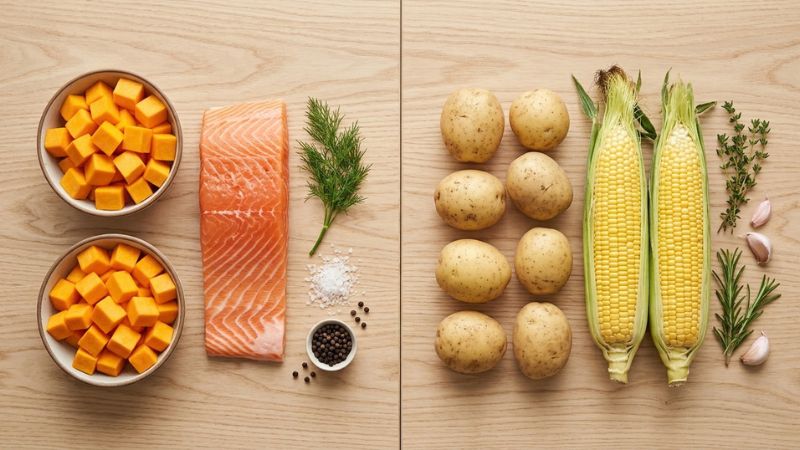
Comparing ingredient lists: named proteins and simple ingredients are easier to evaluate than vague labels.
How to Switch Your Dog to a New Food Safely
Do not swap foods overnight. A sudden change can upset your dog’s stomach. Follow this 10-day schedule:
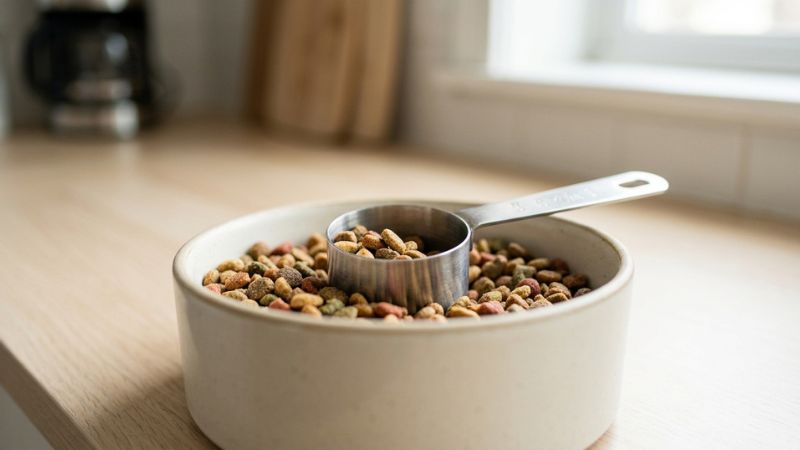
Transitioning slowly over 10 days helps avoid stomach upset.
- Days 1–3: 25% New / 75% Old
- Days 4–6: 50% New / 50% Old
- Days 7–9: 75% New / 25% Old
- Day 10: 100% New
Quick Comparison Table
| Food | Main protein | Starch / fiber sources | Good to know |
|---|---|---|---|
| Spot & Tango Cod + Salmon | Cod, salmon | Sweet potato, tapioca, pumpkin | Subscription; grain-free, poultry-free |
| Zignature Venison | Venison | Peas, chickpeas | No chicken, corn, wheat, soy, potato |
| Farmina N&D Ancestral Grain Lamb & Blueberry | Lamb, herring | Spelt, oats | Contains grains |
| Annamaet Grain Free Lean | Check label | Check label | Reduced fat (7-9%) |
| Wellness CORE Ocean | Whitefish, herring, salmon | Check label | Chicken-free; fish and flax omega blend |
Buyer’s Checklist: What to Check on the Label
- First ingredient is a named animal protein?
- Has an AAFCO “complete and balanced” statement for your dog’s life stage?
- Free from ingredients your dog is known to react to?
- Omega-3 sources listed (fish oil, salmon, whitefish)?
- Zero added sugars, syrups, or molasses?
When to See Your Vet
Yeast dermatitis is not contagious, and treatment usually relies on medicated shampoos and sometimes oral medication, not food alone. Many dogs also have a bacterial skin infection at the same time. See your vet if your dog has:
- Constant licking, scratching or chewing at paws, ears or skin
- A strong musty or “corn chip” smell
- Red, greasy, crusty or darkened skin
- Waxy or dark discharge from the ears
- No improvement after about two weeks
Common Questions (FAQ)
Can dog food cause yeast infections?
No, food does not directly cause yeast infections. Yeast dermatitis is usually linked to an underlying problem such as allergies, and food sensitivities are one possible trigger. Ask your vet whether a diet trial makes sense for your dog.
Is grain-free better for yeast?
Not necessarily. Grain-free does not automatically mean a food is better for yeast-prone skin. What matters more is whether your dog reacts to a specific ingredient, and your vet can help work that out. The FDA has also investigated a possible link between some grain-free diets and heart disease in dogs, so check with your vet before switching.
How long until I see results?
It depends on the cause. Yeast dermatitis usually needs treatment prescribed by your vet, such as medicated shampoo, and a food change alone is unlikely to clear it. If your vet suggests a diet trial, they will tell you how long to run it, which is often several weeks.
This article is for general information and is not veterinary advice. If your dog has ongoing itching, odor or skin changes, see your veterinarian for diagnosis and treatment.
Share :

numan anwar
Pet care enthusiast sharing practical, well-researched guides to help dog and cat owners make confident everyday decisions.
Leave a comment