

This post contains affiliate links. If you buy through one of them, I may earn a small commission at no extra cost to you.
This cat water fountain buying guide covers exactly what matters — material, power source, capacity, noise, and filters — so you can pick one that actually fits your cat. If your cat ignores their water bowl but happily drinks from a dripping faucet, you’re not alone, and here’s what to check before you buy.
Do Cats Really Need a Water Fountain?
Not strictly. A cat can do fine on a regular bowl. But there’s a real reason fountains caught on beyond just being trendy.
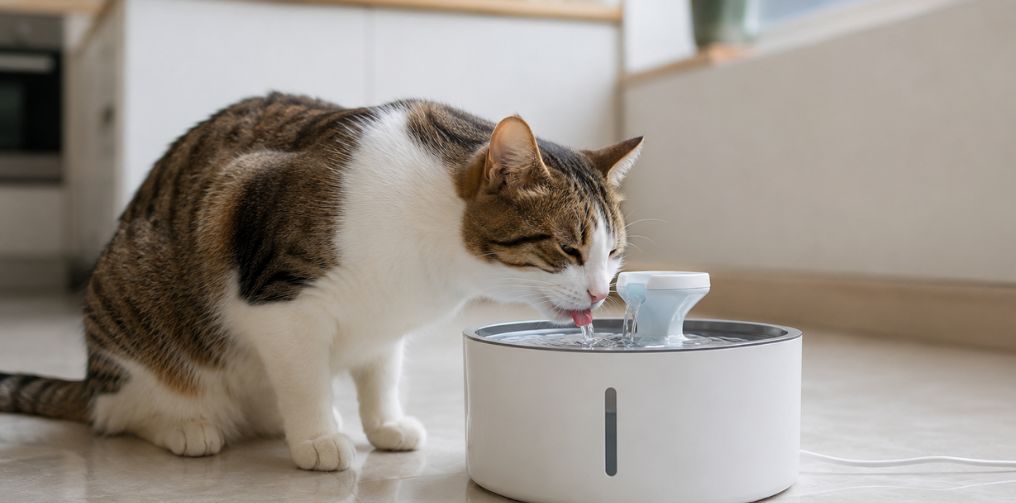
Cats are instinctively drawn to moving water over still water, likely tracing back to their wild ancestry, where flowing water was generally safer and cleaner than stagnant pools that could harbor bacteria. That instinct doesn’t disappear just because your cat lives on a countertop instead of a savanna — it’s a big part of why so many cats prefer the sink over their bowl. (Source: Catster, vet-reviewed content)
There’s also a concrete hydration benchmark worth knowing: according to Dr. Bruce Kornreich, director of the Cornell Feline Health Center, the average 10-pound cat needs roughly one cup of water a day — about 4 ounces for every 5 pounds of body weight. (Source: Rover, quoting Dr. Bruce Kornreich, Cornell Feline Health Center) If your cat is consistently drinking well below that, especially on a mostly dry-food diet, a fountain is one low-effort way to nudge their intake up. It’s not a guaranteed fix for every cat, but it’s a reasonable first thing to try.
Why Hydration Matters More Than You’d Think
Cats that don’t drink enough water — especially on dry-food-only diets — are commonly linked by veterinarians to a higher risk of urinary tract issues, kidney strain, and painful blockages over time. This shows up consistently across veterinary-affiliated sources, though it’s worth treating as general guidance rather than a diagnosis. If you’re worried your specific cat isn’t drinking enough, that’s a conversation for your vet, not something to figure out from a blog post.
A fountain won’t fix an underlying health issue on its own. What it can do is make drinking water a little more appealing day to day — a small, low-risk thing to try.
What to Check Before You Buy a Cat Water Fountain
Material: Stainless Steel vs. Ceramic vs. Plastic
- Stainless steel is durable, easy to clean, and doesn’t hold onto smells the way plastic can. It’s the go-to choice if you want something that’ll last.
- Ceramic fountains are often praised for low bacterial buildup and a heavier, more stable base — but they’re breakable, which matters if you have a clumsy cat or a busy household.
- Plastic fountains are usually the cheapest option, but some cats develop chin acne from prolonged contact with plastic, and lower-quality plastic can hold onto odor over time.
There’s no single “best” material here — it’s a tradeoff between durability, cost, and your cat’s sensitivity.
Power Source: Cordless vs. Plug-In
Plug-in fountains run continuously and are the traditional option. Cordless, battery-operated fountains have become more common — they’re easier to place anywhere in the house without worrying about an outlet or a cord your cat might chew on. The tradeoff is battery life and replacement cost, and that varies enough by model that it’s worth checking the specific listing rather than assuming.
Capacity: How Much Water Do You Actually Need?
Using Dr. Kornreich’s benchmark (roughly 4 oz per 5 lbs of body weight per day) as a rough guide, a single cat doesn’t need a huge tank. Multi-cat households benefit from more capacity so you’re not refilling constantly. Check the listed capacity and think honestly about how many pets will actually be drinking from it.
Noise Level
This comes down to pump quality, and there’s no universal decibel figure that applies across all fountains. If noise matters to you — say, it’ll sit near where you sleep or work — check recent buyer reviews for noise complaints specifically. “Ultra-quiet” in a product description is marketing language, not a tested standard.
Filter Type & Replacement Frequency
Most fountains combine a carbon filter (for taste and odor) with a foam pre-filter (for hair and debris). Manufacturers commonly recommend replacing filters somewhere between every 2 weeks and once a month, depending on the brand — so check the specific product’s guidance rather than assuming a fixed number. Factor in ongoing filter costs, since they add up over the life of the fountain.
Easy to Clean / Dishwasher-Safe Parts
Fountains need regular cleaning regardless of filters — buildup happens in the pump and reservoir either way. Removable, dishwasher-safe parts make this a lot less of a chore. If a listing doesn’t mention dishwasher-safe parts, assume hand-washing only.
Featured Pick: Petgravity Stainless Steel Cordless Fountain
Based on the product photos and listing title, this is a stainless-steel, cordless (battery-operated) fountain with a separate stainless bowl and a reservoir tank marked with 1L/2L/3L fill lines. It has a touch control panel on top and an orange “unlock” release for accessing the pump and lid.
Confirmed from the photos: stainless steel construction on the bowl and tank, cordless/battery operation, a marked reservoir, and a touch-panel control interface.
Worth verifying yourself before buying: exact capacity, battery life, noise level, filter type and replacement cost, and any specific filtration or “purifies” performance claims. Pull these from the current listing rather than assuming — sellers can update specs.
Pros, based on the visible design:
- Stainless steel is easy to clean and won’t hold onto odor the way some plastics do
- Cordless design means flexible placement, no outlet required
- Separate stainless bowl may be easier to hand-wash or dishwasher-safe (confirm with the listing)
Worth double-checking:
- Battery life and replacement schedule aren’t visible from photos alone
- No independently verified noise-level or filtration data
- Whether the actual tank capacity suits a multi-cat household
Check the current listing and price here.
Other Fountain Types Worth Considering
You don’t have to go cordless or stainless to get the benefits of a fountain:
- Plug-in ceramic fountains make sense if you’d rather prioritize noise and long-term bacterial buildup over portability.
- Budget plastic fountains are a low-cost way to test whether your cat is even interested in a fountain before spending more.
- Large-capacity multi-cat fountains are worth prioritizing over aesthetics if you have three or more cats sharing one water source.
Who Should (and Shouldn’t) Get a Fountain
Good fit: multi-cat households, cats already drawn to running water (faucets, dripping taps), cats on mostly dry-food diets, and anyone who wants an easy, low-effort way to encourage more drinking.
Maybe skip it: if your cat already drinks well from a bowl and shows zero interest in moving water, a fountain might just mean extra cleaning without much upside. Some cats never take to fountains — introducing one gradually (off at first, then a low setting) can help, but there’s no guarantee every cat comes around.
FAQ
Do cats really need a water fountain? No — cats can stay healthy drinking from a regular bowl. A fountain can help encourage some cats to drink more, thanks to their instinctive preference for moving water, but it’s not a requirement. (Source: Catster; Cornell Feline Health Center via Rover)
How loud are cat water fountains? It depends on the model and pump quality — there’s no single reliable figure across all fountains. Check recent buyer reviews for noise complaints on the specific model rather than trusting terms like “ultra-quiet.”
How often should I replace the filter? Typically somewhere between every 2 weeks and once a month, depending on the brand and how many cats are using it. Follow the manufacturer’s guidance for your specific model.
Is stainless steel or ceramic better? Neither is objectively better — stainless steel is generally more durable and easier to clean; ceramic is heavier and more stable but breakable. It comes down to your household and budget.
Can a fountain help with cat kidney or urinary issues? Increased water intake is commonly linked by veterinarians to better urinary and kidney health, and a fountain is one way to encourage that. If you have specific health concerns about your cat, talk to your vet — don’t treat a fountain as a substitute for veterinary care. (Source: general veterinary consensus, e.g., Meowant/vet-affiliated content)
Quick Buying Checklist
- Material fits your priorities (durability vs. cost vs. sensitivity)
- Power source (cordless vs. plug-in) suits your space
- Capacity matches your number of cats
- Recent reviews checked for noise complaints
- Filter type and replacement cost/frequency confirmed
- Dishwasher-safe or easy-to-hand-wash parts
- Actual listing checked for exact specs — don’t rely on the product photo alone
Share :

numan anwar
Pet care enthusiast sharing practical, well-researched guides to help dog and cat owners make confident everyday decisions.
Leave a comment