

Disclosure: As an affiliate, PetGlowGuide may earn a small commission from qualifying purchases made through links in this post, at no extra cost to you.
How to Safely Remove Mats and Tangles Without Hurting Your Pet
If you’ve ever tried to brush a stubborn knot out of your dog or cat’s fur, you already know the struggle. Matted hair isn’t just a bad hair day—it actually pulls painfully at your pet’s skin, traps moisture, and can quickly lead to irritation or even infection. Yanking a regular brush through a tight mat only hurts your pet and makes them terrified of grooming time.
Instead of pulling, the secret to safely removing these stubborn tangles is slicing them apart gently. The easiest and safest way to do this at home is with a specialized double-sided dematting rake.
The Painful Problem of Matted Fur (And Why Pulling Fails)
When loose undercoat fur gets tangled up with dirt, moisture, and topcoat hairs, it creates dense knots known as mats. According to veterinary and professional grooming guidelines, severe mats apply constant tension to the skin. Every time your dog or cat moves, the mat pulls, causing localized pain and inflammation.
Trying to drag a standard bristle or slicker brush through these solid clumps will just rip the hair straight from the root. To untangle matted pet fur without pain, you need a tool designed to break the knot, not drag it.
How a Double-Sided Dematting Rake Solves Tangles
A double-sided dematting tool is specifically built to handle thick coats in two steps: breaking up heavy mats and thinning out the bulk undercoat.
| Feature | Primary Purpose | How It Works |
| 9-Teeth Side | Heavy Mat Breaking | The wider spacing catches thick, stubborn tangles and slices through them without snagging the rest of the coat. |
| 17-Teeth Side | Deshedding & Thinning | The denser spacing acts as an undercoat deshedding rake, pulling out loose, dead fur after the worst knots are cleared. |
Skin-Safe Blade Geometry
The most important safety feature of a good dematting rake is the shape of the blades. The outer tips of the metal teeth are completely rounded. This means that even if the comb presses against your pet, it won’t scratch or scrape their skin.
However, the inside curves of the teeth are actually sharp. When the comb catches a mat, that sharpened inside edge effortlessly slices the knot apart while keeping the sharp part safely away from the skin.
Step-by-Step: How to Demat Your Dog or Cat Painlessly
Learning how to safely remove matted pet hair is all about using the right technique so your pet stays calm and comfortable.
-
Step 1: Start with a Dry Coat. Always demat on completely dry fur. Water acts like a sponge on matted hair, causing it to shrink and tighten. You can lightly spritz a pet-safe leave-in detangling spray for some extra slip, but never soak the fur.
-
Step 2: Secure the Hair at the Base. This is the most critical safety step. Using your free hand, firmly pinch and hold the base of the matted fur right against the skin. This acts as an anchor—any tension from the comb pulls against your fingers, not your pet’s sensitive skin.
-
Step 3: Use Short, Picking Strokes. Start at the outer edge of the mat (the part furthest from the skin) and use the 9-teeth side of the rake to gently pick at the tangle. Don’t drag the rake in long sweeps. Work your way inward until the knot breaks apart.
-
Step 4: Finish with the Deshedding Side. Once the major knots are gone, flip the tool over to the 17-teeth side. Gently comb through the coat to clear out the remaining loose undercoat so future mats don’t form.
Double-Sided Dematting Brush: Hands-On Review
Finding the best dematting comb for dogs and cats can be overwhelming. Based on its design and performance, here is our honest take on the popular 9/17 tooth stainless steel model.
| Pros | Cons |
| Skin-Safe: Rounded outer teeth make it virtually impossible to accidentally scratch your pet. | Not Universal: Completely ineffective (and potentially harmful) for short-haired or single-coated breeds. |
| Dual-Purpose: You get a mat-breaker and a deshedding rake in one tool, saving you money. | Requires Patience: For very severe mats, picking them apart still takes time and care. |
| Ergonomic: The anti-slip rubber handle saves your wrists during longer grooming sessions. |
Note: While many generic manufacturers claim these tools will last forever, the exact alloy grade of the stainless steel on unbranded models is difficult to verify from a strong source. Still, they hold up very well to regular home grooming.
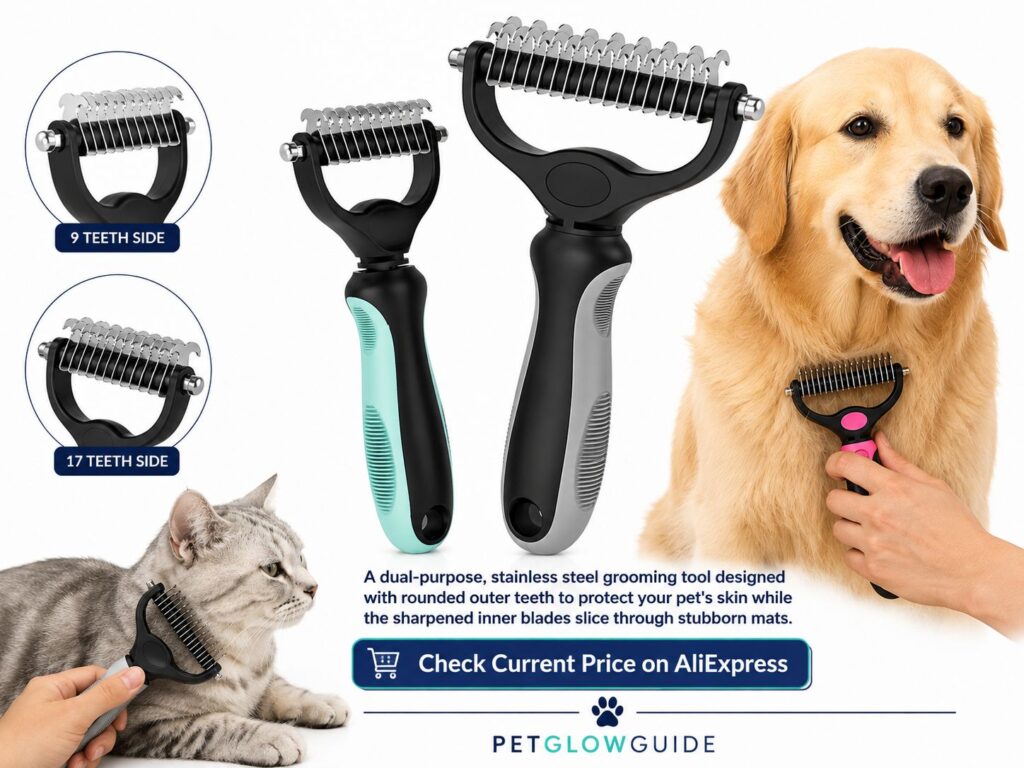
A dual-purpose, stainless steel grooming tool designed with rounded outer teeth to protect your pet’s skin while the sharpened inner blades slice through stubborn mats.
Check Current Price on AliExpress
Coat Compatibility: Is This Tool Right for Your Pet?
Using the wrong grooming tool can seriously damage your pet’s coat. Before you buy, make sure this tool is actually meant for your furry friend.
-
Best For: Double-coated dogs (like Golden Retrievers, Huskies, German Shepherds, and Pomeranians) and long-haired cats (like Maine Coons, Ragdolls, and Persians).
-
Avoid On: Single-coated or short-haired breeds (like Pugs, Boxers, Pitbulls, or short-haired domestic cats). Using an undercoat rake on these pets can scrape their skin and ruin their topcoat.
Alternatives to Dematting Rakes
If a double-sided rake isn’t the right fit, consider these options:
-
Slicker Brushes: Fantastic for daily top-coat brushing and removing surface dirt, but they won’t penetrate deep, heavy mats.
-
Grooming Gloves: The perfect, gentle option for short-haired breeds that just need a little help managing surface shedding.
-
Professional Grooming: If your pet’s coat is severely “pelted” (the fur forms a solid, hard sheet tight against the skin), do not try to comb it out. This requires a professional groomer or vet to safely shave the coat using clippers.
Pre-Purchase Checklist: What to Look for Before Buying
When shopping for an undercoat deshedding rake, double-check these three things:
-
Rust-Resistant Material: Look for stainless steel teeth for hygiene and longevity.
-
Two-Sided Spacing: Make sure the rake has both a wide side (around 9 teeth) for tangles and a narrow side (around 17 teeth) for thinning.
-
Comfort Grip: Dematting takes time. A soft, rubberized, anti-slip handle is a must to keep your hand from cramping.
Frequently Asked Questions
Does a dematting rake hurt dogs or cats?
No, as long as it’s used correctly. The rounded outer teeth are designed specifically to prevent scratching. However, pulling hard on a mat without holding the base of the fur will cause pain. Always hold the hair at the root to protect their skin.
Should I wet the fur before using a dematting rake?
No. You should only use a dematting rake on dry fur. Wetting a mat causes the hair fibers to swell and lock together, making the knot much tighter and harder to remove.
How often should I use an undercoat dematting rake?
For double-coated breeds, using the deshedding side once or twice a week is usually perfect, especially during heavy spring and fall shedding seasons.
Can I use a dematting comb on severe pelleted mats?
No. Extreme pelleted matting—where the fur feels like a solid, hard shell tight against the skin—cannot be safely combed out. Trying to pull it apart risks tearing the skin. Severe cases like this require a professional groomer or vet to carefully shave the mats away.
Share :

numan anwar
Pet care enthusiast sharing practical, well-researched guides to help dog and cat owners make confident everyday decisions.
Leave a comment