This post contains affiliate links. If you purchase through them, we may earn a commission at no extra cost to you.
If you’ve ever wrestled a stressed-out cat into a hard plastic crate, you already know why soft cat carrier bags have caught on. They’re easier to carry, less intimidating for your cat, and often keep them closer to you during a walk, a vet trip, or a quick errand.
But “soft and cute” isn’t the same as “safe and well-made.” Here’s what actually matters before you buy one.
Pet carriers should offer adequate airflow and be properly sized and secured for the animal inside. Look for mesh panels or open sections that let air move freely, plus closures — zippers, clips, or tethers — your cat can’t easily push open from the inside.
Matching the carrier’s size and material to your specific cat is standard veterinary advice for reducing carrier-related stress. So is acclimating your cat gradually and giving them a way to feel hidden, like a cover or flap. Too tight, and your cat will feel squeezed. Too loose, and they can shift into an awkward or unsafe position.
A good carrier should be simple to get your cat in and out of, easy to clean, and roomy enough that they’re not cramped. Wide openings or zip-top access tend to beat a single small opening here.
Worth knowing before you buy: carriers secured with a seat belt need to be crash-test certified. Belting in a non-certified carrier can actually crush it during a sudden stop. Most soft sling-style and shoulder-bag carriers — including the one below — aren’t built as car restraints. They’re made for carrying and short trips on foot, not driving. If you need something for regular car travel, look for a crash-test certified option, or use a secured hard-sided carrier instead.
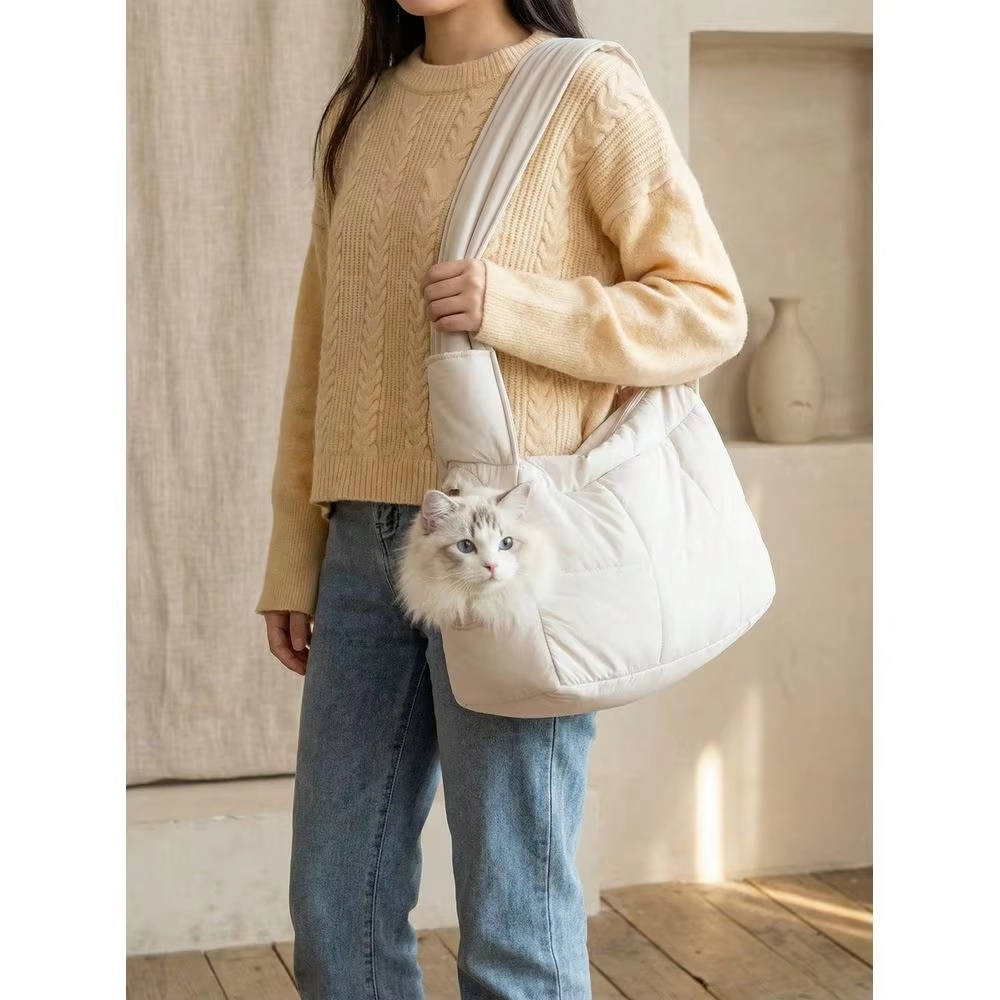
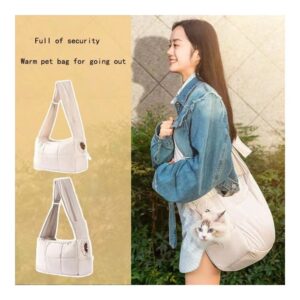
This one fits the soft, sling-style category: a quilted, cream-colored shoulder bag with a round head-opening that lets your cat’s head and front paws stay out while the rest of their body stays supported inside.
What we can confirm from the photo: a padded, cross-body-style strap, a quilted exterior, and a head-opening positioned so your cat can rest comfortably while being carried.
What we can’t confirm without checking the listing: exact weight capacity, interior dimensions, fabric composition, and whether it includes an internal safety tether. The listing also describes it as suitable for small dogs — we haven’t independently verified that, so check the size and weight range against your own pet before assuming it fits.
Pros:
Cons:
Who it’s good for: small-to-medium cats who don’t mind being visible, for short walks, errands, or similar outings.
Who should look elsewhere: anxious or hiding-prone cats, larger cats near the (currently unconfirmed) weight limit, or anyone needing a car-safe or airline-compliant carrier.
👉 Check the current listing and price here
Hard-sided carriers: heavier and less flexible, but sturdier and easier to crash-test certify — often the better call for car or air travel.
Backpack-style carriers: spread the weight across both shoulders instead of one, which can help on longer walks, though they usually enclose the cat fully rather than offering a head-opening.
Are soft-sided cat carriers safe?
They can be, as long as they offer good ventilation, a secure closure, and the right size for your cat. They’re generally not a substitute for a crash-tested carrier in a vehicle.
What size carrier does my cat need?
Match the carrier’s size and material to your cat’s actual measurements, not just the photos. Vets recommend enough room for comfort without leaving space for your cat to escape.
Can I use a cat carrier bag in the car?
Not safely, unless it’s specifically crash-test certified. A non-certified carrier shouldn’t be belted in — it can crush under a sudden stop. Use a certified or hard-sided option for driving.
Can dogs use cat carrier bags too?
Some soft carriers are marketed for both, but it comes down to the dog’s actual size and weight versus the carrier’s rated capacity. We couldn’t verify the dog-suitability claim for the pick above, so check the listing directly.
How do I get my cat used to a carrier?
Leave it out at home, add familiar bedding, and let your cat explore it at their own pace before any travel day. Giving them a way to feel hidden inside — a blanket or cover works — helps too.