


General information for dog owners. This article cannot diagnose your dog and does not replace a veterinary exam.
Watching a dog hesitate at the bottom of the stairs, or take a long moment to get up from a nap, can be worrying. These changes often creep in slowly, which makes them easy to dismiss at first. One possible explanation is arthritis, a joint problem that is common in dogs. This guide explains the signs to look for, what can lead to arthritis, how vets approach diagnosis and care, and what you can do at home to keep your dog comfortable.
Quick answer: Arthritis in dogs is a long-term joint condition. It cannot be cured, but a veterinarian can often help manage the pain and slow its progress. If you notice signs of it, book a veterinary exam instead of guessing, and do not give your dog human pain relievers unless your vet tells you to.
What Is Arthritis in Dogs?
Arthritis means inflammation and wear in one or more joints. In dogs, the most common form is osteoarthritis (OA). In a healthy joint, smooth cartilage and joint fluid cushion the bones as they move. With OA, the cartilage gradually thins and the bone around the joint changes, so movement becomes stiff and painful.
Cornell’s Riney Canine Health Center describes osteoarthritis as a chronic, progressive joint disease that can start at any age, not just in senior dogs. VCA Animal Hospitals cites estimates that osteoarthritis affects at least 1 in 5 dogs over age one and about 8 in 10 dogs over age eight.
Arthritis is one of several long-term health conditions covered in our guide to common dog diseases.
Signs of Arthritis in Dogs
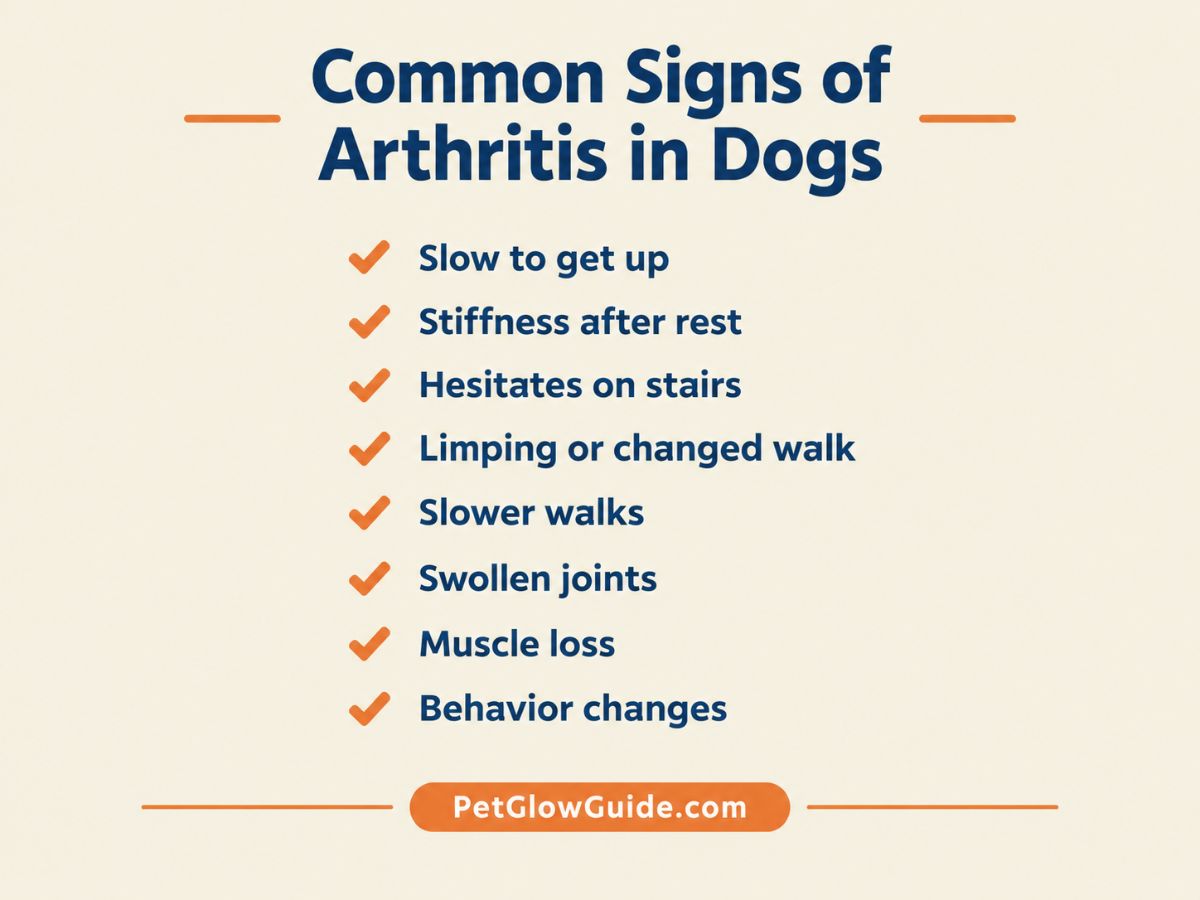
The signs vary from mild to severe, and a dog may not show all of them. Look for changes like these:
- Slow or difficult getting up from lying down
- Stiffness, especially after rest
- Hesitating before stairs, or before jumping onto furniture or into the car
- Limping or a change in the way your dog walks
- Slower walks, tiring sooner, or less interest in exercise
- Swollen joints
- Muscle loss
- Not wanting to be touched in certain spots
- Irritability or sudden changes in behavior
If your dog is mainly limping on a rear leg, our guide to a dog limping on a back leg explains common causes and urgent warning signs.
How Signs Can Look Day to Day

Many dogs are stiffest when they first get up after resting. According to MSPCA-Angell veterinary surgeon Dr. Sue Casale, a dog may loosen up as it moves and then seem sorer later, after a long walk or lots of play. A flare-up can also happen if the joint is twisted or injured further, so a sudden change deserves attention.
What Can Lead to Arthritis in Dogs?
There is usually no single cause. For most dogs, several factors add up over time. Some of the most common ones are below.
| Factor | What it means |
| Hip or elbow dysplasia | The joint develops abnormally, which can wear the cartilage. Signs can appear as early as one year of age. |
| Cruciate ligament injury | Damage to a ligament in the knee leaves the joint unstable. A torn cruciate ligament in the knee is one example, and our back-leg limping guide covers how it can look. |
| Luxating patella | The kneecap dislocates, or slips out of place. |
| Past fractures or joint injuries | Earlier damage to a joint can lead to arthritis later. |
| Extra body weight | More weight adds force to the joints. Body fat also produces substances that promote inflammation. |
| Body build and activity history | A dog’s conformation and how active it has been can both play a part. |
Is It Just Old Age?
Arthritis is more common in older dogs, but age alone is not considered the cause. VCA’s veterinary authors say that simple aging is not a cause of OA. Joint development, past injuries, and body weight tend to add up over the years instead. Not sure when your dog counts as a senior? See what age a dog is considered senior.
When to Call Your Vet
Book a veterinary exam if you notice any of the signs above, even if they seem mild. Cornell notes that the sooner OA is diagnosed and managed, the better the long-term outlook, so early care matters.
Sudden, severe limping is a different situation from slow stiffness. The back-leg guide linked above explains which signs call for urgent veterinary care. If your dog also seems unwell in other ways, see other warning signs that your dog may be sick.
A few notes can make the visit more useful:
- When the stiffness is worst, such as after rest or after walks
- Which activities are hard, such as stairs, jumping, or getting into the car
- Which leg or joint seems affected
- Any medicines or supplements your dog currently takes
- A short phone video of your dog walking and getting up, which can show your vet what you see at home
How Vets Diagnose Arthritis
Your vet will watch how your dog walks and stands, and feel the joints for swelling, changes, or pain. X-rays may be used to look at the joint and to find underlying orthopedic problems. In some cases, more advanced imaging such as CT or MRI, or arthroscopy, may be recommended to see the cartilage and soft tissues around the joint.
How Arthritis Is Managed
There is no cure for OA, but many dogs can live comfortably with a combination of approaches. Cornell describes the goals as reducing pain, slowing damage to the joint, and keeping up muscle. Your vet will tailor the plan to your dog’s age, health, and which joints are affected.
Weight Control
Keeping a dog lean takes pressure off the joints, which is why weight control is a key part of managing arthritis. Your vet can help you set a realistic target and choose a feeding plan.
Low-Impact Exercise
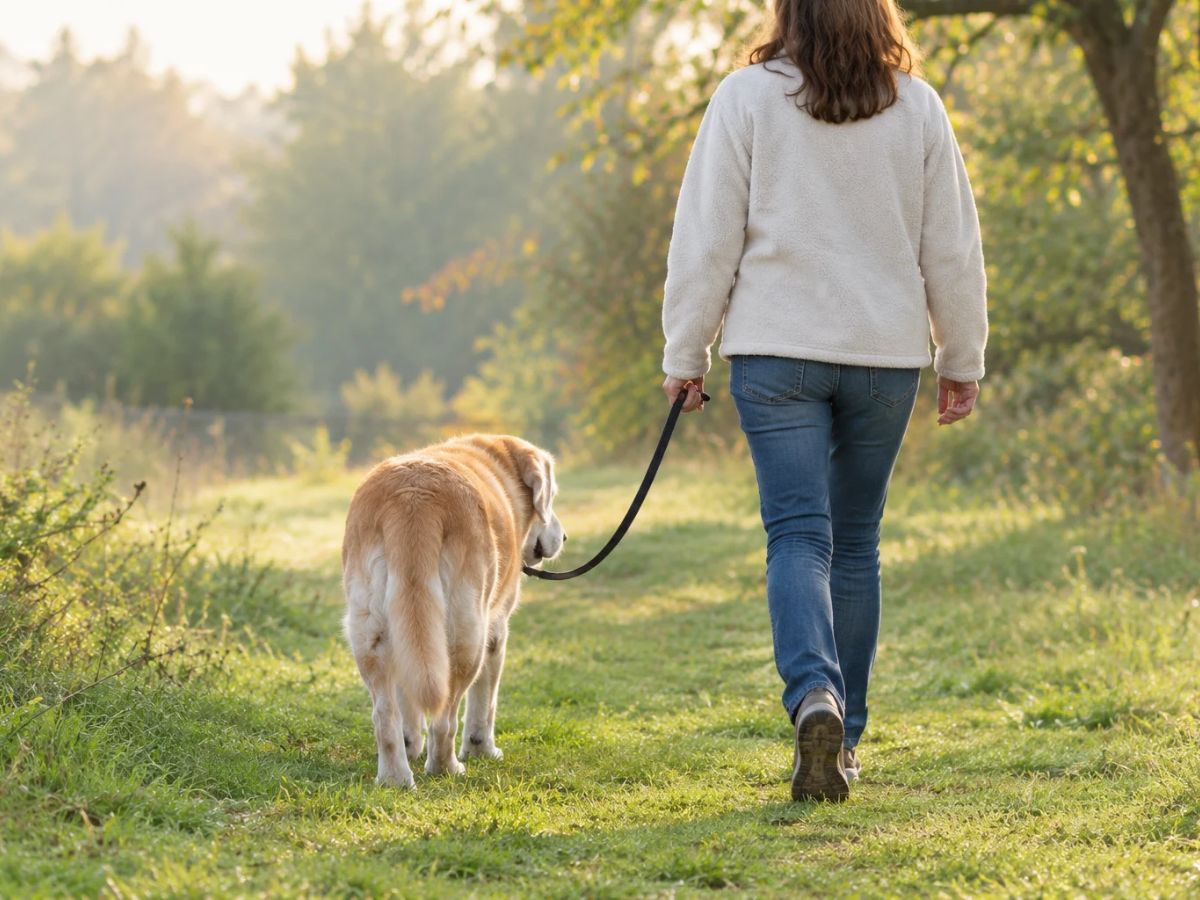
Gentle movement helps, but the amount matters. Cornell lists leash walks and swimming as low-impact options. MSPCA-Angell surgeon Dr. Sue Casale suggests a simple check: if your dog is not more lame after an activity, that level is likely appropriate, though she notes that more studies are needed.
Physical Rehabilitation
Some dogs benefit from rehabilitation, which can include range-of-motion exercises and underwater treadmill work. Your vet can refer you to a rehabilitation specialist if it makes sense for your dog.
Pain Medication Prescribed by a Vet
Nonsteroidal anti-inflammatory drugs (NSAIDs) are commonly prescribed for OA pain. A dog on an NSAID for a long time needs routine monitoring, and the FDA suggests asking your vet about blood tests before starting and rechecking them regularly. Never change a dose on your own.
Joint Supplements
Some owners ask about joint supplements. Evidence varies, so ask your vet whether any supplement is appropriate for your dog, especially if your dog already takes medication.
Surgery for Some Underlying Causes
If arthritis is linked to a problem such as hip dysplasia or a torn cruciate ligament, surgery may be recommended for that underlying cause. Your vet can explain whether it applies to your dog.
Don’t Give Human Pain Relievers Without Asking Your Vet
When a dog seems sore, it is tempting to reach for the medicine cabinet. Don’t. The FDA says no over-the-counter NSAIDs are approved for dogs, so ask your vet before giving any pain reliever. Medicines made for people, such as ibuprofen or naproxen, can be absorbed and processed differently in dogs and may cause serious side effects. Acetaminophen can also cause serious harm in dogs. The same caution applies to leftover medicine prescribed for another pet, because it may not be right for your dog.
Making Your Home More Comfortable
Small changes can make daily life easier for a dog with sore joints:
- Put non-slip rugs or mats on slick floors
- Use a ramp or step so your dog can reach the bed, couch, or car
- Provide soft, padded bedding
- Raise food and water bowls to a comfortable height

Can Arthritis Be Prevented?
Not always, but you can improve the odds. VCA points to keeping a dog lean through growth and adulthood as the most effective step. MSPCA-Angell adds that treating injuries such as ligament tears early may help slow arthritis. Some risk factors, such as genetics, cannot be changed.
Frequently Asked Questions
Can arthritis in dogs be cured? No. Osteoarthritis cannot be cured, but pain and progression can often be managed with your vet’s help.
Can young dogs get arthritis? Yes. It can develop at any age, especially after joint problems such as dysplasia or an injury.
Do dogs with arthritis always limp? No. Limping is only one possible sign. Others include stiffness, slowness getting up, and hesitation on stairs.
Is exercise good for a dog with arthritis? Gentle, controlled exercise is usually part of the plan, but the right amount depends on your dog. Ask your vet to guide you.
Can I give my dog ibuprofen or other human pain medicine? No. Talk to your vet first. Human pain relievers can be unsafe for dogs.
Quick Glossary
- Arthritis: inflammation and wear in one or more joints.
- Osteoarthritis (OA): the most common type of arthritis in dogs, in which joint cartilage gradually breaks down.
- Cartilage: the smooth tissue that cushions the ends of bones in a joint.
- Lameness: the veterinary word for limping or an uneven walk.
- NSAID: a nonsteroidal anti-inflammatory drug, a type of pain reliever. Only vet-prescribed NSAIDs should be used for dogs.
- Orthopedic: relating to bones, joints, and muscles.
The Bottom Line
Arthritis is common in dogs and often shows up as stiffness, slowness, or hesitation rather than obvious limping. It cannot be cured, but early veterinary care and a plan that combines weight control, gentle exercise, home changes, and vet-prescribed treatment can help many dogs stay comfortable. If your dog is showing these signs, book a veterinary exam, keep notes on what you see, and don’t give human pain relievers unless your vet says so.
Sources
- Osteoarthritis, Cornell University College of Veterinary Medicine, Riney Canine Health Center
- Arthritis in Dogs, VCA Animal Hospitals
- Understanding Canine Arthritis, MSPCA-Angell
- Get the Facts about Pain Relievers for Pets, U.S. Food and Drug Administration
Share :

numan anwar
Pet care enthusiast sharing practical, well-researched guides to help dog and cat owners make confident everyday decisions.
Leave a comment