


Finding crusty scabs on your dog can be concerning, especially if the skin looks red or your dog keeps scratching. Scabs can develop for several reasons, including irritation, parasites, allergies, and bacterial skin infections.
Not every scab is a sign of infection. Different skin conditions can look similar, so the appearance of a scab alone cannot tell you what is causing it.
This guide explains common causes of crusty scabs on dogs, signs that need attention, what to avoid applying at home, and when to contact your veterinarian.
What Do Crusty Scabs on Dogs Look Like?

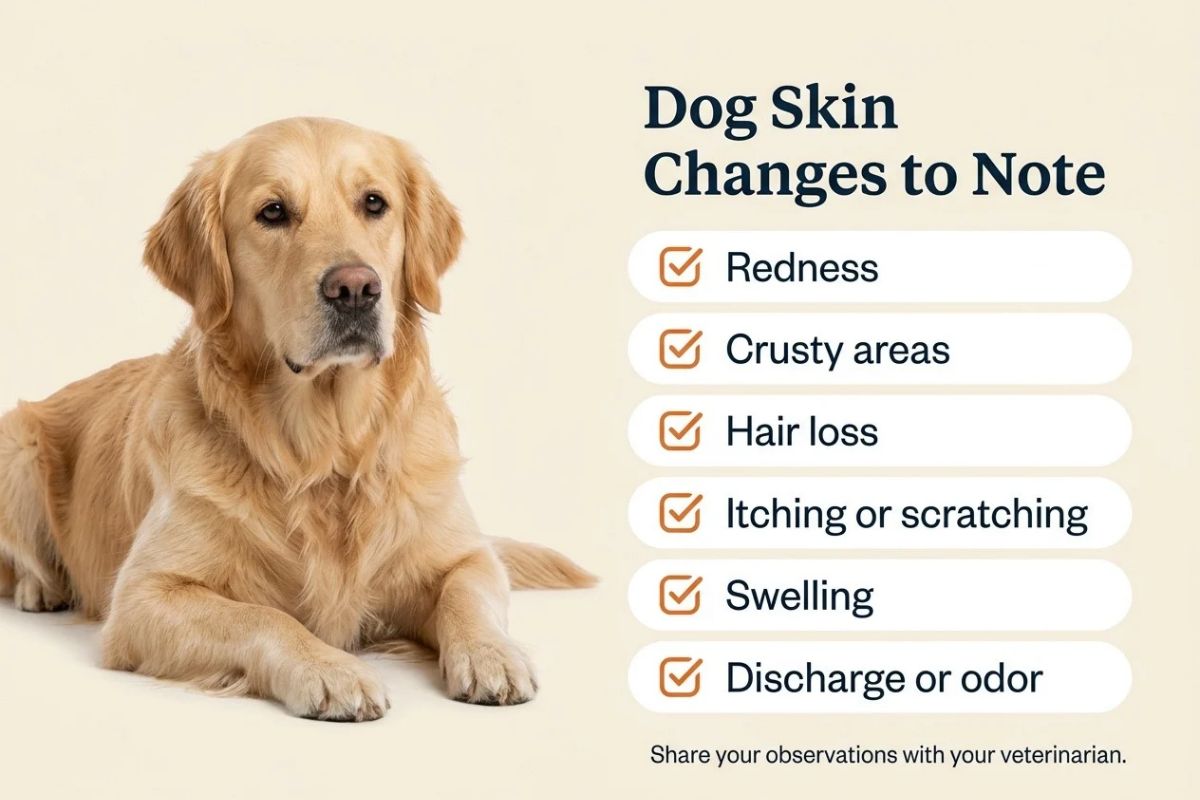
Crusty scabs may appear as small, dry patches or larger areas of affected skin. Depending on the cause, you might also notice:
- Redness, scaling, or irritated skin
- Hair loss around affected patches
- Frequent scratching, licking, or chewing
- Swelling or tenderness
- Fluid, discharge, or an unusual odor
Some dogs show several of these signs, while others have only one or two. The location of the scabs, how long they have been present, and whether they are getting worse can help your veterinarian assess the problem.
Can You Tell If a Scab Is Infected by Looking at It?
Not reliably. Bacterial skin infections can cause crusting, scaling, and hair loss. More severe infections may also involve pain, swelling, odor, or discharge.
However, other skin conditions can produce similar changes. These signs can raise concern about an infection, but they do not confirm the diagnosis.
The Merck Veterinary Manual’s guide to pyoderma in dogs explains the signs associated with bacterial skin infections.
What Causes Crusty Scabs on Dogs?
Several conditions can cause crusting or damage to a dog’s skin. Identifying the underlying cause is important because treatment depends on the problem.
1. Bacterial Skin Infections
Bacterial skin infections, commonly referred to as pyoderma, may cause scaling, scabs, and patches of hair loss. Deeper infections can produce more pronounced inflammation, pain, odor, or discharge.
An infection may also occur alongside another skin problem. For example, allergies or parasites can trigger itching and skin damage, which may contribute to secondary infection.
A veterinarian can assess whether a bacterial infection is likely and determine whether additional testing is needed.
2. Fleas, Mites, and Other Parasites
External parasites can irritate the skin and trigger itching. Repeated scratching, licking, or chewing may then damage the skin and contribute to scabs.
Not seeing fleas does not rule out every parasite-related problem. Other causes, including allergies and infections, can also cause itching.
If your dog has persistent scratching, hair loss, or recurring scabs, ask your veterinarian whether parasite checks are appropriate.
3. Allergies and Repeated Scratching
Allergies can cause itchy, inflamed skin in dogs. A dog may repeatedly scratch, lick, or chew the affected areas, causing further skin damage.
In some cases, inflammation and secondary infection may occur together. However, itching alone does not establish that your dog has an allergy.
The Merck Veterinary Manual’s guide to itching in dogs explains several possible causes of persistent itching.
4. Hot Spots and Skin Irritation
Hot spots are inflamed skin lesions that can worsen when a dog repeatedly licks or scratches the area. Allergies, external parasites, and moisture trapped in the coat can contribute to their development.
A hot spot may look different from a dry scab, but both can involve irritated or damaged skin. If an area becomes increasingly painful, wet, swollen, or inflamed, contact your veterinarian instead of assuming it is a minor skin problem.
Read more in Cornell University College of Veterinary Medicine’s guide to hot spots.
5. Other Skin Conditions
Irritants, trauma, and other skin disorders can also cause crusting. Some problems recur when the underlying cause has not been identified or addressed.
Because the signs can overlap, avoid choosing a treatment based only on how the skin looks. The Merck Veterinary Manual’s overview of dermatitis and skin problems in dogs explains the different causes of skin inflammation.
How Can You Tell If a Dog’s Scab May Be Infected?
Pay attention to changes that are new, persistent, or getting worse. Concerning signs include:
- Increasing redness or swelling
- Pain or sensitivity around the affected area
- Pus or other discharge
- An unusual or unpleasant odor
- Scabs spreading to new areas
- Hair loss around affected patches
- Persistent licking, scratching, or chewing
These signs do not prove that bacteria are responsible, but they warrant veterinary attention, especially when several occur together.
Contact your veterinarian promptly if the skin is worsening, painful, swollen, or producing discharge. Seek urgent veterinary care if the problem progresses rapidly or your dog seems seriously unwell.
What Should You Do If Your Dog Has Crusty Scabs?
Your next steps depend on the severity of the skin problem and how your dog is behaving. These precautions can help you avoid making the situation worse while arranging appropriate advice.
1. Observe the Skin Without Picking at It
Note where the scabs are located, how many areas are affected, and whether the skin is changing. If it is safe to do so, take a clear photograph to help you track changes and explain the problem to your veterinarian.
Do not try to diagnose the condition from a photograph alone.
2. Prevent Further Scratching or Licking
Repeated licking, chewing, and scratching can cause additional skin damage. Ask your veterinarian how to prevent your dog from irritating the affected area.
A protective collar may be useful in some situations, provided it fits properly and does not interfere with eating, drinking, or breathing. It should not replace veterinary assessment when the skin is painful or worsening.
3. Do Not Peel Off the Scabs
Avoid picking, peeling, or scrubbing crusty areas. This may irritate the skin or cause further damage.
Do not shave or cut hair close to a painful or damaged area unless your veterinarian recommends an appropriate approach.
4. Avoid Unapproved Home Remedies
Do not experiment with household products, essential oils, human creams, or leftover medications.
In particular, avoid applying rubbing alcohol or hydrogen peroxide to wounds unless your veterinarian specifically directs you to do so. These products may delay healing or damage tissue. Other products may also be unsuitable depending on the underlying condition.
The VCA Animal Hospitals guide to wound care explains what to avoid when caring for an injured pet.
Do not give leftover antibiotics or other medication without veterinary advice. The right treatment depends on the diagnosis.
5. Contact Your Veterinarian When Needed
Arrange an examination if the scabs spread, keep returning, become painful, or occur with persistent itching, hair loss, odor, or discharge.
If your dog seems uncomfortable or the condition is getting worse, do not wait for it to become severe before seeking advice.
When Should You Take Your Dog to the Vet?
A veterinary assessment is particularly important when you notice:
- Increasing redness or swelling
- Pain, tenderness, or persistent irritation
- Pus or other discharge
- A strong or unusual odor
- Scabs spreading to other areas
- Recurring skin problems or unexplained hair loss
- Scratching that repeatedly damages the skin
Seek urgent veterinary care if the skin problem is rapidly worsening, the damage is extensive, your dog is in severe pain, or your dog seems seriously unwell.
A veterinarian can help determine whether the problem involves infection, parasites, allergies, or another condition and recommend appropriate next steps.
How Do Vets Diagnose and Treat Dog Skin Scabs?
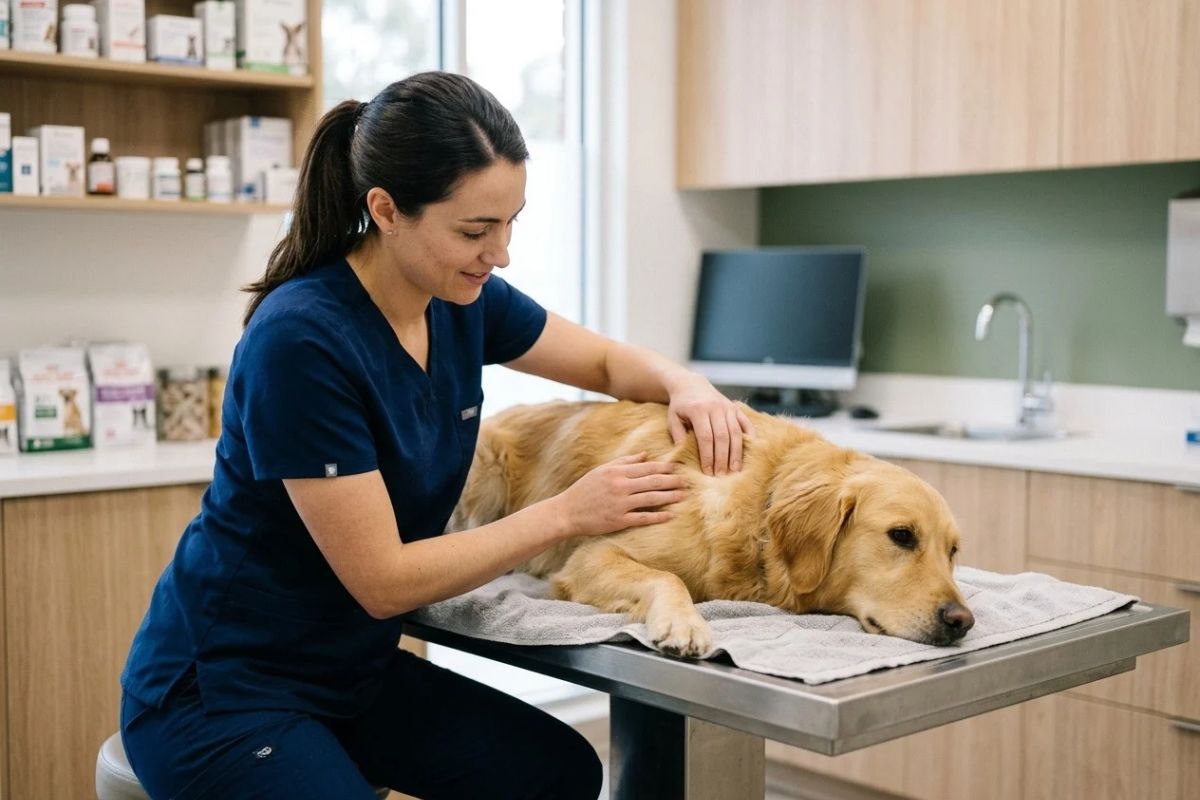
A veterinarian will review your dog’s history and examine the affected skin. Depending on the findings, diagnostic tests may include skin scrapings, examination of hair or skin samples, cultures, blood or urine tests, or a biopsy.
Not every dog needs every test. The appropriate tests depend on the suspected cause, the examination findings, and your dog’s overall health.
See the Merck Veterinary Manual’s guide to diagnosing skin disorders in dogs for more information.
Why Treatment Depends on the Cause
There is no single treatment that is appropriate for every dog with crusty scabs.
A parasite-related problem may require parasite control, while a bacterial infection may need infection-specific treatment. If allergies or another underlying condition contribute to the skin damage, that issue may also need attention.
Your veterinarian can recommend a plan based on the diagnosis and severity of the condition. Do not assume that antibiotics, medicated shampoos, or topical creams are necessary or suitable for every case.
Frequently Asked Questions
Why Does My Dog Have Scabs but No Fleas?
Scabs can develop even when you do not see fleas. Possible causes include other parasites, allergies, bacterial infections, irritation, and other skin conditions.
If the problem persists or your dog is uncomfortable, ask your veterinarian to assess the skin and determine what may be causing it.
What Does an Infected Scab Look Like on a Dog?
A potentially infected area may show worsening redness, swelling, pain, crusting, an unusual odor, or discharge. Some bacterial skin infections can also cause hair loss.
These signs do not confirm an infection, so veterinary assessment may be needed to identify the cause.
Can Crusty Scabs on Dogs Heal Without Treatment?
That depends on the cause and severity. A minor injury may heal, but scabs associated with an ongoing infection, parasites, allergies, or repeated scratching may persist or return.
Do not assume a recurring or worsening skin problem will resolve on its own. Seek veterinary advice if you are unsure or notice concerning changes.
Can I Use Human Cream on My Dog’s Scabs?
Do not apply human creams or medicated products without checking with your veterinarian. A product that is appropriate for one condition may be unsuitable for another, and some ingredients may pose risks if a dog licks them.
Ask your veterinarian what, if anything, should be applied to the affected skin.
Should I Remove or Peel Off My Dog’s Scab?
Avoid picking, peeling, or scrubbing the scab. This can irritate the skin or cause further damage.
If the area is painful, wet, swollen, or difficult to assess, have your veterinarian examine it rather than trying to remove the crust yourself.
Final Thoughts
Crusty scabs on dogs can have several causes, including parasites, allergies, irritation, and bacterial skin infections. Their appearance alone cannot reliably identify the problem.
Observe changes in your dog’s skin, avoid picking at scabs or applying unapproved products, and seek veterinary advice if the areas worsen, become painful, produce discharge, or keep returning.
Identifying the underlying cause is the best way to determine what care your dog needs.
This article provides general educational information and is not a substitute for veterinary examination, diagnosis, or treatment.
Share :

numan anwar
Pet care enthusiast sharing practical, well-researched guides to help dog and cat owners make confident everyday decisions.
Leave a comment