

This article may contain affiliate links. If you purchase through these links, we may earn a small commission at no extra cost to you.
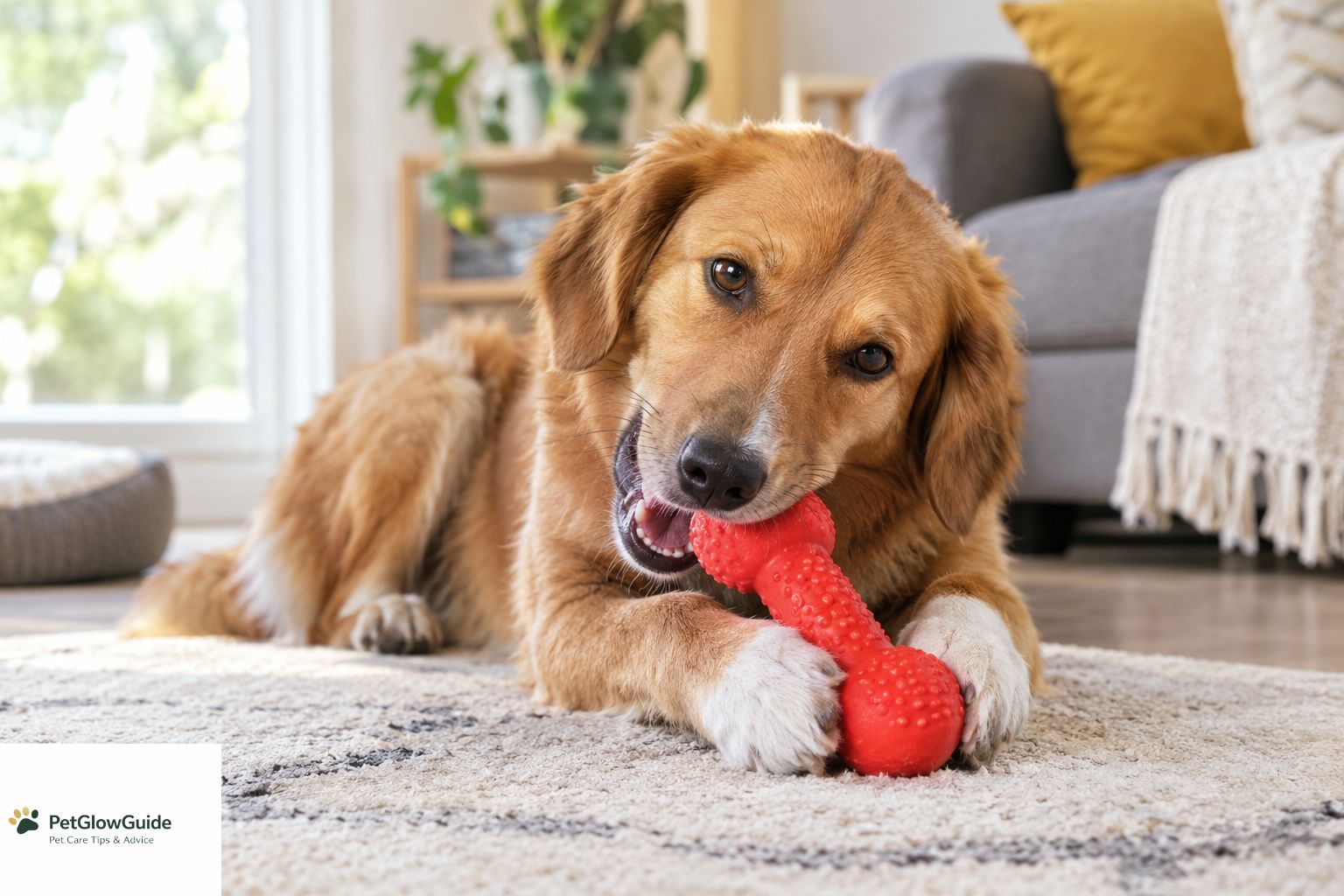
Chewing is one of the most natural things a dog does. It relieves stress, keeps jaws active, and can support dental health when the right toy is used. But not every chew toy on the market is actually safe — some popular options carry real risks, including tooth fractures and choking hazards.
This guide explains what chew toys are for, which materials are generally safer, which ones to avoid, and how to choose the right chew for your dog’s size, age, and chewing style.
Why Dogs Need Chew Toys
Chewing isn’t just a habit — it’s an instinct dogs are born with. Puppies chew to relieve teething discomfort, while adult dogs chew to relieve stress, stay mentally engaged, and satisfy a natural urge to gnaw. Without an appropriate outlet, that instinct often gets redirected toward furniture, shoes, or anything else within reach.
Giving your dog a suitable chew toy isn’t just about entertainment. It gives them a safe, approved outlet for a behavior they’re going to do anyway, and in some cases supports jaw and gum activity as part of a broader dental care routine.
Chew toys also offer mental stimulation, especially ones that make a dog work a little to get a reward. If your dog enjoys that kind of challenge, an interactive puzzle-style toy can be a useful addition alongside regular chew toys — we cover that in more detail in our full guide to dog toys.
Types of Chew Toys and Chews
Not all chews behave the same way once your dog gets to work on them. Understanding the difference helps you make safer choices.
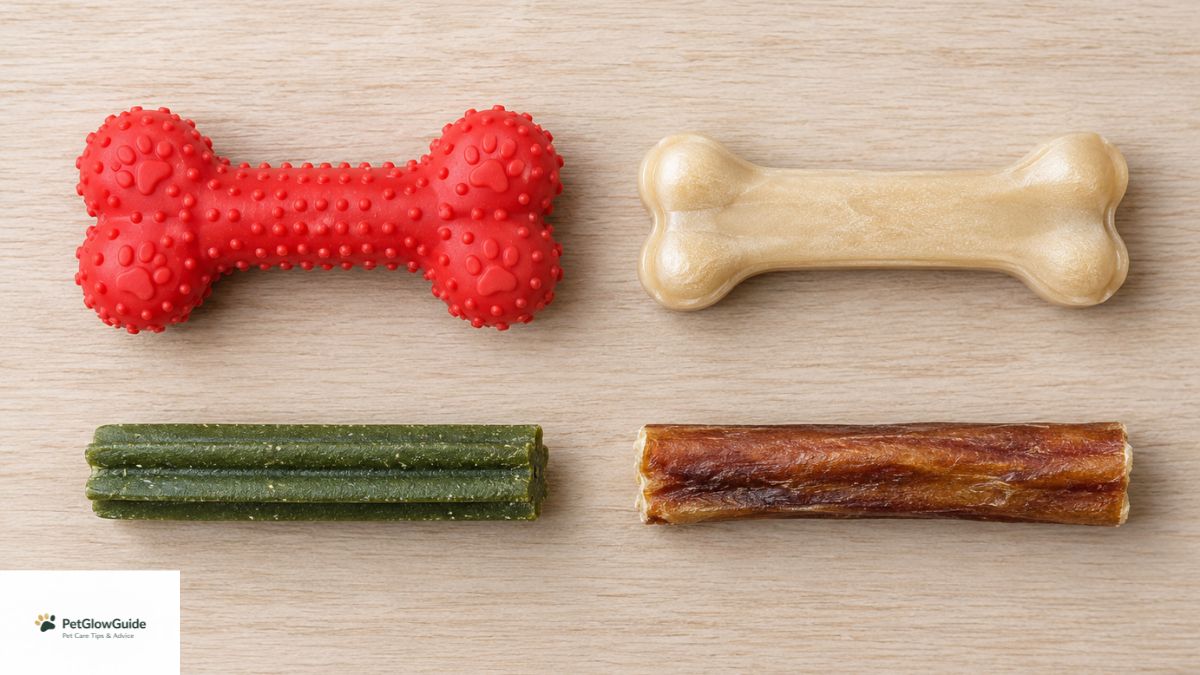
Different chew types suit different needs — durability, dental benefit, or digestibility.
| Type | Digestible? | General Risk Level | Notes |
|---|---|---|---|
| Natural rubber or silicone toys | No | Lower | Durable, flexible, widely used |
| Nylon chews | No | Moderate | Can be very hard; check flexibility |
| Dental chews | Partially | Lower to moderate | Supports tooth/gum health but doesn’t replace brushing |
| Bully sticks / tendon chews | Yes | Moderate | Digestible, but the last small piece is still a choking risk |
| Rawhide | No | Moderate to higher | Needs supervision; large swallowed pieces can cause blockage |
| Real bones / bone treats | No | Higher | Linked to tooth fractures and internal injury (see below) |
Rubber and Silicone Chew Toys
Natural rubber and food-grade silicone toys are among the most commonly recommended options, largely because they combine durability with some flexibility. A toy with a bit of give is less likely to cause tooth damage than something completely rigid.
When choosing one, look for solid construction, no small parts that could break off, and a size that matches your dog’s mouth and jaw strength.
The Cross-border Pet Dog Leakage Toy Ball is one option in this category — a rubber ball with raised, tooth-like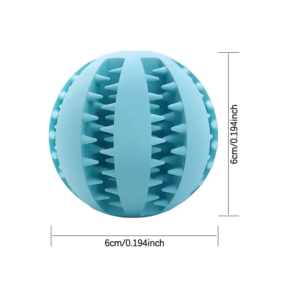 ridges built for chewing and treat dispensing. It currently holds a 4.9-star rating from over 1,400 reviews. As with any listing, check the current product details, size options, and recent buyer feedback before purchasing. See available options
Dental Chews
Dental chews are designed to support gum and tooth health by encouraging longer, more thorough chewing. Some products in this category have been independently tested for plaque and tartar reduction through the Veterinary Oral Health Council (VOHC), which maintains a list of accepted products.
They’re a helpful addition to a dental care routine, but not a substitute for regular toothbrushing.
Digestible Chews (Bully Sticks and Similar)
Digestible chews, like bully sticks and tendon chews, break down in a dog’s stomach if swallowed, which generally makes them lower-risk than indigestible chews. That said, they still require supervision — the biggest risk usually comes near the end, when a small enough piece can be swallowed whole.
Chews and Materials to Avoid or Use With Caution
Some popular chew options carry more risk than many owners realize. Not every dog that’s chewed one has had a problem, but the risks below are well documented enough to warrant caution.
- Real bones and bone treats — linked to broken teeth, oral injuries, and internal blockages
- Antlers — very hard, and a common cause of tooth fractures seen by veterinary dentists
- Hard nylon bones — some are hard enough to crack teeth, especially with strong chewers
- Cooked bones of any kind — can splinter into sharp fragments
Why Real Bones Carry Risk
The U.S. Food and Drug Administration has published a consumer warning specifically about bone treats — bones that are processed, sometimes flavored, and sold as dog chews. According to the FDA’s Center for Veterinary Medicine, giving a dog a bone treat can lead to outcomes ranging from a vet visit to emergency surgery, and in some reported cases, death. The agency’s records include reports of gastrointestinal obstruction, choking, and oral injuries connected to bone treats.
That doesn’t make every bone-shaped product automatically dangerous, but it’s a strong reason to be cautious with anything in the “real bone” category, cooked or not.
How to Choose a Safe Chew Toy
A few simple checks help you avoid the most common chew toy mistakes:
- Choose a size that matches your dog’s mouth — too small becomes a choking risk, too large and your dog may lose interest
- Check for small, detachable parts (eyes, bells, plastic pieces)
- Avoid anything so hard it can’t flex slightly under pressure
- Replace any chew once it’s worn down enough to be swallowed
- Supervise your dog with a new chew toy the first few times
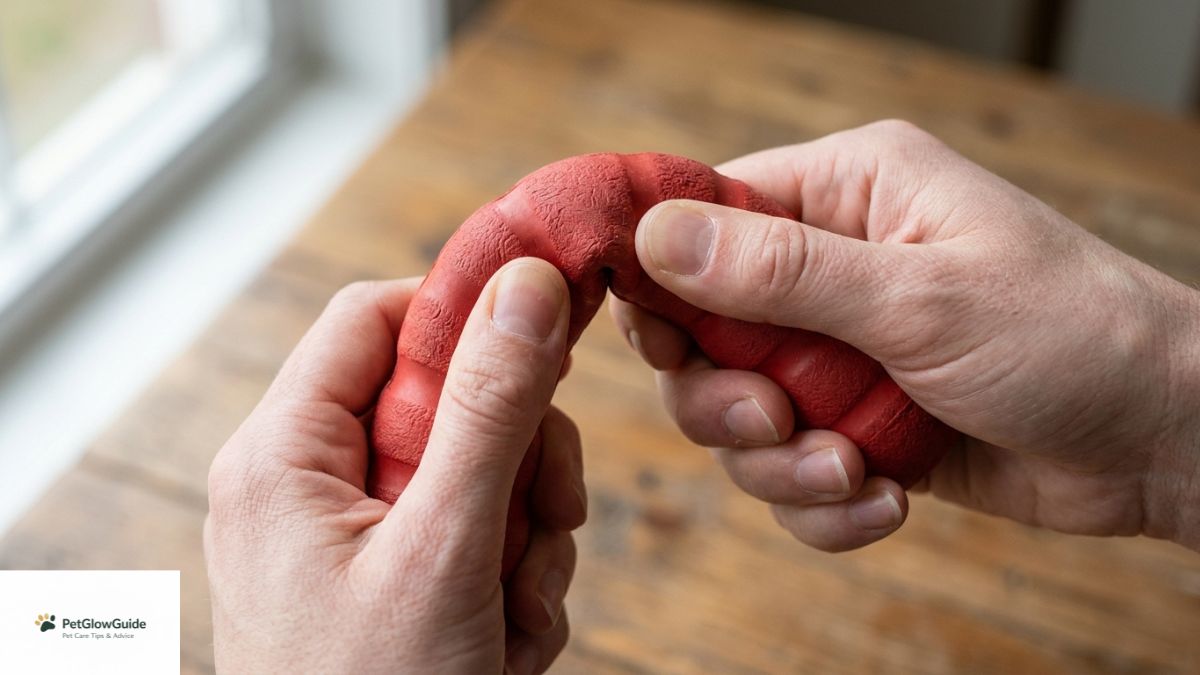
The Flex Test (Simple Hardness Check)
Veterinary dental sources commonly recommend a simple way to judge whether a chew is too hard for a dog’s teeth:
- Gently press your fingernail into the surface of the chew.
- If it leaves a slight indentation, it’s more likely to be safe for teeth.
- If the chew doesn’t flex or give at all, it’s probably too hard. Dogs bite down at an angle, and hard objects that don’t flex can crack a tooth.
This isn’t a guarantee of safety, but it’s a useful, practical check before handing over any new chew.
Choosing Chew Toys by Dog Size and Chewing Style
Every dog chews differently. A toy that’s perfect for one dog may be completely wrong for another.
Chew Toys for Puppies
Puppies go through a teething phase where softer, more flexible chews are usually more appropriate than the harder options made for adult dogs. Puppy-specific chews are typically softer, sized for smaller mouths, and sometimes textured to help soothe sore gums.
The Squeaky Plush Duck Dog Toy fits thiscategory 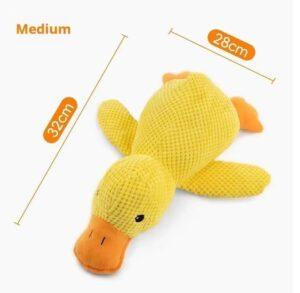 — a plush toy with a built-in squeaker, marketed as a teething and comfort companion for puppies, with a 4.9-star rating from close to 100 reviews. Since it’s plush rather than a hard chew, it suits gentle chewers best and should be supervised closely, especially once stitching or stuffing starts to show wear. See puppy-safe chew toy options
If your dog is a light chewer and just needs something fun to carry and squeak, our guide to the best interactive plush toys for dogs covers what to check before you buy.
Chew Toys for Aggressive Chewers
Dogs that chew aggressively often go through toys quickly, which can tempt owners toward the hardest material available. But durability and hardness aren’t the same thing — a toy that’s too hard can crack teeth even if it never breaks itself. The safer approach is to look for toys built for strong chewers that still pass a basic flex test, and to size up rather than choosing something rock-hard.
If you’d like to compare several options built for stronger chewers side by side, our dog toy buyer’s guide covers this in more detail.
Chew Toy Safety Rules to Follow
- Supervise your dog with any new chew toy, especially in the first few uses
- Choose the correct size for your dog’s weight and jaw strength
- Remove and replace a chew once it’s small enough to be swallowed
- Inspect toys regularly for cracks, tears, or loose parts
- When in doubt about a specific chew, ask your veterinarian — what’s safe for one dog may not be safe for another based on age, breed, and health history
Frequently Asked Questions
Are chew toys good for dogs’ teeth? Some chew toys, particularly dental chews and rubber toys that encourage gnawing, can support gum and tooth activity as part of a broader dental care routine. They aren’t a replacement for regular brushing.
Can chew toys be dangerous for dogs? Yes, in certain cases. Toys that are too hard can cause tooth fractures, and toys with small or detachable parts can become choking hazards. Choosing the right size and material, and supervising your dog, reduces these risks.
Are real bones safe for dogs to chew? The FDA has warned against giving dogs bone treats due to reported cases of choking, internal blockages, oral injuries, and in some cases, death. Many veterinary sources also point to bones and antlers as common causes of tooth fractures.
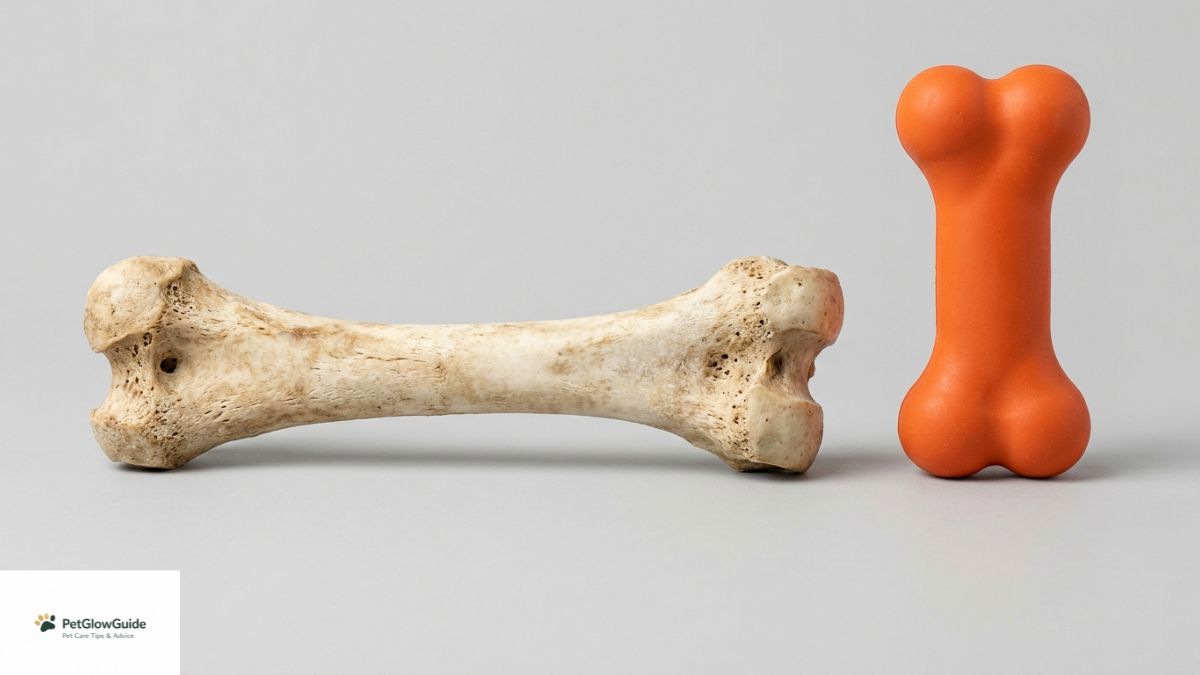
Real bones can fracture teeth or splinter — rubber chews are a safer long-lasting option.
How often should I replace my dog’s chew toy? There’s no fixed schedule — it depends on how quickly your dog wears down a toy. As a general rule, replace it as soon as it becomes small enough to swallow or shows visible damage.
Should I supervise my dog while chewing? Yes. Veterinary organizations generally recommend supervising dogs with any chew toy, particularly new ones, since even generally safe materials can pose a risk if broken apart and swallowed.
This article is written for general informational purposes and is not a substitute for advice from your dog’s veterinarian, especially if your dog has a history of gastrointestinal issues, dental problems, or aggressive chewing habits.
Share :

numan anwar
Pet care enthusiast sharing practical, well-researched guides to help dog and cat owners make confident everyday decisions.