

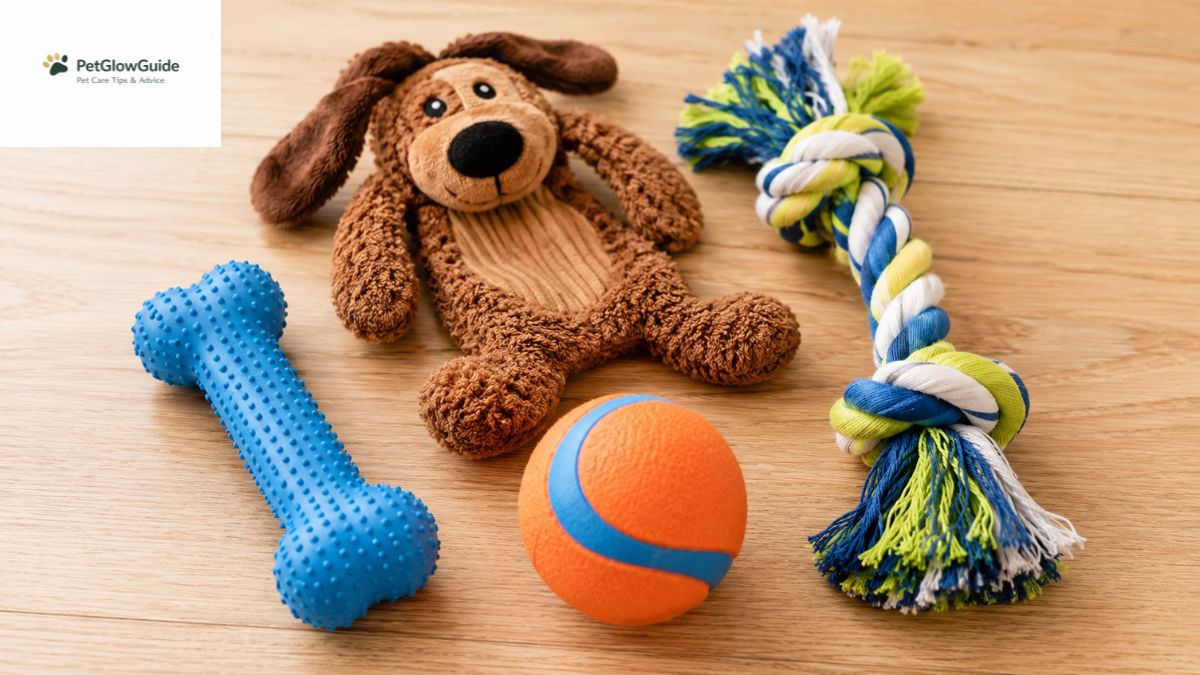
Walk down any pet store aisle and you’ll see hundreds of toys promising to be the toughest, safest, or most fun option for your dog. There’s no single “best” toy, though — only the best toy for your dog, based on their size, how they chew, and what the toy is made of. This guide walks through how to make that call, along with a few safety details that are easy to miss.
How to Choose the Right Dog Toy for Your Dog
Before comparing toy types, it helps to run through three quick questions: How big is your dog? How do they chew? And what’s the toy actually made of? Getting these right prevents most of the common toy-related accidents — choking, broken teeth, and swallowed pieces.
Match the Toy to Your Dog’s Size
A toy that’s too small for your dog’s mouth can get lodged in the throat or swallowed whole. A toy that’s too large isn’t necessarily safer — it just becomes frustrating or unused. As a general rule, a safe toy shouldn’t fit entirely inside your dog’s mouth, and it should be large enough that your dog can’t easily compress or swallow it in one bite.
This matters more than owners often assume. A toy sized correctly for a 15-pound terrier can be a serious choking hazard for an 80-pound retriever, and vice versa — a toy built for a large breed may simply be too heavy or unwieldy for a small dog to enjoy safely.
Quick sizing checklist:
- The toy should not fit fully inside your dog’s mouth in one piece
- It should be sturdy enough that your dog can’t flatten or compress it easily
- Reassess sizing as puppies grow — a toy that fit at 4 months may not fit at 10 months
- When in doubt, size up rather than down
Identify Your Dog’s Chewing Style
Not all dogs interact with toys the same way, and matching a toy to your dog’s actual behavior — not just their breed — makes a real difference in safety.
| Chewing Style | Typical Behavior | Best-Fit Toys |
|---|---|---|
| Nibbler | Gently gnaws, licks, or mouths toys without much force | Plush toys, soft rubber toys, lightweight rope toys |
| Inhaler | Tries to swallow toys or treats quickly, with little chewing | Larger, harder-to-swallow toys; avoid anything ball-shaped that fits in the throat |
| Destroyer | Chews aggressively, aims to tear apart or break the toy | Heavy-duty rubber or nylon chew toys; avoid plush toys with stuffing or squeakers |
Most dogs lean toward one of these styles, though it can shift depending on their mood, age, or the specific toy. If you’re not sure which category fits your dog, watch them with a new toy for the first few minutes — that’s usually when the pattern becomes obvious.
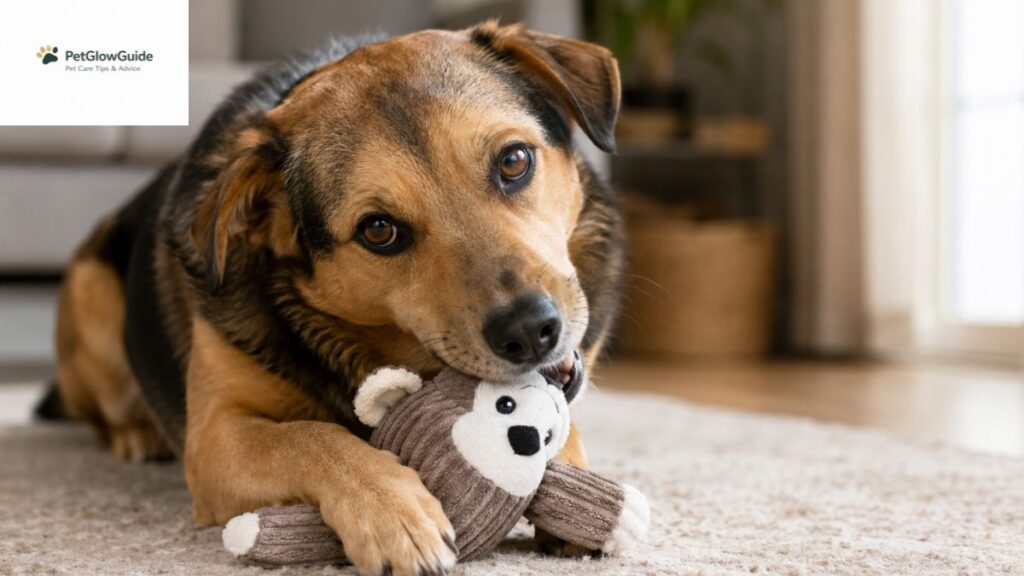
Understanding your dog’s chewing style helps you pick a safer toy.
Check the Material
Material affects both durability and safety, and the two don’t always go together. A toy that’s extremely hard can be tough enough to survive a destroyer, but hard materials can also crack teeth. A toy that’s soft and flexible is gentler on teeth but may not last with an aggressive chewer.
Common materials you’ll encounter:
- Natural rubber — generally durable and a bit more forgiving on teeth than harder plastics
- Nylon — very durable, popular for heavy chewers, but can be hard enough to cause tooth wear with prolonged use
- Plush/fabric — comfortable for nibblers, but not designed to withstand aggressive chewing
- Rope (cotton or blended fiber) — good for tug play, but can fray and shed fibers over time
Because pet toys aren’t required to carry the same safety certifications as children’s products (more on that below), it’s worth checking product labeling for non-toxic material claims and choosing toys from manufacturers who are transparent about what their products are made of.
Is There a Safety Standard for Dog Toys?
In the United States, dog toys are not covered by a dedicated, mandatory federal safety standard the way children’s toys are. Children’s toys must meet the requirements of the Consumer Product Safety Improvement Act, including the ASTM F963 safety standard — but that standard does not apply to pet toys as a legal requirement.
The Consumer Product Safety Commission has indicated it doesn’t have the specific mandate or resources to actively regulate pet products unless a product has already caused injury to a person. That said, the CPSC does step in on specific overlapping hazards. Products with button or coin batteries, including some interactive pet toys, are subject to federal warning-label and safety requirements because of the risk to children who might access them.
Voluntary industry standards are starting to take shape. ASTM International, the organization behind many product safety standards, has a subcommittee working on safety specifications specifically for pet products, though these aren’t mandatory yet.
In practice, this means the safety of a dog toy depends heavily on the manufacturer’s own practices and your own judgment as an owner, rather than a guaranteed government certification. Buying from established, transparent brands and inspecting toys yourself matters more with pet products than it does with children’s products.
Best Types of Dog Toys (and What to Watch For)
Each toy category serves a different purpose, and carries a different set of risks.
Chew Toys 

Chew toys are the go-to for destroyers and dogs who need an outlet for natural chewing behavior. Hard rubber and nylon chew toys tend to hold up best against aggressive chewing, but “hardest” isn’t always “best” — overly rigid materials can contribute to tooth fractures, especially in dogs that chew with a lot of force.
Rawhide chews are popular, but they deserve extra caution. Rawhide can become slippery when wet, and large pieces can break off and be swallowed before they’ve broken down, creating a choking or blockage risk. If you do use rawhide, supervise your dog closely rather than leaving them with it unattended.
This post contains affiliate links. If you purchase through these links, we may earn a small commission at no extra cost to you.
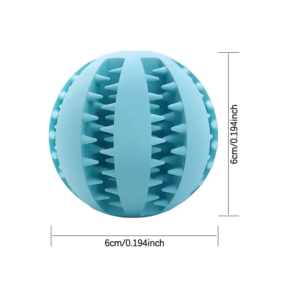
Treat-Dispensing Chew Ball
This rubber ball works as both a chew toy and a treat puzzle — fill it with kibble or treats to keep destroyers and food-motivated dogs engaged longer. Available in multiple sizes, so choose one that matches your dog’s mouth size as described above.
Check Current Price on AliExpress →
Fetch Toys (Balls & Frisbees)

Tennis balls are a classic fetch toy, but they carry two risks worth knowing about. First, a compressed tennis ball can become lodged in a dog’s throat, and the fuzzy covering can be ingested if your dog likes to shred it. Second, that same fuzzy covering — especially once it picks up dirt and grit from the ground — acts something like sandpaper against teeth over repeated, prolonged chewing, which can gradually wear down tooth enamel over time.
This doesn’t mean tennis balls are off-limits. It means they work best for active fetch play rather than as an unsupervised chew toy. If your dog tends to chew on balls rather than just fetch them, a solid rubber ball made for dogs is a safer everyday option.
Plush & Stuffed Toys
Plush toys are often a nibbler’s favorite — something to carry around, cuddle, or gently squeak. The main risk here is internal parts: squeakers and stuffing can be chewed out and swallowed, which can lead to a gastrointestinal obstruction. Plush toys work best for dogs who mouth gently rather than tear, and they’re generally a poor fit for destroyers.
This post contains affiliate links. If you purchase through these links, we may earn a small commission at no extra cost to you.
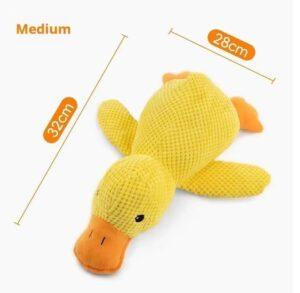
Squeaky Plush Duck Toy
A soft, squeaky plush toy that’s a good match for nibblers who enjoy carrying, cuddling, or gently squeaking a toy. As with any plush toy, keep an eye on the squeaker and stitching over time, and set it aside once seams start to loosen.
Check Current Price on AliExpress →
Interactive & Puzzle Toys
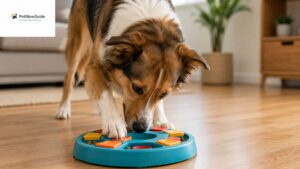
Treat-dispensing and puzzle toys are less about physical durability and more about mental engagement. They work well for dogs that get bored easily or show destructive behavior from lack of stimulation. These toys are generally a safe category across chewing styles, since they’re built to be manipulated rather than shredded, though they should still be checked for cracks or damage over time like any other toy.
Treat-dispensing and puzzle toys are less about physical durability and more about mental engagement. They work well for dogs that get bored easily or show destructive behavior from lack of stimulation. These toys are generally a safe category across chewing styles, since they’re built to be manipulated rather than shredded, though they should still be checked for cracks or damage over time like any other toy. For a broader look at how toys fit into your dog’s overall play and enrichment routine, see our complete guide to pet toys for dogs.
Rope & Tug Toys
Rope toys are great for interactive tug play and can double as a light chew option for gentle chewers. The main thing to watch is fraying — as the fibers loosen, they can be ingested, and loose threads can occasionally wrap around teeth. Rotate out a rope toy once it starts visibly shredding rather than waiting for it to fall apart completely.
Dog Toy Safety: Warning Signs and What to Avoid
Regardless of toy type, a few warning signs apply across the board:
- Small, detachable parts — plastic eyes, buttons, or bells that can be chewed off and swallowed
- Single-hole designs on enrichment toys — some chew toys with only one hole have been linked to tongue entrapment in dogs; toys with two holes reduce this risk
- Brittle or overly hard materials — plastic that cracks into sharp pieces, or materials so hard they risk tooth fractures
- Damaged toys — any toy that’s cracked, torn, or has exposed stuffing or squeaker parts
- Unsupervised use of high-risk chews — rawhide, bones, or anything that can break into swallowable pieces
Supervision matters more than people expect, especially with a new toy. The first several play sessions are when you’ll learn how your dog actually interacts with a toy — whether they chew gently, try to destroy it, or attempt to swallow pieces.
When to Replace or Throw Away a Dog Toy
Toys don’t last forever, and holding onto a damaged one is an easy way to turn a toy that used to be safe into a hazard without realizing it.
Replace a toy when you notice:
- Cracks or splits in rubber or hard plastic
- Fraying or shredding on rope or fabric toys
- Exposed stuffing or a squeaker that’s become accessible
- Sharp edges from a broken-off piece
- Any small part that’s come loose
Make toy inspection a quick habit — a monthly check for toys in regular rotation is a reasonable starting point, and anything showing damage should be tossed rather than kept “just in case.”
Best Dog Toys for Specific Needs
Best Toys for Aggressive Chewers
For destroyers, durability comes first. Hard rubber and nylon chew toys designed specifically for heavy chewers tend to hold up best. Avoid brittle plastics, thin plush toys, and anything with parts that can be torn off in one bite. For a deeper breakdown of what actually works for strong chewers, see our dedicated guide for heavy chewers.
Best Toys for Puppies
Puppies need softer materials that are gentle on developing teeth and gums, plus close supervision since they tend to explore everything by mouth. Toy size also needs to be reassessed frequently as puppies grow. For a full safety walkthrough tailored to young dogs, check our puppy toy safety guide.
Best Toys for Senior Dogs
Older dogs often benefit from softer chew options that are easier on aging teeth and joints, along with lower-impact fetch toys that don’t require intense jumping or hard biting. Comfort-focused plush toys are frequently a good fit here, provided the dog isn’t a heavy chewer.
Best Toys for Mental Stimulation
Puzzle feeders, snuffle mats, and treat-dispensing toys are a good addition to any dog’s rotation, particularly for dogs that seem bored, anxious, or prone to destructive behavior around the house. These toys work by making your dog problem-solve for a reward, which can be mentally tiring in a good way.
Frequently Asked Questions
Are dog toys regulated for safety?
Not in the same way children’s toys are. There’s no dedicated, mandatory federal safety standard for pet toys in the U.S., though general consumer protection laws still apply, and some specific hazards, like button batteries, are regulated. Voluntary industry standards are still developing.
What size toy is safe for my dog?
A safe toy shouldn’t fit entirely inside your dog’s mouth or be easy to compress and swallow. Reassess sizing as puppies grow, and when unsure, choose a slightly larger toy over a smaller one.
Are tennis balls bad for dogs?
Not inherently, but they carry two risks: choking if compressed or shredded, and dental wear from the abrasive felt covering with heavy or prolonged chewing. They’re best used for active fetch rather than left as an unsupervised chew toy.
How do I know if a toy is safe for aggressive chewers?
Look for hard rubber or nylon construction specifically marketed for heavy chewers, and avoid brittle plastics or toys with parts that can be torn off. Even durable toys should be inspected regularly for cracks.
When should I throw away a dog toy?
As soon as you notice cracks, fraying, exposed stuffing, a loose squeaker, or any small piece that’s come free. It’s one of the easiest hazards to prevent, since it just takes a regular look at the toys your dog already has.
Are squeaky toys safe for dogs?
They can be, for dogs that chew gently. The main risk is the squeaker itself — if a dog manages to tear it out, it can be swallowed. Squeaky plush toys are generally a better fit for nibblers than destroyers.