

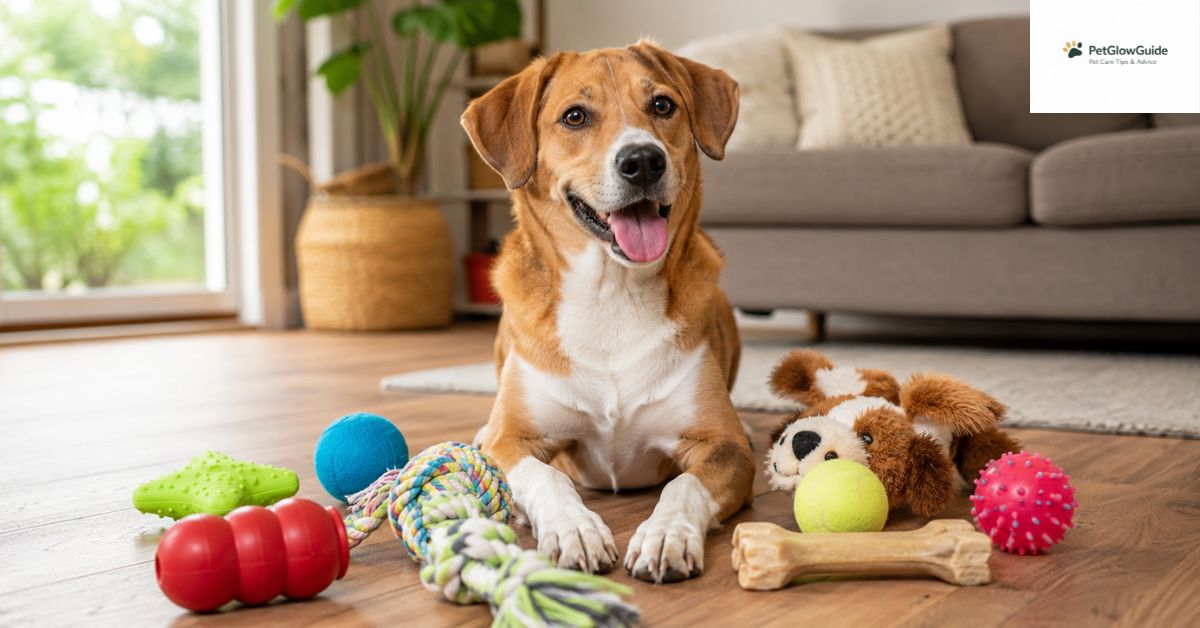
Pet toys for dogs come in every shape and size — and if you’ve ever walked into a pet store or scrolled through an online shop looking for one, you’ve probably noticed how many options there are Chew toys, puzzle toys, plush toys, fetch balls — it can be hard to know where to start.
This guide breaks down why dog toys matter, the main types available, and how to choose the right one based on your dog’s size, age, and chewing habits.
Why Dog Toys Matter
Toys aren’t just about keeping your dog entertained. They serve a few practical purposes:
Mental stimulation. Dogs, especially working and high-energy breeds, need more than physical exercise — they need mental engagement too. Toys that involve problem-solving or scent work can help satisfy this.
Physical exercise. Toys designed for fetching, tugging, or chasing give dogs an outlet for energy, which can be especially useful for high-energy breeds or dogs that don’t get long daily walks.
Dental and chewing needs. Chewing is a natural behavior for dogs. Having appropriate chew toys available can give dogs a suitable outlet for this instinct, rather than furniture or shoes.
Reducing boredom-related behavior. Dogs left alone for long periods without any form of stimulation may be more likely to develop destructive habits. Toys — particularly interactive or puzzle-style toys — can help fill that gap.
It’s worth noting that toys are a supplement to, not a replacement for, regular exercise, training, and attention. A tired, unstimulated dog with a pile of toys isn’t the same as a dog getting daily walks and interaction.
Types of Dog Toys
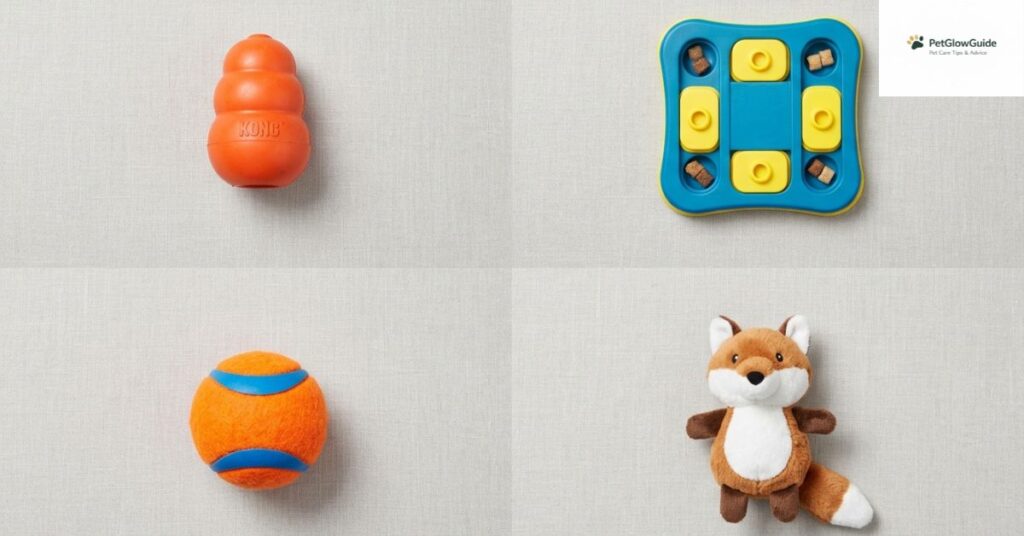
Not all dog toys serve the same purpose. Here’s a breakdown of the main categories.
Chew Toys
Chew toys are designed to withstand repeated biting and gnawing. They’re especially useful for puppies going through teething, and for adult dogs that chew as a way to relieve stress or boredom. Durability matters most in this category — a toy that falls apart quickly can become a choking hazard.
Interactive and Puzzle Toys
These toys usually involve some kind of challenge — hiding treats inside a compartment, requiring the dog to figure out how to release a reward, or responding to the dog’s movement. They’re a good option for mental stimulation and can help reduce boredom when a dog is home alone.
See our picks for the best interactive plush toys for bored or destructive dogs
Fetch and Outdoor Toys
Balls, flying discs, and launchers fall into this category. They’re built around movement and are typically used outdoors or in larger indoor spaces. These toys support physical exercise more than mental engagement.
Plush and Comfort Toys
Soft toys are often used for comfort, gentle play, or as a “security object,” particularly for puppies or anxious dogs. They’re generally not designed for heavy chewing and should be chosen carefully for dogs that tend to shred or ingest fabric and stuffing.
Choosing the Right Toy for Your Dog
The “best” dog toy depends heavily on the individual dog. Here’s what to consider.
By Size
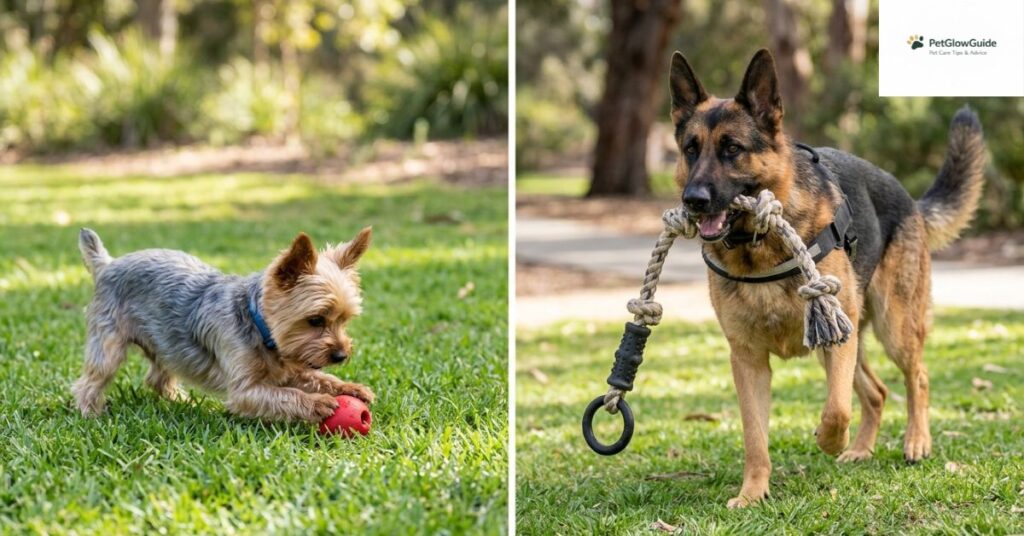
A toy that’s appropriately sized for your dog reduces the risk of choking or swallowing. A toy too small for a large dog can be a hazard; a toy too large for a small dog may be difficult or frustrating for them to use.
By Age
Puppies, adult dogs, and senior dogs often benefit from different toy types. Puppies going through teething usually need softer, more forgiving chew toys, while adult dogs with stronger jaws may need more durable options. Senior dogs may prefer softer toys that are gentler on aging teeth and joints.
By Chewing Style
Some dogs are naturally gentle with toys, while others are aggressive chewers that can destroy a “durable” toy within minutes. Understanding your dog’s chewing style helps avoid wasted money and reduces the risk of them swallowing broken pieces.
Dog Toy Safety Tips
Toy safety is worth taking seriously, since the wrong toy — or a damaged one — can pose a real risk.
A few general practices to keep in mind:
Inspect toys regularly for tears, loose parts, or exposed stuffing, and remove damaged toys promptly.
– Match toy size to your dog to reduce choking risk — a toy that can fit entirely in your dog’s mouth may not be appropriately sized.
– Supervise new toys, especially the first few times, to see how your dog interacts with them.
– Avoid toys with small, detachable parts (like squeakers or plastic eyes) for dogs that tend to chew through fabric or plastic quickly.
For specific safety guidance — such as which materials are considered
safe or how to respond if your dog swallows part of a toy — it’s best
to consult your veterinarian. Organizations such as the ASPCA and the
American Humane Society also publish general pet toy safety guidance. Not verified from a strong source: any specific statistics on toy-related injuries, since none were available for this article.
Frequently Asked Questions
How often should I replace my dog’stoys?
There’s no fixed schedule — it depends on how quickly your dog wears down a toy. As a general rule, replace any toy once it shows signs of damage, such as tears, missing pieces, or exposed material.
Are squeaky toys safe for dogs?
Many dogs enjoy squeaky toys without issue, but the squeaker itself can be a choking hazard if a dog manages to remove and swallow it. Supervision is recommended, particularly with dogs that chew aggressively.
Do all dogs need puzzle toys?
Not necessarily, but they can be helpful for dogs that show signs of boredom, especially those left alone for extended periods or breeds known for high mental energy.
What toys are best for aggressive chewers?
Very durable rubber or nylon chew toys are generally better suited to aggressive chewers than plush or thin rubber toys.