

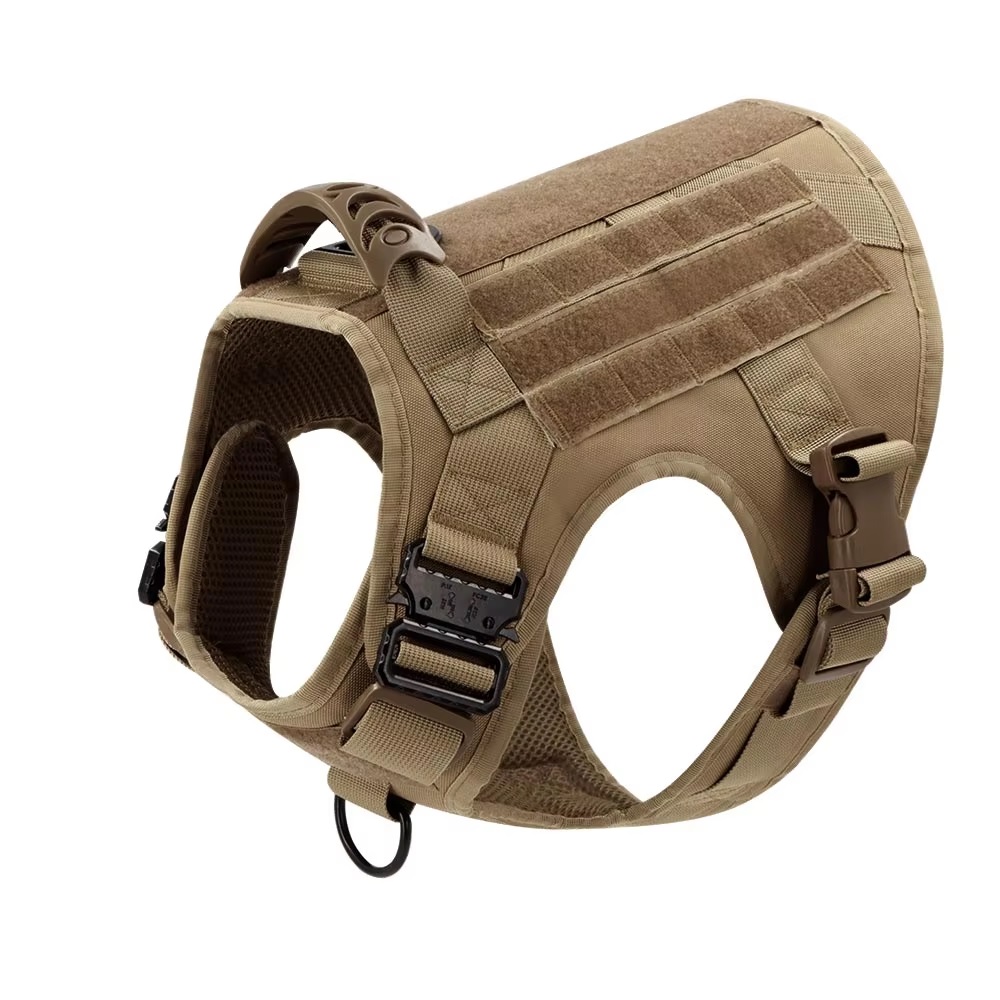
If you’ve got a large or strong dog who pulls, lunges, or just has a lot of power behind every step, a standard leash-and-collar setup can turn walks into a wrestling match — and put real strain on your dog’s neck in the process. That’s where tactical-style harnesses come in: a top handle, heavy-duty webbing, and multiple attachment points give you more control without putting pressure on your dog’s throat.
This guide covers what actually matters when choosing one of these harnesses, what the research says about harnesses versus collars, and a closer look at one popular option — a green tactical harness and leash set currently trending on AliExpress.
This post contains affiliate links. If you buy through them, we may earn a commission at no extra cost to you.
Why Large or Strong Dogs Often Need a Different Kind of Harness
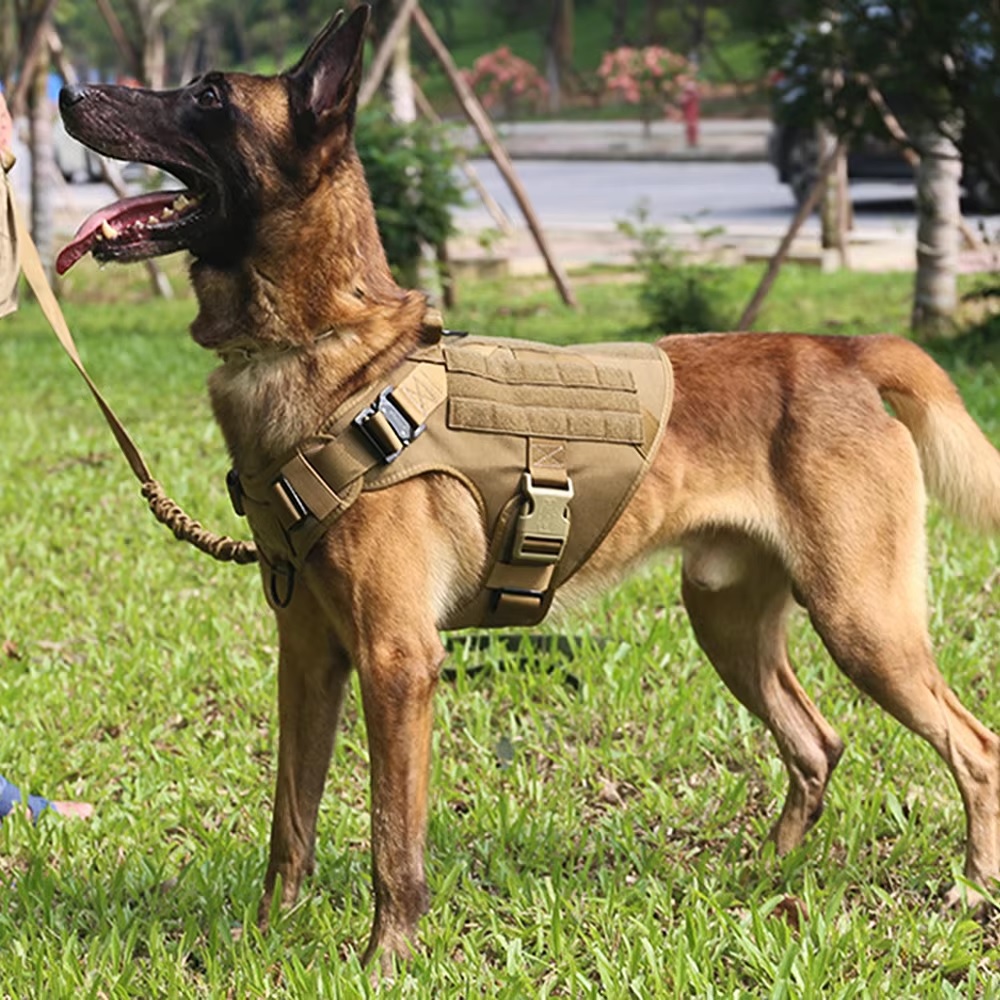
When a dog pulls hard against a neck collar, that force concentrates on the trachea, the jugular veins, and the cervical spine — all delicate structures. For a 20-pound dog, that’s a problem. For an 80-pound German Shepherd or Malinois-type dog with real pulling power behind them, it’s a bigger one.
A harness spreads that same force across the chest and shoulders instead, which is generally considered a safer place for it to land. That matters most for training, reactive dogs, or working-breed dogs, where you need a reliable way to interrupt a pull or a lunge without hurting your dog.
A tactical-style harness adds one more layer on top of that: a top handle you can grab in a split second to physically guide or steady your dog — something a standard harness or collar doesn’t give you.
Harness vs. Collar for Strong Dogs — What the Research Actually Says
Most harness marketing tells you it’ll stop your dog from pulling. The research is a bit more complicated than that.
The safety case is solid: collars have been shown to produce pressure on a dog’s neck well beyond what’s known to cause tissue damage in other contexts, and pulling against a collar has been linked to higher pressure inside the eye and to throat strain. Harnesses avoid concentrating force in that area, which is the main reason they’re recommended for dogs that pull.
What’s less talked about: one peer-reviewed study actually found dogs pulled harder — not less — when wearing a back-connection harness compared to a collar, at least in a food-motivated test. So a harness is almost certainly the safer choice for your dog’s neck, but it isn’t a guaranteed fix for pulling on its own. Where the leash clips, how consistent your training is, and your dog’s individual habits all matter too.
Bottom line: pick a harness for safety and control, not as a standalone cure for pulling. Pair it with basic leash training for the best results.
What to Look For in a Tactical-Style Handle Harness
Top handle
A sturdy handle on the back lets you guide or restrain your dog in tight spaces, near traffic, or mid-training — especially useful for large or unpredictable dogs.
Buckle quality
Quick-release buckles should feel solid, not flimsy. On a strong dog, cheap plastic hardware can crack under repeated pulling.
Chest strap position
Straps that sit too far forward — straight across the shoulder joint — can restrict your dog’s natural front-leg movement over time. Look for a design that keeps the shoulder area relatively clear, especially for long walks or hikes.
Adjustability
More adjustment points (four or more) usually means a more precise, secure fit — helpful for dogs whose build doesn’t match “standard” breed proportions.
D-ring placement
A back-mounted ring works fine for general control. Some harnesses add a front chest ring too, which can help redirect a hard-pulling dog by turning them sideways instead of letting them drive straight forward.
Who This Style of Harness Is For (and Who It’s Not)
Good fit for:
- Large or strong dogs who pull on walks
- Owners doing structured obedience or reactivity training
- Working-style or high-drive breeds (German Shepherds, Malinois-types, and similar builds)
- Situations where you might need to physically guide your dog fast — busy streets, vet visits, crowded trails
Probably not necessary for:
- Small dogs or puppies
- Dogs who already walk calmly with no pulling issues
- Owners who just want a lightweight, everyday harness without the extra handle and hardware
Featured Pick: Green Tactical Dog Harness and Leash Set
[PRODUCT IMAGE + INFO BLOCK GOES HERE — see Section 7 below]
One option currently trending on Pinterest — and popular on AliExpress — is this green tactical-style harness and bungee leash set, marketed for medium-to-large dogs.
What we can confirm from the listing and photos:
- Top carry handle
- MOLLE-style webbing panel across the front
- Multiple quick-release buckles
- Front D-ring
- Comes bundled with a bungee-style leash
- Sized for “medium large dogs”
- At the time of writing, listed at a temporary new-shopper price of $17.52 (regular listed price $53.51) — AliExpress pricing changes often, so check the current price before buying
- AliExpress reviewers give it a 4.9-star rating from 80 reviews, with the seller showing 400+ sales on this listing
What’s not confirmed:
- Exact material composition — the listing doesn’t specify fabric type in what we reviewed
- Precise weight capacity
- Long-term durability under heavy daily use — we haven’t tested it ourselves, so treat the review score as buyer feedback, not independent testing
Pros:
- Harness and leash bundled in one set
- Handle placement looks solid for quick control
- Multiple buckles suggest a more adjustable, secure fit than basic strap harnesses
- Budget-friendly compared to most Western tactical-harness brands
Cons:
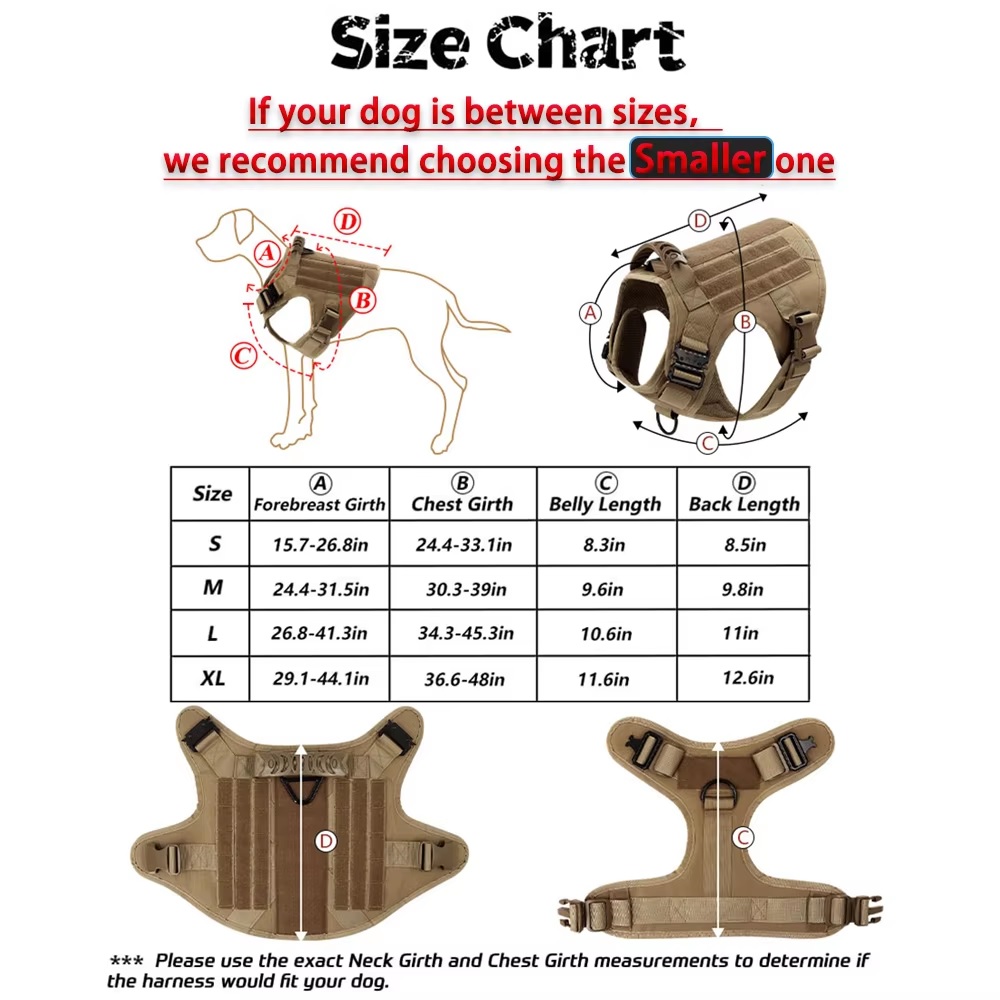
- Sizing chart accuracy is unverified — measure your dog rather than guessing
- Material and weight rating aren’t clearly specified
- Shipping takes longer than domestic retailers, as with most AliExpress orders
Check the current price and size chart for this harness set
What to Check Before You Buy Any Harness Like This
Before buying a tactical-style harness — this one or any other brand — measure first:
- Measure your dog’s chest girth — wrap a flexible tape measure around the widest part of the chest, just behind the front legs.
- Use the two-finger rule — once fastened, you should be able to slip two fingers comfortably underneath. Snug, not tight.
- Compare your measurement to the seller’s specific size chart, not a generic breed guess — this matters more on AliExpress, where sizing can run differently than U.S. or UK pet brands.
- Check for a chewing or durability warranty if your dog is a heavy chewer or puller — not every seller offers one.
- Read recent reviews from owners of large dogs specifically, since a harness can perform very differently on a 30-pound dog than an 80-pound one.
Alternatives to Consider
If a tactical handle style isn’t the right fit, two other common designs are worth knowing about:
- Front-clip harnesses — the leash attaches at the chest instead of the back, which can help redirect a hard-pulling dog by turning them sideways rather than letting them drive forward.
- Y-shaped harnesses — built to sit clear of the shoulder joint, which may matter more for very active dogs or long hikes where shoulder mobility is a priority.
Neither is inherently better than a tactical handle harness — it comes down to whether you want hands-on control (handle style) or shoulder freedom and redirect-based training (front-clip or Y-shaped).
FAQ
What is a tactical dog harness used for?
It’s built for owners who want more physical control over their dog — a top handle for guiding or restraining, reinforced webbing for durability, and often a MOLLE panel for attaching gear. Common uses include training, working-dog applications, and managing strong or reactive dogs in public.
Do tactical harnesses stop dogs from pulling?
Not automatically. Harnesses are generally safer for a dog’s neck than a collar, but the research doesn’t consistently show they reduce pulling force — in some studies, dogs pulled just as hard or harder in a harness. Where the leash clips and how much training your dog has had matter more than the harness style alone.
Is a handle harness good for training?
A handle can genuinely help during training — for example, gently redirecting your dog in a high-distraction environment. That’s practical reasoning rather than a claim backed by a specific study, though: think of the handle as a tool that supports training, not a replacement for it.
Are tactical harnesses safe for everyday walks?
Generally, yes, as long as the fit is right. Collar pulling has been linked to elevated neck and eye pressure in dogs, and harnesses avoid concentrating force in that spot. Fit matters most — too loose, and a dog can back out of it; too tight, and it causes chafing.
How do I choose the right size for a large dog?
Measure your dog’s chest girth with a flexible tape measure, apply the two-finger rule once it’s fastened, and check the specific seller’s size chart rather than relying on general breed-size assumptions — especially important for imported listings, where sizing conventions can differ.
Not a substitute for professional training or veterinary advice. If your dog has an existing neck, spine, or respiratory condition, check with your vet before choosing walking equipment.
Share :

numan anwar
Pet care enthusiast sharing practical, well-researched guides to help dog and cat owners make confident everyday decisions.
Leave a comment