

This post contains affiliate links. If you buy through them, we may earn a commission at no extra cost to you.
If your dog tears through toys in minutes, or turns into a shredding machine the second you leave the house, you’re not alone. Chewing — especially when a dog is bored or left alone — is normal dog behavior, not bad behavior.
The right interactive plush toy, one with a squeaker, some texture, and a design built to survive real play, can genuinely help. The hard part is knowing which toy is actually worth buying and which one will be in pieces by dinnertime.
This guide covers what to check before you buy, who this type of toy actually suits, and a comparison of solid options — including an octopus-style plush and squeaker toy that is an affordable pick in this category
Why Your Dog’s Boredom (or Anxiety) Deserves a Real Solution
Boredom and separation anxiety aren’t the same thing. The ASPCA distinguishes between the two: bored dogs are under-stimulated and looking for something to do, while separation anxiety is a genuine panic response to being left alone — one that toys alone won’t solve.
A well-made interactive toy can meaningfully help with boredom. But if your dog shows signs of true separation anxiety — panting, drooling, self-injury while trying to escape, non-stop howling — a toy is one piece of the puzzle, not the fix. Talk to your vet or a certified behaviorist if that sounds like your dog.
What to Check Before Buying an Interactive Plush Toy
Chew-level match
Be honest about how your dog chews. Vets are consistent on this: toys that tear apart easily can become a choking hazard or cause internal injury if the pieces are swallowed. If your dog is a determined, aggressive chewer, a soft plush toy isn’t the right category for them — however cute it looks in the listing photo.
No-stuffing vs. stuffed construction
Traditional stuffed plush toys look great, but they carry real risk for dogs who tear into things: swallowed stuffing can cause an intestinal blockage. Many newer interactive toys use a “no-stuffing” design instead, where the crinkle or squeaker sits inside flat fabric layers with nothing loose to ingest. For moderate-to-heavy chewers, no-stuffing is the safer choice.
Squeaker safety
Dogs are often driven to find and “kill” the source of a squeak — it’s part of what makes these toys fun, and also the main safety concern. If a squeaker tears loose, it becomes a small, hard object your dog can swallow. Look for a squeaker sewn into its own protective pouch, and supervise the first several sessions with any new squeaky toy.
Size-to-dog-weight fit
A toy sized for a small breed can be a choking risk for a large dog. An oversized, overly hard toy can be a dental risk for a small one. Match the toy to your dog’s actual size and jaw strength, not just what looks cute in photos.
Quick check: Some vets and trainers recommend the “thumbnail test” — if you can’t leave an indentation on a chew surface with your thumbnail, it’s probably too hard for your dog’s teeth. This applies more to hard chew toys than soft plush, but it’s a useful gut-check for build quality in general.
Who This Type of Toy Is (and Isn’t) Good For
Good fit for:
- Light-to-moderate chewers
- Puppies during supervised play (not left alone with the toy)
- Dogs who enjoy tug, toss, and squeak-and-shake play
- Everyday boredom, not clinical separation anxiety
Not a good fit for:
- Aggressive, dedicated “destroyer” chewers — if your dog lives to destroy toys, skip soft, plush, or squeaker toys and look at solid rubber instead
- Dogs regularly left unsupervised with the toy still accessible
- Treating diagnosed separation anxiety as a stand-alone fix
Meet the Pick: Interactive Plush Octopus Dog Toy
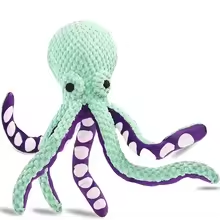
This interactive plush octopus toy is designed for dogs who enjoy squeaky toys, tossing, and interactive play. Its multi-arm design gives dogs different areas to grab and carry, making it a fun option for boredom relief and everyday play. Because plush toys can vary in durability depending on the dog, this toy is best suited to supervised play, especially for strong chewers.
Comparison: Top Interactive Plush Octopus-Style Toys
| Toy | Best For | Construction | Squeaker | Size Range | Notes |
|---|---|---|---|---|---|
| Interactive Plush Octopus Dog Toy | Light–moderate chewers, small–large dogs | Plush, multi-arm design | Yes | Small–large | Budget-friendly; check the listing for stuffing type before buying |
| Tuffy Ocean Creatures Oscar Octopus | Tug and interactive play (not a chew toy) | Multi-layer reinforced plush | Yes, multiple, in protective pouches | Small–large (varies by version) | Multi-layer fabric; the maker says it is built for play, not chewing |
| Tall Tails Octopus w/ Squeaker | Light chewers, cuddlers | Reinforced mesh plush | Yes, in protected pouch | One size (~14″) | Built more for comfort/cuddle play than heavy chewing |
| HuggleHounds Octavie Knottie | Light–moderate chewers | Three-layer lining, knotted limbs | Yes, multiple (number varies by size) | Small–large (2 sizes) | Knotted legs for tug; three-layer lining |
| Snuggle Puppy Tender-Tuffs Octopus | Small–medium dogs, tug play | Two-layer tear-resistant fabric, stretchy legs | Yes, puncture-resistant | Small–medium | Stretchy legs make it good for tug play. |
Durability notes above come from manufacturer product descriptions, not independent lab testing. No toy in this category is truly indestructible — supervise plush toys regardless of brand.
Our Pick (and Why)
For everyday boredom rather than heavy-duty destruction, the interactive plush octopus dog toy is a reasonable starting point. Based on the seller’s listing, it has a squeaker, a multi-limb design and size options from small to large, and it is usually priced below the branded options above (prices change, so check the listing). We haven’t tested this toy ourselves, so treat the durability claims with caution. It is a low-risk way to find out whether your dog even likes this toy style. If your dog turns out to be a heavy chewer, size up to a reinforced option above, or skip plush entirely for solid rubber.
Alternatives If Your Dog Destroys Plush Toys Fast
If your dog has already gone through several plush toys, it may just be the wrong category for them. A few alternatives worth trying:
- Solid natural rubber toys (Kong-style) — vets frequently point to these as safer and longer-lasting for aggressive chewers
- Puzzle or treat-dispensing toys — ASPCA-recommended for boredom and mild separation-related stress, since they reward mental effort instead of destruction
- Non-fraying rope alternatives — traditional rope toys have their own risk, since frayed strands can cause intestinal blockages, so look for woven synthetic options built to resist fraying
For a deeper look at tougher options and what makes a chew toy safe, see our chew toy safety guide.
How to Introduce a New Toy Safely
- Supervise the first several sessions with any new toy, especially squeaky ones.
- Check toys weekly for tears, loose seams, or a squeaker working its way loose.
- Retire the toy at the first sign of damage — don’t wait for a full tear.
- Rotate toys regularly. Novelty itself helps with boredom, per ASPCA guidance.
- If using a toy as part of a departure routine for an anxious dog, treat it as one part of a broader plan — and involve your vet if symptoms are significant.
FAQ
Are plush toys safe for dogs that chew a lot?
Generally, no. Trainers and vets commonly advise skipping soft, stuffed, or squeaker toys for dogs who tend to destroy their toys, since torn pieces or stuffing can pose choking or blockage risks.
Are squeaker toys safe for dogs?
For most dogs, yes, with supervision. The main risk is a dog tearing the squeaker free and swallowing it — look for a squeaker sewn into a protective inner pouch, and supervise new toys closely.
How do I stop my dog from destroying toys?
You likely can’t stop a strong chewing drive entirely, but you can manage it: match the toy to your dog’s chew level, rotate toys to reduce fixation on one item, and move to solid rubber if plush consistently doesn’t survive.
What toys help with dog separation anxiety?
The ASPCA recommends interactive and food-based toys, like puzzle feeders or frozen stuffed toys, as part of managing mild separation-related stress. Toys alone don’t treat diagnosed separation anxiety, which may need a vet or behaviorist.
How do I know if a toy is the right size for my dog?
Match the toy to your dog’s weight and jaw strength. Too small risks choking; too large or hard risks dental injury, especially in small breeds.
Final Recommendation
There’s no single “best” toy for every dog — the right pick depends on how your dog plays. Start with the checklist above, be honest about your dog’s chew level, and if you want a low-cost way to test whether your dog likes this toy style, the plush octopus toy above is a reasonable, affordable starting point before investing in a heavier-duty option.
Share :

numan anwar
Pet care enthusiast sharing practical, well-researched guides to help dog and cat owners make confident everyday decisions.
Leave a comment