

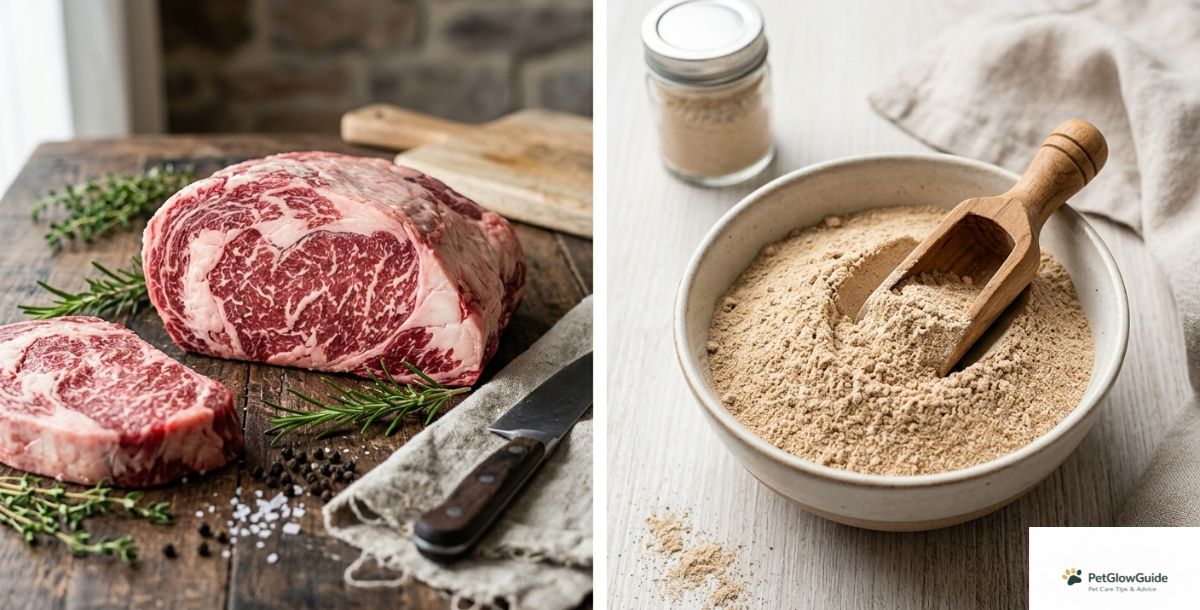
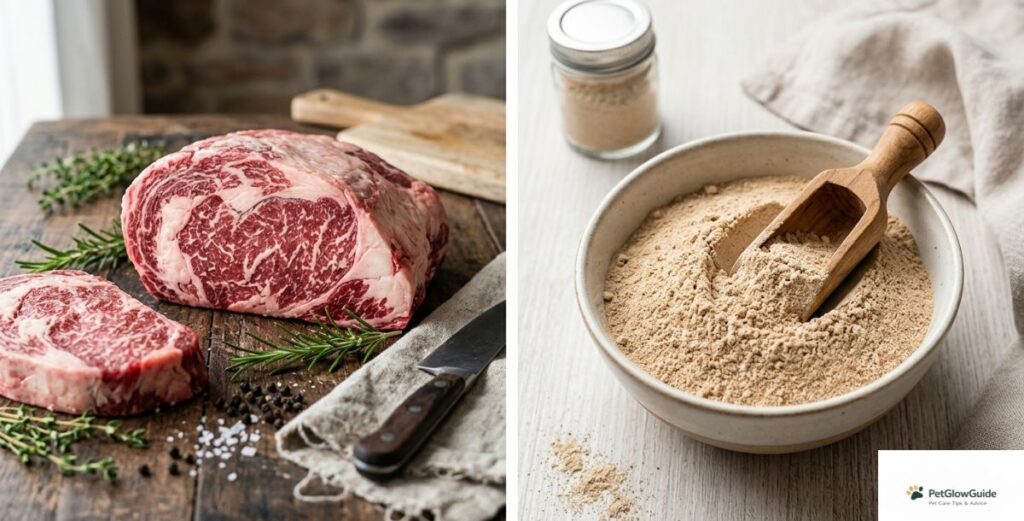
Comparing fresh beef (high moisture) with beef meal (high protein density) for dog food.
If you’ve ever scrutinized the back of a dog food bag, you’ve likely seen “beef meal” listed near the top. To many pet parents, the word “meal” sounds like a processed substitute or a low-quality filler. You might find yourself wondering: Is this real meat? Is it safe? Or is it just “mystery” leftovers?
The truth is that beef meal is one of the most misunderstood ingredients in the pet food industry. When sourced correctly, it isn’t a filler—it is a highly concentrated protein powerhouse. This guide breaks down the science of beef meal, how it’s made, and why it actually provides more nutrition than the “fresh beef” you see pictured on the packaging.
What Exactly is Beef Meal? (The AAFCO Definition)
In the United States, pet food labels are regulated based on standards provided by the Association of American Feed Control Officers (AAFCO). According to AAFCO, beef meal is the “rendered product from mammal tissues.”
However, there are strict “gatekeeping” rules for what can legally be called beef meal:
- Named Species: It must come specifically from cattle. If a label says “meat meal” or “animal meal,” it could be a blend of various unknown mammals. “Beef meal” is a higher-quality designation because the source is transparent and specific.
- Strict Exclusions: AAFCO regulations stipulate that beef meal cannot contain added blood, hair, hoof, horn, hide trimmings, manure, or stomach contents.
- Permitted Parts: It primarily consists of muscle tissue and organ meats. It also includes ground bone, which provides essential minerals like calcium and phosphorus.
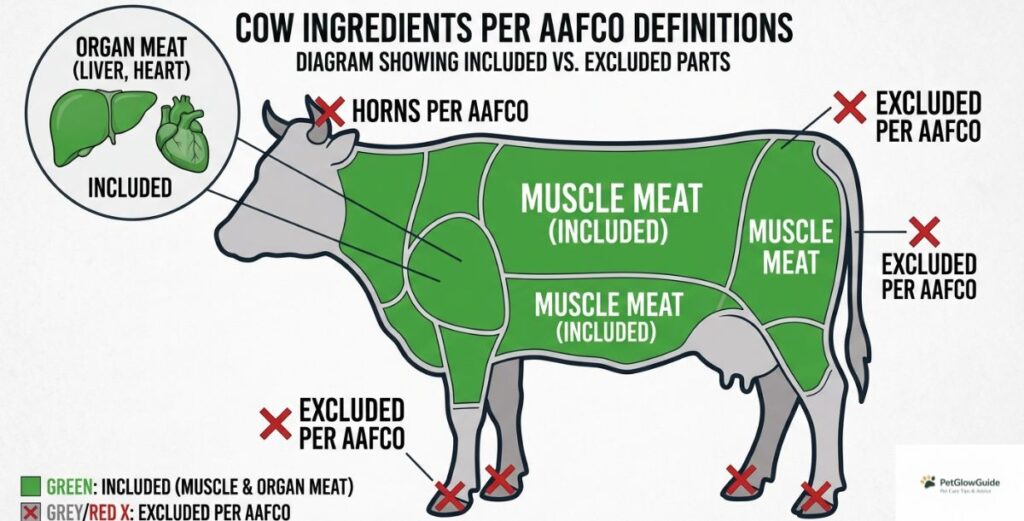
What’s actually in beef meal? A look at AAFCO-approved ingredients.
How is Beef Meal Made? The Rendering Process Explained
The journey from cattle to “meal” involves a process called rendering. Think of rendering as an industrial-scale version of making a slow-cooked stew, where the goal is to separate the solids from the liquids and remove moisture.
- Grinding and Cooking: The beef tissues are ground and cooked at high temperatures (typically between 240°F and 270°F).
- Separation: The intense heat melts the fat (tallow), which is drained away. What remains is a protein-rich solid.
- Drying and Grinding: These solids are dried until almost all moisture is removed and then ground into a fine, shelf-stable powder.
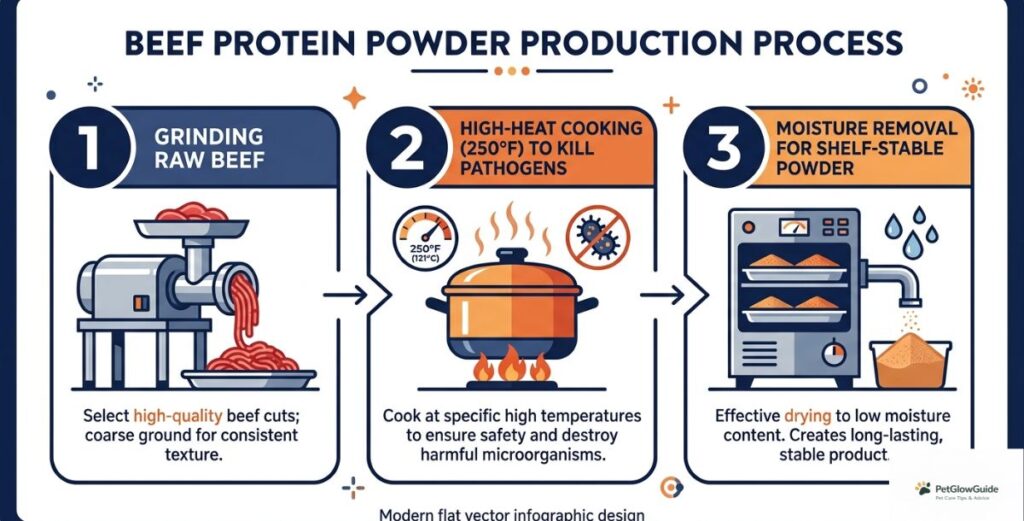
The 3-step process of turning fresh beef into a safe, concentrated protein powder.
Safety Note: This high-heat process is vital for food safety. According to industry standards followed by major producers like Diamond Pet Foods, the rendering temperature effectively kills microorganisms and pathogens, including Salmonella and E. coli, ensuring the final kibble is safe for your home environment.
Beef Meal vs. Fresh Beef: Which is Better?
At first glance, “fresh beef” sounds superior. However, looking at the nutrition through a dry matter basis lens changes the perspective.
- The Water Weight Factor: Fresh beef is roughly 70% water. When a manufacturer lists “fresh beef” as the first ingredient, that weight includes all that water. During the extrusion process (making the kibble), that water is cooked away, meaning the actual amount of beef remaining in the final product is much smaller than it appears on the label.
- Protein Density: Because beef meal has already had the water removed before it is added to the mix, it is a concentrated protein source. According to nutritional analyses cited by PetMD and the Corey Nutrition Company, beef meal contains approximately 300% more protein by weight than fresh beef.
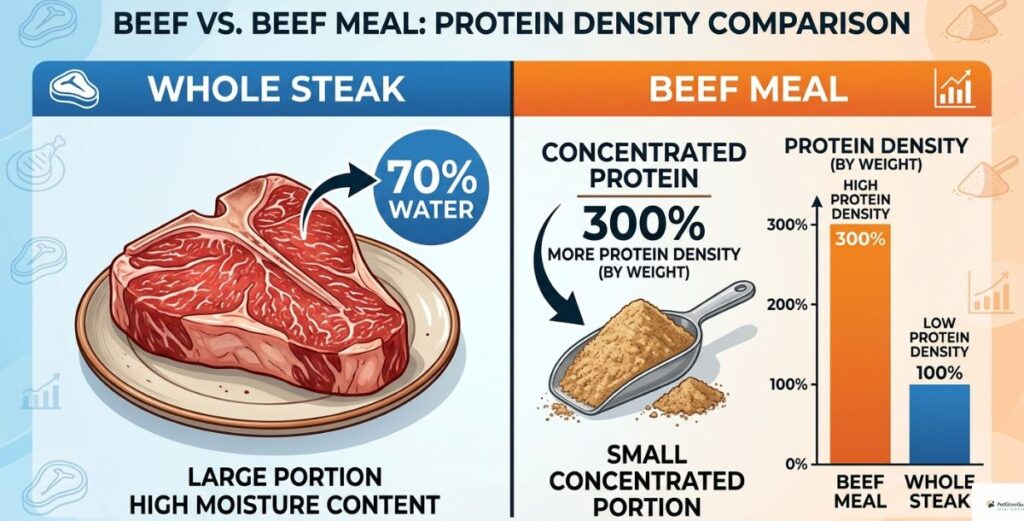
Beef Meal vs. Whole Steak: Why meal provides more protein per gram.
Is Beef Meal a Filler or “Mystery Meat”?
The term “mystery meat” usually applies to generic “meat meal” where the animal source isn’t disclosed. Because Beef Meal is a specific, named ingredient, its origin is fully traceable to cattle.
Is it a filler? By definition, a filler is an ingredient with little to no nutritional value used to provide bulk (like certain hulls or fibers). Since beef meal provides essential amino acids and has a high biological value for muscle maintenance, it is a functional nutrient, not a filler.
Potential Concerns: Allergies and Quality
While beef meal is nutritionally dense, it isn’t the right choice for every dog.
- Allergies: Beef is one of the most common food allergens in dogs. A study published in Veterinary Dermatology found that beef is responsible for a significant portion of adverse food reactions. If your dog has a confirmed beef allergy, they will react to both fresh beef and beef meal.
- Label Quality: Always look for “Beef Meal” rather than generic “Meat Meal.” The specificity of the animal is the best indicator of a high-quality manufacturing process.
Conclusion: Should You Feed Your Dog Beef Meal?
Beef meal is a safe, nutrient-dense, and highly digestible protein source. It allows pet food manufacturers to pack a massive amount of protein into a small kibble without the deceptive bulk of water weight. If your dog isn’t allergic to beef and you are buying from a reputable brand that adheres to AAFCO standards, beef meal is an excellent ingredient that supports your dog’s strength and energy levels.
Helpful Elements for Pet Owners
Comparison: Fresh Beef vs. Beef Meal
| Feature | Fresh Beef | Beef Meal |
| Moisture Content | ~70% | ~10% |
| Protein Concentration | Lower (due to water) | ~300% Higher |
| AAFCO Regulated | Yes | Yes |
| Shelf Stability | Low (spoils quickly) | High (stable powder) |
Checklist: How to Audit Your Dog Food Label
- [ ] Is the meal “named”? (Look for “Beef Meal,” not “Meat Meal”)
- [ ] Is it in the Top 3? (High-quality foods list animal proteins first)
- [ ] Is there an AAFCO statement? (Ensures the food is “complete and balanced”)
- [ ] Does your dog have beef sensitivities? (Avoid if they struggle with beef)
Common Questions (FAQs)
- Does beef meal contain bones? Yes. AAFCO allows for the inclusion of bone in meat meals, which serves as a natural, bioavailable source of calcium and phosphorus.
- Why is beef meal cheaper than fresh beef? It is more efficient to transport and store because you aren’t paying to ship water. The lower cost is a result of logistics, not necessarily lower quality.
Share :

numan anwar
Pet care enthusiast sharing practical, well-researched guides to help dog and cat owners make confident everyday decisions.