

Introduction
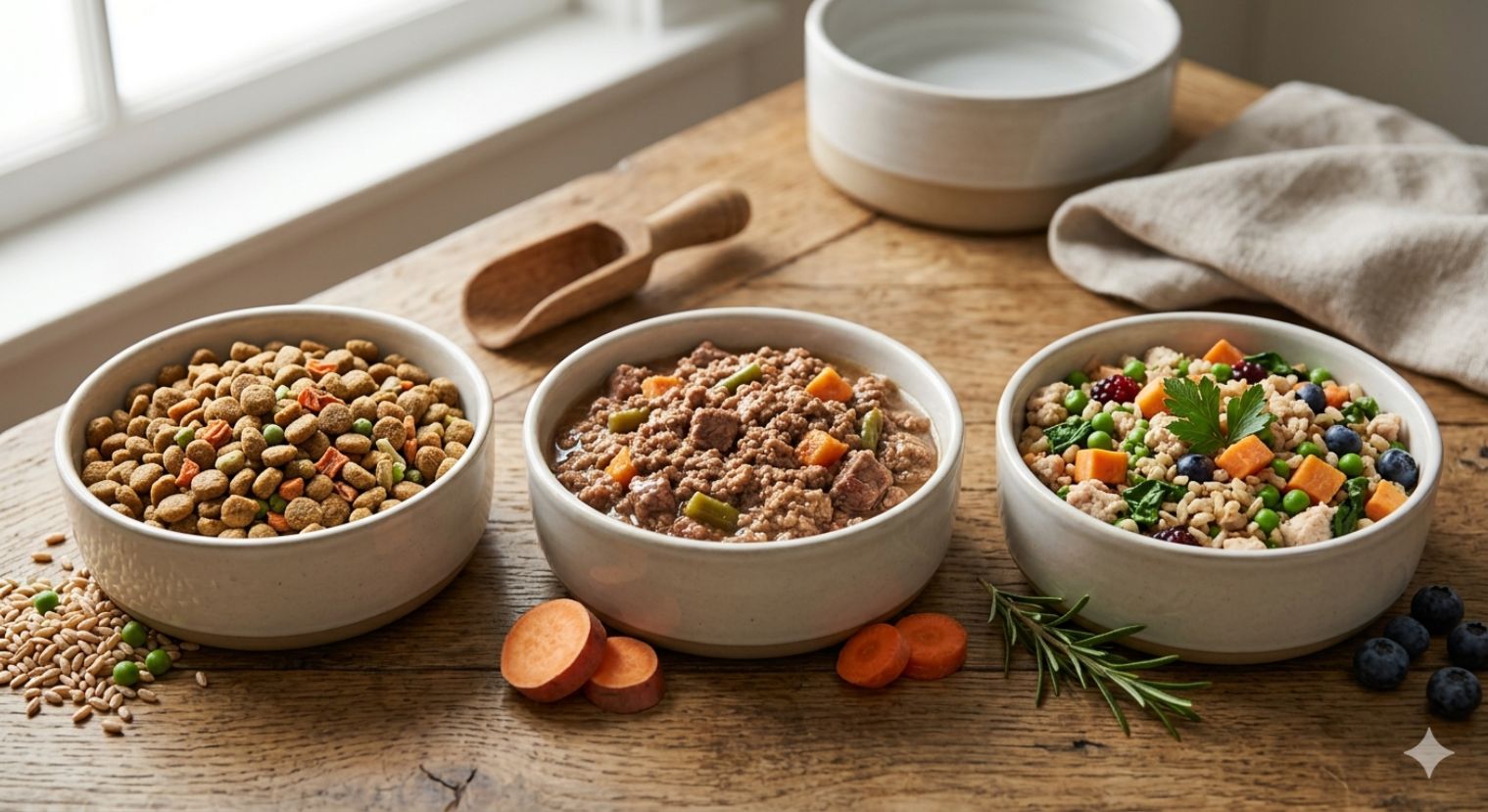
Dog food is a nutritionally formulated product made specifically to meeta dog’s dietary needs — including protein, fat, carbohydrates, vitamins,minerals, and water.
Feeding your dog is more than just filling a bowl with kibble or canned food. Dog food is a carefully formulated product designed to meet a dog’s specific nutritional needs. In this guide, we’ll break down what dog food is, why it’s important, the types available, and how to choose the best food based on your dog’s age, breed, and health.
What Is Dog Food?
Dog food refers to commercially produced food formulated for the dietary needs of dogs. It’s made from various ingredients that provide essential nutrients, including proteins, fats, carbohydrates, vitamins, minerals, and water. Dog food must meet specific nutritional standards to ensure it supports your dog’s health, longevity, and well-being.
The Association of American Feed Control Officials (AAFCO) defines what constitutes “complete and balanced” dog food. This means the food must contain the appropriate nutrients for a dog’s age, size, and health condition.
Core Dog Food Nutrients
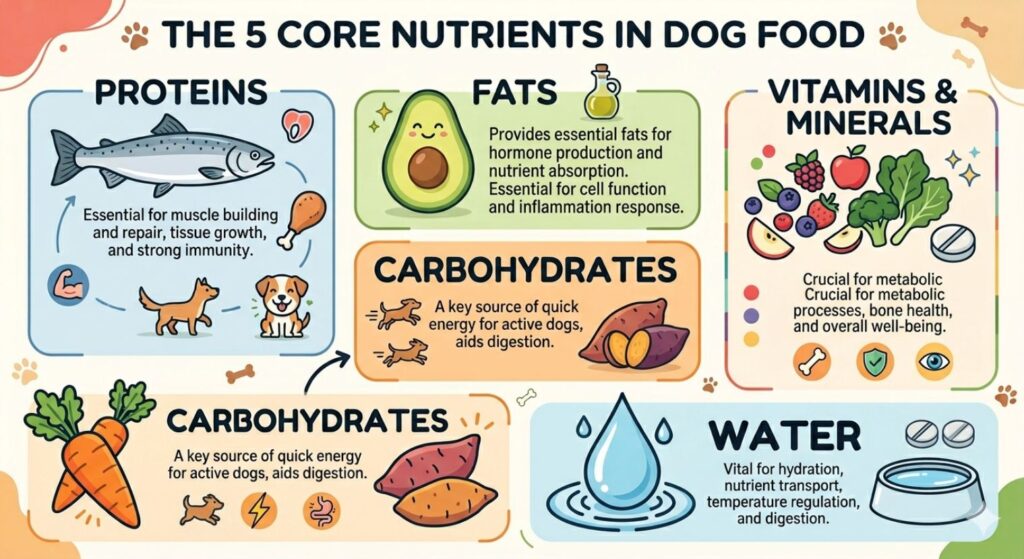
Dog food’s nutritional value depends on key ingredients that together meet your pet’s dietary needs. Here’s a breakdown of the core nutrients in dog food:
- Proteins
Proteins are crucial for muscle growth, cell repair, and immune function. Meat, poultry, and fish are common protein sources in dog food. - Fats
Fats provide energy, help absorb vitamins, and support skin and coat health. Omega-3 and omega-6 fatty acids are essential for maintaining a healthy coat. - Carbohydrates
Carbohydrates, often from grains or vegetables, provide energy and fiber, which is important for digestion. - Vitamins & Minerals
These nutrients help with metabolic function, bone health, and immune support. Common vitamins in dog food include A, D, and E, while minerals like calcium and phosphorus support bone strength. - Water
Water aids in digestion, nutrient absorption, and hydration. Wet dog food has a higher moisture content, which helps keep your dog hydrated.
Understanding crude protein in dog food can also help you read and compare dog food labels more accurately.
(Source: PetMD, AKC)
Types of Dog Food
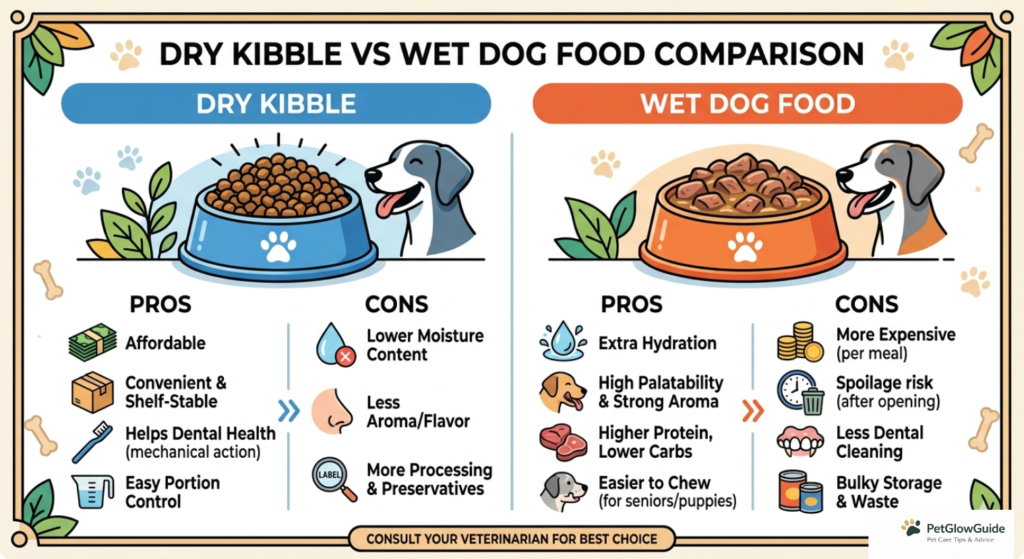
There are various types of dog food, and choosing the right one depends on your dog’s health needs and preferences.
- Dry Dog Food (Kibble)
Dry food is the most affordable and convenient option.If you are looking for dry food options for dogs with yeast-related concerns, see our guide to the best dry dog foods for yeast infections. It can help keep your dog’s teeth clean, but some dogs may find it less appealing compared to wet food. - Wet Dog Food
Wet food contains more moisture, making it a good choice for dogs that need extra hydration. It’s typically more palatable but can be pricier. - Fresh or Raw Dog Food
Fresh and raw dog food options are gaining popularity, often made with whole ingredients and less processed. However, these diets may require more preparation and storage. - Organic Dog Food
Organic dog food is made from ingredients grown without pesticides or chemicals. It’s suitable for pet owners who prefer a natural diet for their dogs.
(Source: Chewy, Freshpet)
How to Choose the Right Dog Food
Selecting the best dog food for your pet involves considering several factors:
- Age
Puppies, adult dogs, and senior dogs have different nutritional needs. Puppies require more protein and fat for growth, while older dogs may need fewer calories to maintain a healthy weight. - Breed
Certain breeds may require specialized diets. For example, large breeds may need food that supports joint health, while small breeds may need higher-calorie food due to their fast metabolism. - Health Conditions
Dogs with allergies, sensitive stomachs, or specific health conditions may benefit from specialized diets, such as grain-free or hypoallergenic food. - Ingredients
Always read the label carefully. Look for high-quality protein sources, avoid by-products, and ensure the food contains the right balance of fats and carbs.
If your dog has sensitive or yeast-prone skin, the label matters even more. Here is how to choose a dry dog food for a dog with skin problems.
Dog Food Myths and Misconceptions
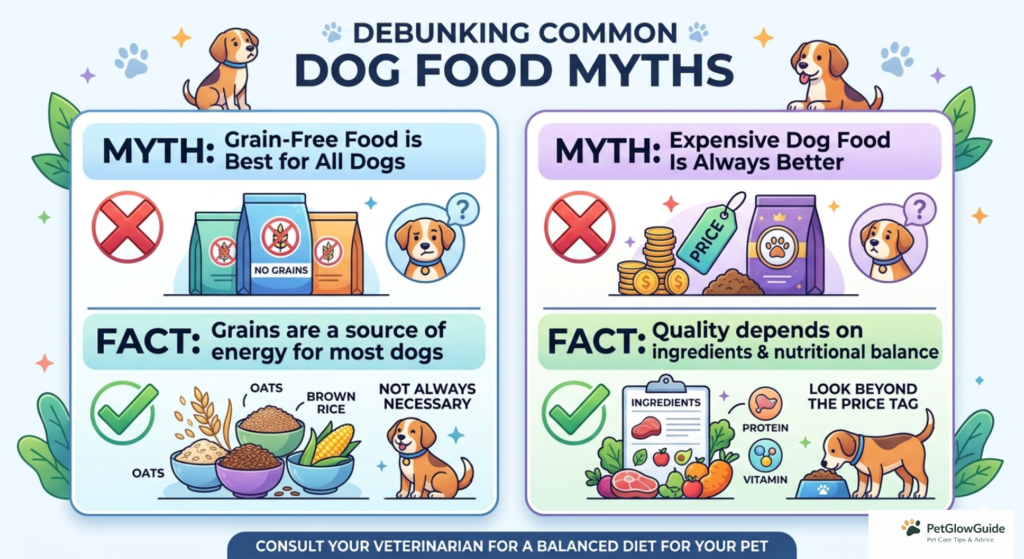
There are many myths surrounding dog food. Here are a couple of common ones:
Myth 1: Grain-Free Food Is Best for All Dogs
While grain-free food may benefit dogs with specific food allergies, most dogs do not need grain-free food. In fact, grains like rice and barley are excellent sources of fiber and can be part of a balanced diet.
Myth 2: Expensive Dog Food Is Always Better
While premium dog food brands may offer high-quality ingredients, price doesn’t always guarantee better nutrition. It’s essential to check the ingredient list and compare.
(Source: PetMD)
Frequently Asked Questions
What Does Dog Food Mean?
Dog food refers to commercially produced food formulated specificallyfor a dog’s dietary needs. It’s made from ingredients that supplyessential nutrients — protein, fat, carbohydrates, vitamins, minerals,and water — in the balance a dog needs to stay healthy.
What Is Dog Food Made Of?
Most dog food is made from a combination of animal protein sources(like meat, poultry, or fish), fats, carbohydrates from grains orvegetables, and added vitamins and minerals. The exact ingredients varyby brand and type, but AAFCO requires that food labeled “complete andbalanced” contain all the nutrients a dog needs for their life stage.
Conclusion
Understanding what dog food is and how to choose the best one for your dog is vital for their health. Whether you’re feeding a puppy, an adult, or a senior dog, knowing the basics of dog food nutrition helps ensure they live a long, healthy life. Always consult your veterinarian to make the best decision for your dog’s dietary needs.
Share :

numan anwar
Pet care enthusiast sharing practical, well-researched guides to help dog and cat owners make confident everyday decisions.
Leave a comment